
 Afirik
 Asiya
Asiya Turai
Turai Amerik Worgo
 Australiya e Oseaniya
 Antarktika
 Baharu Pasifik
 Baharu Atlantik
 Baharu Indiya
 Baharu Arktik
 Baharu Mediterane
 Baharu Boɗeeru
 Baharu Karibiya
 Baharu Koral
 Baharu Ciina Worgo
 Baharu Filipin
 Baharu Andaman
 Baharu Rewo
 Baharu Timor e Arafura
 Baharu Bengal
 Baharu Kaliforniya
European paper wasp
 Ina fiɗa
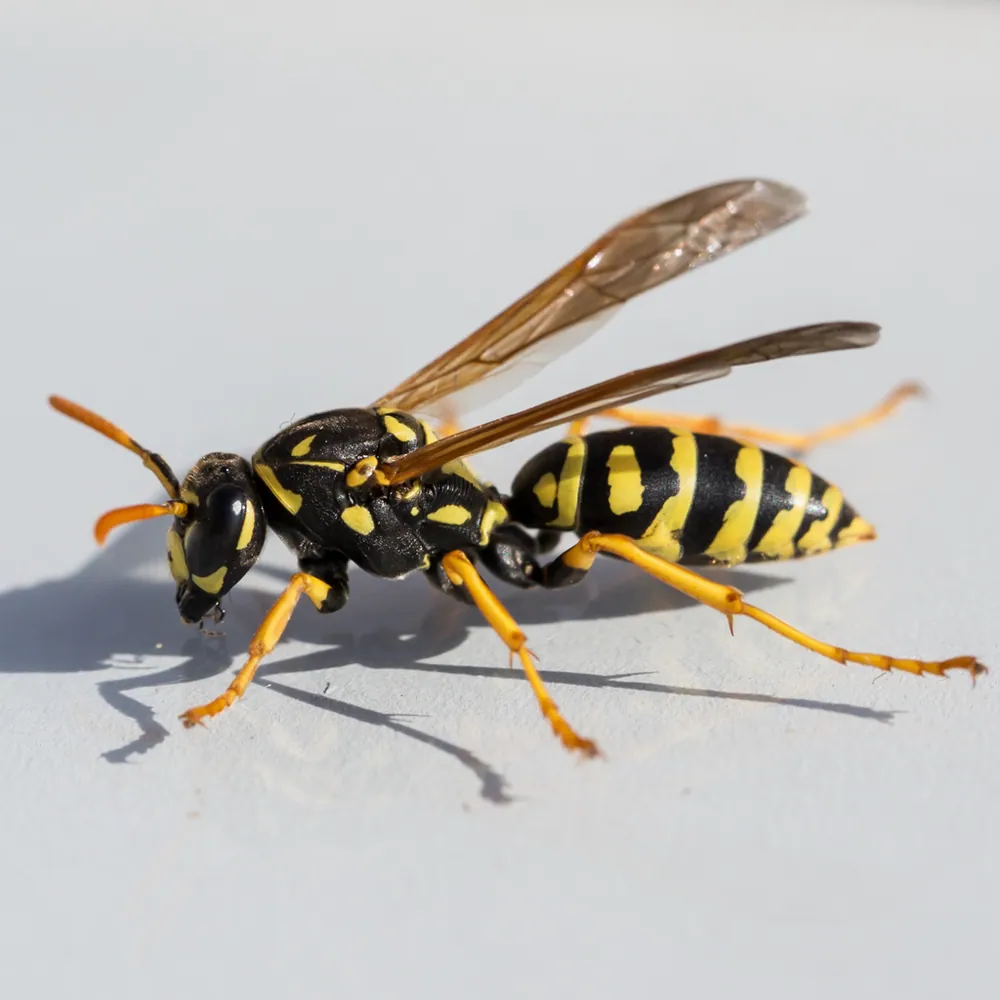
The European paper wasp is a yellow and black social wasp that builds nests from chewed plant fibre mixed with saliva, which looks like grey paper. It lives in warm, temperate parts of Europe, North Africa and Asia, and it has spread to many other continents. It matters because it has become a common invasive species in North America.1

 No anndirto nde
- Its body is coloured entirely yellow and black.1
- The female's mandible (jaw) is black and sometimes has a yellow spot.1
- The outer half of the antennae (feelers) is orange-yellow.1
- Wings are about 8.5 to 13 mm long, with little variation between individuals.1
- Males have curled antennae and no stinger.1
Ina jiiɓindiree e: Its yellow and black body is similar to that of Vespula germanica, one of the most common and defensive wasps in its native range. In older literature it was often confused with Polistes gallicus, which is now recognised as a separate species.1
Doole tooke
Tooke ina yalta e fiɗirgal.
Hol no nde woni bone e yimɓe?
Bone e yimɓe: Ina muusaIna waawi muusude sanne, kono ɓadii abada wonaa bone mawɗo.Hol ko nde waɗata si nde hulii?
Its bright yellow and black colouring is a warning colour, and its nests are built in well-protected places to help it avoid predators.1
 Si nde fiɗii
- Ittu fiɗirgal nyaaku e ɗiwtude ngal, ɓuuɓnu nokku oo.
- Si neɗɗo oo ina tampa foofde, yeeso walla daande mum ina ɓutta, walla ina yiɗi waasude hakkille, ɗum ko musiiba allergy: noddu lamba ballal yaawngal, huutoro allura adrenaline mum (adrenaline pen) si o jogii.
Sahaa fof, noddu lamba ballal yaawngal (112, 000, 911) ko adii. Ɗum ko ballal arano kuuɓal, wonaa wasiyya doktaa. Aslu ballal arano
 Reen hoore maa
- Taa memu, taa nanngu, taa aaɓnu dabbaare ladde abada, hay pamaro, hay si ina wayi no ɗaanii walla maayii.
- Accu nde nokku. Si a fottii e gooto, deeƴu, ruttu caggal seeɗa seeɗa, accu nde yaha laawol mum.
- Si gooto e majji fiɗii ma: deeƴu, taa dillu, noddu lamba ballal yaawngal (112, 000, 911) walla yah asibiti law. Siftor no nde wayri, foto ina walla.
Nde ɗaɓɓaaki ma. Nde huutora tooke mum ngam nanngude ñaamdu walla reende hoore mum, nde ɓuri yiɗde suuɗaade. Ɓeydu anndude no reentorto
Hol to e aduna?
Hol no nde mawni?
Hol no nde juuti?
 pamaro haa ina waawi joɗaade dow ceɓre feɗeendu maa
 ina waawi diwde dow nokku fijo bal fof nder sakan 15
Hol no European paper wasp mawni, fottindaade e AAN?
Hiisa tan nder browser maa. Alaa ko mooftetee walla ko neletee.
Hol no nde yaawi?


Anndal
Its colonies can include many unrelated wasps: about 35% of the wasps in a colony are unrelated, which is unusual for social insects.1
Males' abdominal spots vary in size, location and pattern, and they signal social rank within the colony.1
If the queen is removed from a nest, the second most dominant female takes over her role.1
In spring, some North American colonies have been seen with more than 80 wasps joining to reuse and expand an old nest.1
The first North American record was in Massachusetts in the late 1970s, and it had spread across the northeastern USA by 1995.1
Feññinoowo goonga
Fenaande: The species name is sometimes spelled "dominulus", as authors wrongly assumed the name was an adjective.
Goonga: Dominula is a noun meaning "little mistress", so under the International Code of Zoological Nomenclature it does not change when the species moves genus.1
Ɗo anndal iwi
- European paper wasp (Wikipedia (CC BY-SA 4.0))
- Polistes dominula (iNaturalist): inɗe e tolnugol.
- Venom Wiki: darja bone, mawnude woowaaɗo e miijo yaawre ko amen. Ndaar no min hiisirta ɗum: No min betiri bone.
Kala anndal e ngoo hello ina jogii limre hollirnde iwdi mum. Si min juumii, accu min, min yiɗɓe dabbaaji, wonaa jaridaa ganndal. Wiy min e [email protected] min feewnitay.
 Yaare nden ina heege! Venom Wiki ko golle neɗɗo gooto: meere, tawa tallaaji alaa, trackers alaa. Ballal pamarngal ina walla heddinde ɗum e internet.Ñaamnu yaare nden
Goɗɗi e fedde wootere: Nyaakuuje, zanzaro e zanzaro mawɓe
 Asian giant hornetNyaakuuje, zanzaro e zanzaro mawɓeIna waawi warde
 Common waspNyaakuuje, zanzaro e zanzaro mawɓeIna muusa tan
 European hornetNyaakuuje, zanzaro e zanzaro mawɓeIna muusa tan
 Western honey beeNyaakuuje, zanzaro e zanzaro mawɓeIna muusa tan
 Giant honey beeNyaakuuje, zanzaro e zanzaro mawɓeIna haani doktaa
 Asian hornetNyaakuuje, zanzaro e zanzaro mawɓeIna muusa tan
Ina wona kadi e: Turai
 Common European adderViper e adderIna haani doktaa
 Spanish flyDabbaaji goɗɗi tooke memde walla ñaamdeIna haani doktaaTaa memu
 Fire salamanderKwaɗoji tooke, kwaɗoji mawɗi e newtIna muusa tanTaa memu
 Blunt-nosed viperViper e adderIna waawi warde
 Nose-horned viperViper e adderIna waawi warde
 Ottoman viperViper e adderIna waawi warde