
 Afirik
 Asiya
Asiya Turai
Turai Amerik Worgo
 Australiya e Oseaniya
 Antarktika
 Baharu Pasifik
 Baharu Atlantik
 Baharu Indiya
 Baharu Arktik
 Baharu Mediterane
 Baharu Boɗeeru
 Baharu Karibiya
 Baharu Koral
 Baharu Ciina Worgo
 Baharu Filipin
 Baharu Andaman
 Baharu Rewo
 Baharu Timor e Arafura
 Baharu Bengal
 Baharu Kaliforniya
Asian giant hornet
 Ina fiɗa
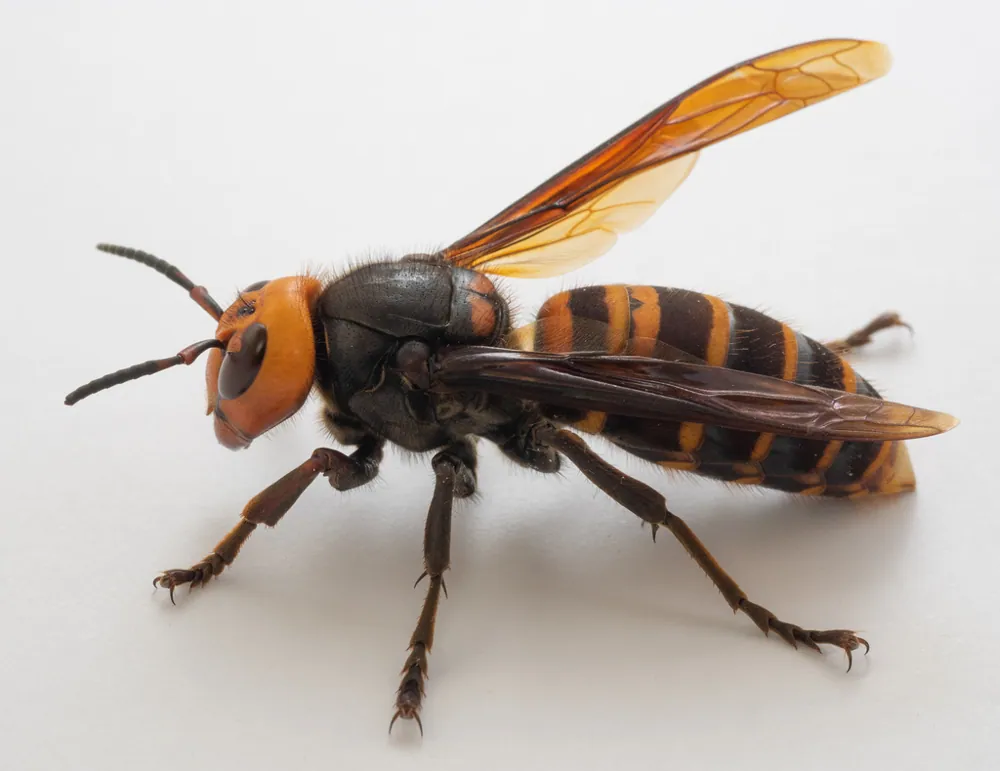
The Asian giant hornet is the world's largest hornet. It lives in forests and low mountains across much of East, South and Southeast Asia. Its sting carries a large amount of potent venom, so it is one of the hornets people should be most careful around.1

 No anndirto nde
- The head is a light orange shade, and the eyes are dark brown to black.1
- The thorax is dark brown, and the two wings are grey.1
- The abdomen has bands of dark brown or black alternating with yellow-orange, and the sixth segment is yellow.1
- The body is about 4.5 cm long, and queens are larger than workers.1
Ina jiiɓindiree e: It is often confused with the European hornet, the eastern cicada killer and the southern yellowjacket. Thousands of photos sent in from the eastern United States, where this hornet has never been found, turned out to be these or other wasps, bees and insects.1
Doole tooke
Tooke ina yalta e fiɗirgal.
Hol ko tooke mum (ŋatol walla fiɗol) waɗata?
Its stinger is about 6 mm long and injects a large amount of potent venom. The venom can kill a person when several hornets sting at the same time, or in the rare case of an allergic reaction.1
Hol no nde woni bone e yimɓe?
Bone e yimɓe: Bone sanneIna waawi warde neɗɗo mo heɓaali safaara.It can kill a person when several hornets sting together, or through a rare allergic reaction to the venom.1
 Si nde fiɗii
- Ittu fiɗirgal nyaaku e ɗiwtude ngal, ɓuuɓnu nokku oo.
- Si neɗɗo oo ina tampa foofde, yeeso walla daande mum ina ɓutta, walla ina yiɗi waasude hakkille, ɗum ko musiiba allergy: noddu lamba ballal yaawngal, huutoro allura adrenaline mum (adrenaline pen) si o jogii.
Sahaa fof, noddu lamba ballal yaawngal (112, 000, 911) ko adii. Ɗum ko ballal arano kuuɓal, wonaa wasiyya doktaa. Aslu ballal arano
 Reen hoore maa
- Taa memu, taa nanngu, taa aaɓnu dabbaare ladde abada, hay pamaro, hay si ina wayi no ɗaanii walla maayii.
- Accu nde nokku. Si a fottii e gooto, deeƴu, ruttu caggal seeɗa seeɗa, accu nde yaha laawol mum.
- Si gooto e majji fiɗii ma: deeƴu, taa dillu, noddu lamba ballal yaawngal (112, 000, 911) walla yah asibiti law. Siftor no nde wayri, foto ina walla.
Nde ɗaɓɓaaki ma. Nde huutora tooke mum ngam nanngude ñaamdu walla reende hoore mum, nde ɓuri yiɗde suuɗaade. Ɓeydu anndude no reentorto
Hol to e aduna?
Hol no nde mawni?
Hol no nde juuti?
 ɓuri famɗude njuuteendi feɗeendu maa pamaru
 ina waawi diwde dow nokku fijo bal fof nder sakan 9,5
Hol no Asian giant hornet mawni, fottindaade e AAN?
Hiisa tan nder browser maa. Alaa ko mooftetee walla ko neletee.
Hol no nde yaawi?


Anndal
It is the world's largest hornet.1
Its stinger is about 6 mm long, and it injects a large amount of potent venom.1
It was found briefly in the Pacific Northwest of North America from late 2019, and it was eradicated there by December 2024.1
The species has existed since the Miocene epoch, based on fossils found in the Shanwang Formation in China.1
Male drones are similar in size to females but have no stinger, which is typical of the order Hymenoptera.1
Feññinoowo goonga
Fenaande: Any large wasp or hornet seen in the eastern United States is an Asian giant hornet.
Goonga: None of the thousands of samples submitted from the eastern United States, where this hornet has never occurred, was this species. They were mostly other wasps such as the European hornet.1
Ɗo anndal iwi
- Asian giant hornet (Wikipedia (CC BY-SA 4.0))
- Vespa mandarinia (iNaturalist): inɗe e tolnugol.
- Venom Wiki: darja bone, mawnude woowaaɗo e miijo yaawre ko amen. Ndaar no min hiisirta ɗum: No min betiri bone.
Kala anndal e ngoo hello ina jogii limre hollirnde iwdi mum. Si min juumii, accu min, min yiɗɓe dabbaaji, wonaa jaridaa ganndal. Wiy min e [email protected] min feewnitay.
 Yaare nden ina heege! Venom Wiki ko golle neɗɗo gooto: meere, tawa tallaaji alaa, trackers alaa. Ballal pamarngal ina walla heddinde ɗum e internet.Ñaamnu yaare nden
Goɗɗi e fedde wootere: Nyaakuuje, zanzaro e zanzaro mawɓe
 Common waspNyaakuuje, zanzaro e zanzaro mawɓeIna muusa tan
 European hornetNyaakuuje, zanzaro e zanzaro mawɓeIna muusa tan
 Western honey beeNyaakuuje, zanzaro e zanzaro mawɓeIna muusa tan
 Giant honey beeNyaakuuje, zanzaro e zanzaro mawɓeIna haani doktaa
 Asian hornetNyaakuuje, zanzaro e zanzaro mawɓeIna muusa tan
 European paper waspNyaakuuje, zanzaro e zanzaro mawɓeIna muusa tan
 Yaare deathstalker
 Cobra Indiya
 Viper kiifi kaasa Indiya
 King cobra
 Puff adder
 Mboddi Russell