
 Afirik
 Asiya
Asiya Turai
Turai Amerik Worgo
 Australiya e Oseaniya
 Antarktika
 Baharu Pasifik
 Baharu Atlantik
 Baharu Indiya
 Baharu Arktik
 Baharu Mediterane
 Baharu Boɗeeru
 Baharu Karibiya
 Baharu Koral
 Baharu Ciina Worgo
 Baharu Filipin
 Baharu Andaman
 Baharu Rewo
 Baharu Timor e Arafura
 Baharu Bengal
 Baharu Kaliforniya
Lollyfish
 Tooke nder nguru mumIna ñaama: Seeɗa e kala huundeTooke memde walla ñaamde, wonaa tooke ŋatol walla fiɗol
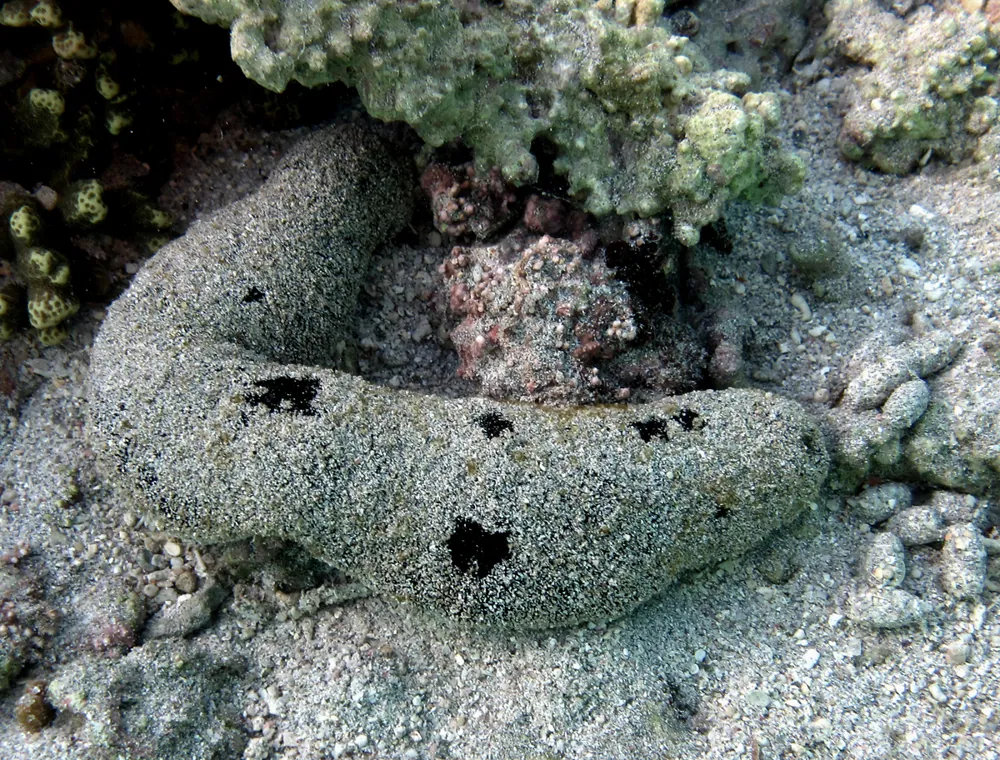
The lollyfish is a black sea cucumber, a soft-bodied animal that lives on the seabed. It is found in shallow tropical waters across the Indo-Pacific, from the Red Sea and East Africa to Australia. It matters to people because its skin releases a toxic red fluid when it is damaged.1
 No anndirto nde
Doole tooke
Nguru mum ko tooke. Ina bone memde nde, memde nde e ɗemngal walla ñaamde nde.
Hol ko tooke mum (memde walla ñaamde) waɗata?
It is not venomous. When its skin is rubbed or damaged, it releases a toxic red fluid.1
Hol no nde woni bone e yimɓe?
Bone e yimɓe: HoyɗoNo fiɗol nyaaku walla ɓuri famɗude. Ɓadii alaa bone e yimɓe.Hol ko nde waɗata si nde hulii?
When attacked, it pushes its internal organs out through its anus, and it releases a toxic red fluid when its skin is rubbed or damaged.1
 Si neɗɗo memii nde walla ñaamii nde
- Naatnu barme e ndiyam wulɗam, wulɗam no neɗɗo oo waawi muñde tawa sumataa, heɓu ballal doktaa ngam ittude gi'e. Taa asu ɗe e hoore maa.
Sahaa fof, noddu lamba ballal yaawngal (112, 000, 911) ko adii. Ɗum ko ballal arano kuuɓal, wonaa wasiyya doktaa. Aslu ballal arano
 Reen hoore maa
- Taa memu, taa nanngu, taa aaɓnu dabbaare ladde abada, hay pamaro, hay si ina wayi no ɗaanii walla maayii.
- Accu nde nokku. Si a fottii e gooto, deeƴu, ruttu caggal seeɗa seeɗa, accu nde yaha laawol mum.
- Si a memii nde walla a ñaamii nde: taa momtu gite maa walla hunnduko maa, lootu juuɗe maa, heɓu ballal doktaa.
Nde ɗaɓɓaaki ma. Tooke mum ina woodi tan ngam taa huunde ñaama nde. Ɓeydu anndude no reentorto
Hol to e aduna?
Hol no nde mawni?
Hol no nde juuti?
 juuti no ayaba 3 jokkondiraaɗi
 ɓuri leeltude katantanwa ngesa
Hol no Lollyfish mawni, fottindaade e AAN?
Hiisa tan nder browser maa. Alaa ko mooftetee walla ko neletee.
Hol no nde yaawi?


Anndal
When attacked, it pushes its internal organs out through its anus rather than firing sticky Cuvierian tubules as some sea cucumbers do.1
On Guam, its toxic red fluid is used to drive octopuses out of their hiding holes.1
It can split in two by transverse fission, and a sand coating does not stick to the new surfaces.1
Pools warmed by the sun can reach 39 °C, and individuals there still appeared healthy and fed.1
A thick coating of sand may help keep it cool by shading it from the sun.1
Ngam ganduɓe tooke
- Innde ganndal
- Holothuria atra
- Fedde
- Sea urchin, sea star e gilɗi baharu
- Besngu
- Holothuriidae2
- Tolno
- Holothuriida
- Nahiyaaji
- Baharu Pasifik, Baharu Indiya, Baharu Boɗeeru, Baharu Koral, Baharu Filipin, Baharu Ciina Worgo, Baharu Timor e Arafura, Baharu Bengal, Baharuuji mawɗi
- Ɓikkoy
- It is not possible to tell males from females by looking at them. It spawns mostly in summer and autumn, or all year in equatorial waters. It can also reproduce by splitting in two, which mostly happens to smaller animals.1
- Bone e yimɓe
- 1 / 5: Hoyɗo3
Ɗo anndal iwi
- Holothuria atra (Wikipedia (CC BY-SA 4.0))
- Holothuria atra (iNaturalist): inɗe e tolnugol.
- Venom Wiki: darja bone, mawnude woowaaɗo e miijo yaawre ko amen. Ndaar no min hiisirta ɗum: No min betiri bone.
Kala anndal e ngoo hello ina jogii limre hollirnde iwdi mum. Si min juumii, accu min, min yiɗɓe dabbaaji, wonaa jaridaa ganndal. Wiy min e [email protected] min feewnitay.
 Yaare nden ina heege! Venom Wiki ko golle neɗɗo gooto: meere, tawa tallaaji alaa, trackers alaa. Ballal pamarngal ina walla heddinde ɗum e internet.Ñaamnu yaare nden
Goɗɗi e fedde wootere: Sea urchin, sea star e gilɗi baharu
 Crown-of-thorns starfishSea urchin, sea star e gilɗi baharuIna haani doktaaTaa memu
 Flower urchinSea urchin, sea star e gilɗi baharuIna waawi warde
 Fire urchinSea urchin, sea star e gilɗi baharuIna haani doktaaTaa memu
 Bearded firewormSea urchin, sea star e gilɗi baharuIna muusa tanTaa memu
 Black long-spined urchinSea urchin, sea star e gilɗi baharuIna muusa tanTaa memu
 BloodwormSea urchin, sea star e gilɗi baharuIna muusa tan
Ina wona kadi e: Baharu Pasifik
 Australian box jellyfishJellyfish e fiɗooji baharuWarooɗoTaa memu
 Geography coneCone snail e octopusWarooɗo
 Greater blue-ringed octopusCone snail e octopusWarooɗo
 Japanese pufferfishDabbaaji goɗɗi tooke memde walla ñaamdeWarooɗo
 Southern blue-ringed octopusCone snail e octopusWarooɗo
 Hawksbill sea turtleDabbaaji goɗɗi tooke memde walla ñaamdeIna waawi warde