
 Afirik
 Asiya
Asiya Turai
Turai Amerik Worgo
 Australiya e Oseaniya
 Antarktika
 Baharu Pasifik
 Baharu Atlantik
 Baharu Indiya
 Baharu Arktik
 Baharu Mediterane
 Baharu Boɗeeru
 Baharu Karibiya
 Baharu Koral
 Baharu Ciina Worgo
 Baharu Filipin
 Baharu Andaman
 Baharu Rewo
 Baharu Timor e Arafura
 Baharu Bengal
 Baharu Kaliforniya
Pine-tree lappet
 Leeɓi fiɗooji
The pine-tree lappet is a moth whose caterpillars eat the needles and bark of pine and spruce trees. It is found across Europe, Asia and North Africa. Its caterpillars are covered in fine, sharp hairs that can irritate the skin and cause a serious illness, so it is important to recognise them and avoid touching them.1
 No anndirto nde
- Caterpillars are fuzzy, covered in long, slender hairs with sharp tips, and have black hairs on the thorax.1
- Caterpillar thorax has thick, alternating steel-blue bands, and the abdomen has a black mark bordered by irregular white lines.1
- Cocoons are loose and partly see-through, ranging from yellow-brown to deep black, and are often marked with steel-blue hairs.1
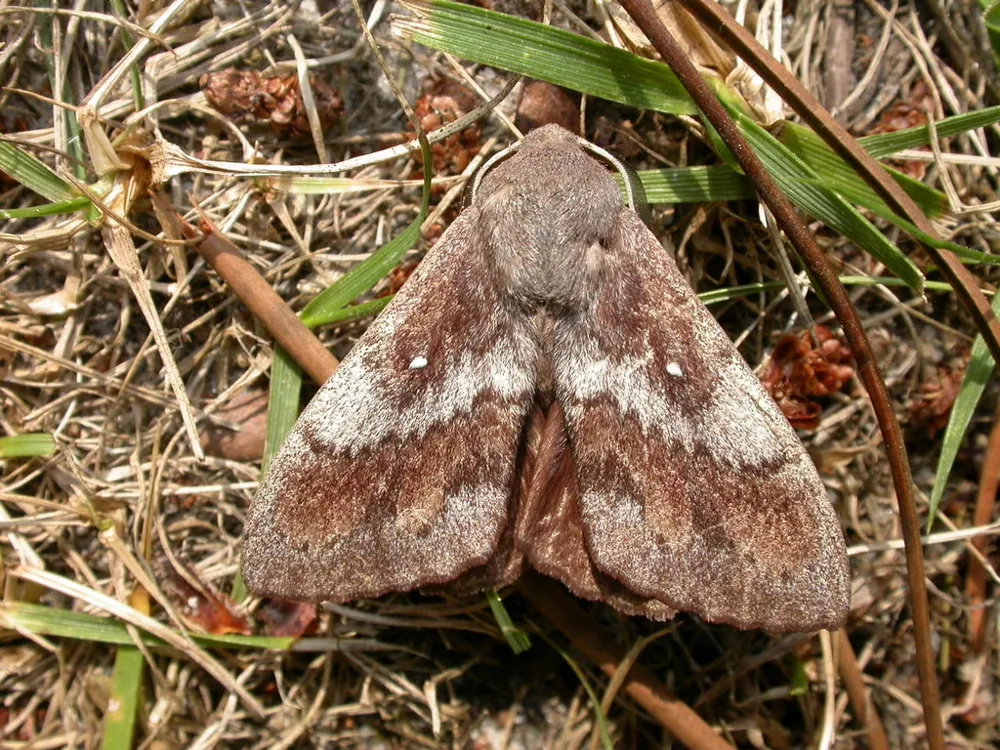
- Adult forewings are grey-brown to brown with a reddish-brown band and a dark brown to black stripe along the edges.1
- Females are larger than males, with a wingspan of 70 to 90 mm, while males have a wingspan of 50 to 70 mm and are usually darker.1
Doole tooke
Leeɓi pamari walla gi'e pamari ina taƴa nder nguru, ina fiɗa.
Hol ko tooke mum (ŋatol walla fiɗol) waɗata?
This animal is not venomous. When the sharp hairs of the caterpillar or cocoon break the skin, they release a toxin. This can cause skin rash, inflammation of the joints and cartilage, and chronic osteoarthritis.1
Hol no nde woni bone e yimɓe?
Bone e yimɓe: Ina muusaIna waawi muusude sanne, kono ɓadii abada wonaa bone mawɗo.Contact with the hairs of living or dead caterpillars, or with their cocoons, can cause an illness called dendrolimiasis.1
Hol ko nde waɗata si nde hulii?
Caterpillars defend themselves with their sharp, irritating hairs, while adults lose these hairs and rely on camouflage.1
 Si a memii leeɓi mum
- Ngam leeɓi gilɗi fiɗooji: ittu ɗi e selotef, refti lootu nguru. Taa momtu.
- Ngam ŋatol: lootu e ɓuuɓnu. Heɓu ballal doktaa si neɗɗo oo ɓanndu mum welaani walla ƴiiƴam ina yalta mo ko newi.
Sahaa fof, noddu lamba ballal yaawngal (112, 000, 911) ko adii. Ɗum ko ballal arano kuuɓal, wonaa wasiyya doktaa. Aslu ballal arano
 Reen hoore maa
- Taa memu, taa nanngu, taa aaɓnu dabbaare ladde abada, hay pamaro, hay si ina wayi no ɗaanii walla maayii.
- Accu nde nokku. Si a fottii e gooto, deeƴu, ruttu caggal seeɗa seeɗa, accu nde yaha laawol mum.
- Si a memii leeɓi mum: deeƴu, taa dillu, noddu lamba ballal yaawngal (112, 000, 911) walla yah asibiti law. Siftor no nde wayri, foto ina walla.
Nde ɗaɓɓaaki ma. Nde huutora tooke mum ngam nanngude ñaamdu walla reende hoore mum, nde ɓuri yiɗde suuɗaade. Ɓeydu anndude no reentorto
Hol to e aduna?
Hol no nde mawni?
Hol no nde juuti?
 juuti no bulok fijo 3 jokkondiraaɗi
 ɓuri leeltude katantanwa ngesa
Hol no Pine-tree lappet mawni, fottindaade e AAN?
Hiisa tan nder browser maa. Alaa ko mooftetee walla ko neletee.
Hol no nde yaawi?

Anndal
Mass feeding by caterpillars can strip whole forests of their needles, which harms the forestry industry.1
Caterpillars can survive for a month without food, which helps them spread when people accidentally transport them.1
Adult moths do not feed and live for only about 9 to 10 days.1
Caterpillars eat the first skins of their eggs as their first meal after hatching.1
Scientists found that the cast skins of the caterpillar contain a substance that may help protect them from fungal infections.1
A single generation takes one year in warmer climates, but about two years in cooler regions.1
Ɗo anndal iwi
- Dendrolimus pini (Wikipedia (CC BY-SA 4.0))
- Dendrolimus pini (iNaturalist): inɗe e tolnugol.
- Venom Wiki: darja bone, mawnude woowaaɗo e miijo yaawre ko amen. Ndaar no min hiisirta ɗum: No min betiri bone.
Kala anndal e ngoo hello ina jogii limre hollirnde iwdi mum. Si min juumii, accu min, min yiɗɓe dabbaaji, wonaa jaridaa ganndal. Wiy min e [email protected] min feewnitay.
 Yaare nden ina heege! Venom Wiki ko golle neɗɗo gooto: meere, tawa tallaaji alaa, trackers alaa. Ballal pamarngal ina walla heddinde ɗum e internet.Ñaamnu yaare nden
Goɗɗi e fedde wootere: Gilɗi leeɓi e dabbaaji pamari
 Oak processionaryGilɗi leeɓi e dabbaaji pamariIna muusa tanTaa memu
 Pine processionaryGilɗi leeɓi e dabbaaji pamariIna muusa tanTaa memu
 Common bombardier beetleGilɗi leeɓi e dabbaaji pamariAlaa bone
 Asian giant water bugGilɗi leeɓi e dabbaaji pamariIna muusa tan
 Blue-striped nettle grubGilɗi leeɓi e dabbaaji pamariIna muusa tanTaa memu
 Brown-tail mothGilɗi leeɓi e dabbaaji pamariIna muusa tanTaa memu
Ina wona kadi e: Turai
 Common European adderViper e adderIna haani doktaa
 Spanish flyDabbaaji goɗɗi tooke memde walla ñaamdeIna haani doktaaTaa memu
 Common waspNyaakuuje, zanzaro e zanzaro mawɓeIna muusa tan
 European hornetNyaakuuje, zanzaro e zanzaro mawɓeIna muusa tan
 Fire salamanderKwaɗoji tooke, kwaɗoji mawɗi e newtIna muusa tanTaa memu
 Western honey beeNyaakuuje, zanzaro e zanzaro mawɓeIna muusa tan