
 Afirik
 Asiya
Asiya Turai
Turai Amerik Worgo
 Australiya e Oseaniya
 Antarktika
 Baharu Pasifik
 Baharu Atlantik
 Baharu Indiya
 Baharu Arktik
 Baharu Mediterane
 Baharu Boɗeeru
 Baharu Karibiya
 Baharu Koral
 Baharu Ciina Worgo
 Baharu Filipin
 Baharu Andaman
 Baharu Rewo
 Baharu Timor e Arafura
 Baharu Bengal
 Baharu Kaliforniya
Rabid wolf spider
 Ina ŋata
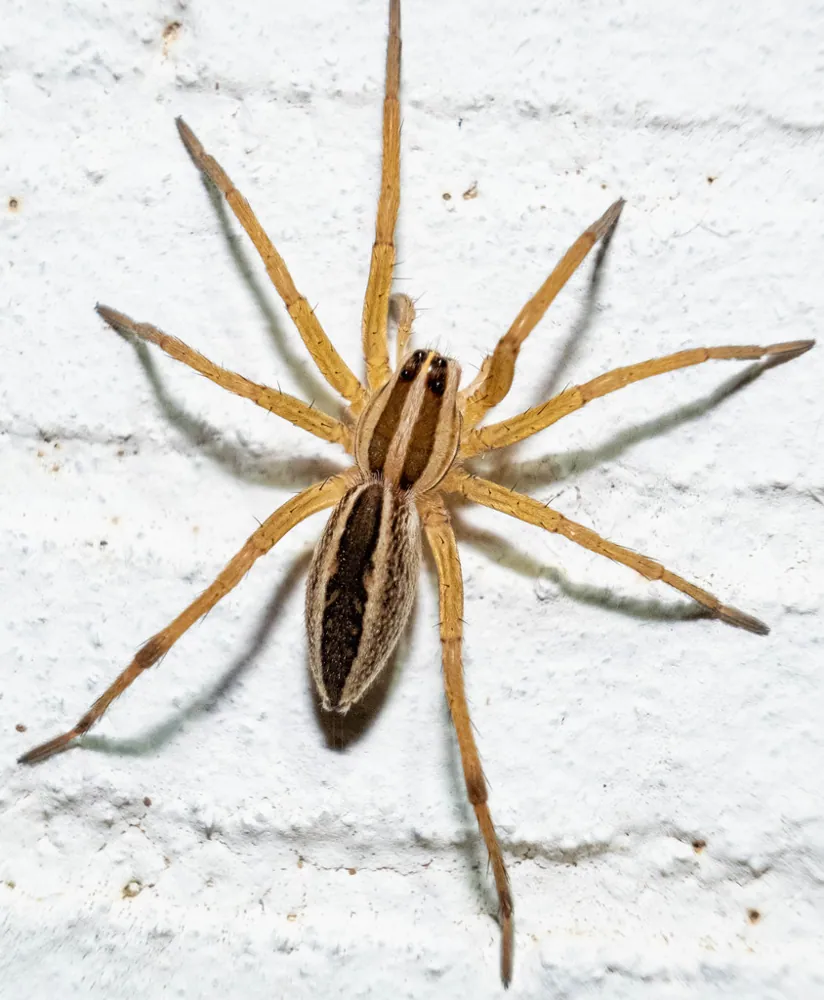
The rabid wolf spider is a spider that lives in North America. It is found in fields, woods and other places where there is plenty of cover. It is a hunter that does not spin webs to trap its food.1

 No anndirto nde
- The cephalothorax (front body section) has two dark stripes.1
- The abdomen (back body section) has one stripe of the same colour as the stripes on the front.1
- Other parts of the body are yellow.1
- It has eight eyes: four above and four below. The lower pair looks more like a moustache.1
- Females are larger than males, with a body length of about an inch. Males are about half an inch.1
Ina jiiɓindiree e: It is often compared with Rabidosa punctulata. In males of R. rabida, the front legs are mostly black. In R. punctulata, all the legs are the same colour.1
Doole tooke
Tooke ina yalta e ñiiƴe mum si nde ŋatii.
Hol no nde woni bone e yimɓe?
Bone e yimɓe: HoyɗoNo fiɗol nyaaku walla ɓuri famɗude. Ɓadii alaa bone e yimɓe.It may bite if provoked, but its bite is not dangerous to humans.1
Hol ko nde waɗata si nde hulii?
It may bite if it is provoked.1
 Si nde ŋatii
- Lootu ŋatol ngol, waɗu kankara dow mum ngam muusu. Heɓu ballal doktaa si muusu ina tiiɗi, ina yaajoo, walla neɗɗo oo ɓanndu mum welaani.
Sahaa fof, noddu lamba ballal yaawngal (112, 000, 911) ko adii. Ɗum ko ballal arano kuuɓal, wonaa wasiyya doktaa. Aslu ballal arano
 Reen hoore maa
- Taa memu, taa nanngu, taa aaɓnu dabbaare ladde abada, hay pamaro, hay si ina wayi no ɗaanii walla maayii.
- Accu nde nokku. Si a fottii e gooto, deeƴu, ruttu caggal seeɗa seeɗa, accu nde yaha laawol mum.
- Si gooto e majji ŋatii ma: deeƴu, taa dillu, noddu lamba ballal yaawngal (112, 000, 911) walla yah asibiti law. Siftor no nde wayri, foto ina walla.
Nde ɗaɓɓaaki ma. Nde huutora tooke mum ngam nanngude ñaamdu walla reende hoore mum, nde ɓuri yiɗde suuɗaade. Ɓeydu anndude no reentorto
Hol to e aduna?
Hol no nde mawni?
Hol no nde juuti?
 juuti ɓadii no kilip kaayit
 ina waawi dogde meeter 100 nder sakan 300 (neɗɗo ɓurɗo yaawde ina haani 9,6)
Hol no Rabid wolf spider mawni, fottindaade e AAN?
Hiisa tan nder browser maa. Alaa ko mooftetee walla ko neletee.
Hol no nde yaawi?


Anndal
When prey enters its silk sheet, it can detach the anchor points and move the silk to wrap the prey up.1
Spiders cannot have rabies, so they cannot pass it on to people or other animals.1
It can camouflage itself to look like bark or leaves when hunting.1
During courtship, the male performs a "dance" in front of the female and makes sounds by stridulation (rubbing body parts together).1
Spiderlings ride on their mother's back until they are old enough to live on their own.1
Its lower pair of eyes looks like a moustache.1
Feññinoowo goonga
Fenaande: A rabid wolf spider has rabies and can give it to you.
Goonga: Spiders cannot have rabies. The name comes from the spider's erratic, rapid movements.1
Ngam ganduɓe tooke
- Innde ganndal
- Rabidosa rabida
- Fedde
- Gizo-gizo
- Besngu
- Lycosidae2
- Tolno
- Araneae
- Nahiyaaji
- Amerik Rewo
- Ɓikkoy
- After mating, the female lays eggs and builds a silk egg sac, which she carries with her. When the spiderlings hatch, they ride on the mother's back until they are old enough to live on their own.1
- Bone e yimɓe
- 1 / 5: Hoyɗo3
Ɗo anndal iwi
- Rabidosa rabida (Wikipedia (CC BY-SA 4.0))
- Rabidosa rabida (iNaturalist): inɗe e tolnugol.
- Venom Wiki: darja bone, mawnude woowaaɗo e miijo yaawre ko amen. Ndaar no min hiisirta ɗum: No min betiri bone.
Kala anndal e ngoo hello ina jogii limre hollirnde iwdi mum. Si min juumii, accu min, min yiɗɓe dabbaaji, wonaa jaridaa ganndal. Wiy min e [email protected] min feewnitay.
 Yaare nden ina heege! Venom Wiki ko golle neɗɗo gooto: meere, tawa tallaaji alaa, trackers alaa. Ballal pamarngal ina walla heddinde ɗum e internet.Ñaamnu yaare nden
 Brown recluse
 Southern black widow
 Northern black widow
 Western black widow
 Bold jumping spider
 Golden silk orb-weaver
 Terciopelo
 Eastern coral snake
 Eastern diamondback rattlesnake
 Eyelash viper
 Timber rattlesnake
 Western diamondback rattlesnake