
 Afirik
 Asiya
Asiya Turai
Turai Amerik Worgo
 Australiya e Oseaniya
 Antarktika
 Baharu Pasifik
 Baharu Atlantik
 Baharu Indiya
 Baharu Arktik
 Baharu Mediterane
 Baharu Boɗeeru
 Baharu Karibiya
 Baharu Koral
 Baharu Ciina Worgo
 Baharu Filipin
 Baharu Andaman
 Baharu Rewo
 Baharu Timor e Arafura
 Baharu Bengal
 Baharu Kaliforniya
Regal jumping spider
 Ina ŋata
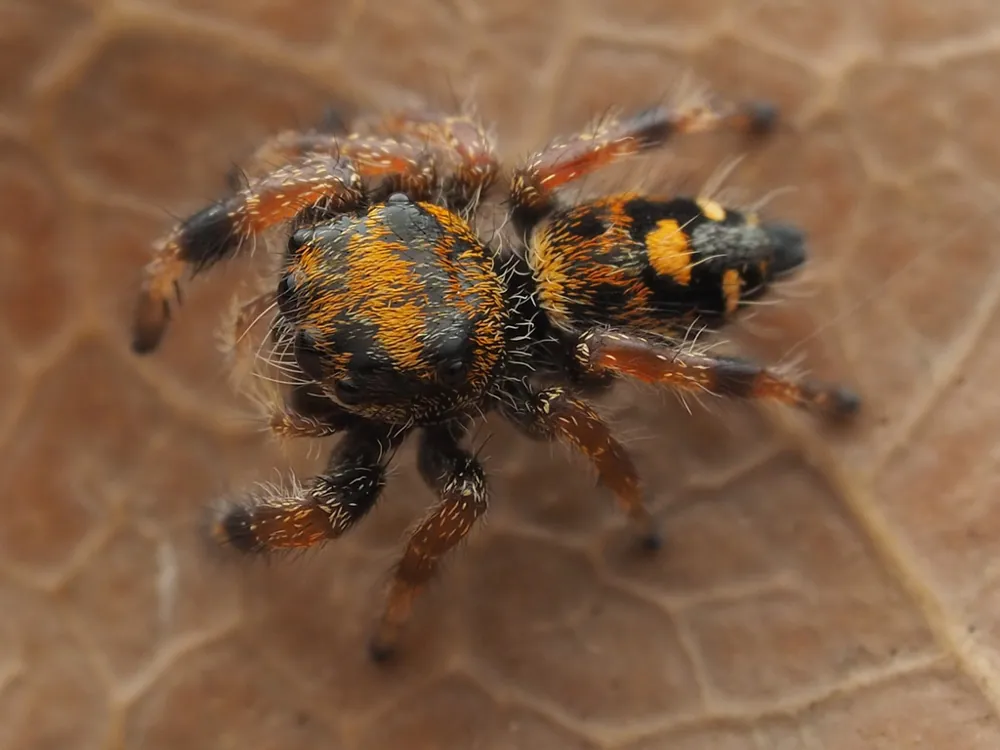
The regal jumper is a jumping spider that lives in parts of the United States and the Caribbean. It is the largest jumping spider in eastern North America. Its bite is considered minimally harmful to people, but it is still a spider to treat with respect.1

 No anndirto nde
- Adult males are black with several white markings on the back of the abdomen. Their first pair of legs has an alternating black and white fringe.1
- Adult males have large, iridescent green-blue-violet jaws (chelicerae) with a small bump (tubercle) on each.1
- Adult females are covered mostly in brown, orange, tan or grey scales, and may have white or orange markings on the abdomen.1
- Adult females have tufts of hairs (setae) around the eyes, which males lack.1
- Juveniles are pale brown with reddish-brown markings on the abdomen rimmed with black, and have dark red fangs.1
Doole tooke
Tooke ina yalta e ñiiƴe mum si nde ŋatii.
Hol ko tooke mum (ŋatol walla fiɗol) waɗata?
Documented bites have caused severe pain, similar to a bee sting, with swelling that can last up to three months. This reaction is likely due to individual sensitivity or local inflammation.1
Hol no nde woni bone e yimɓe?
Bone e yimɓe: HoyɗoNo fiɗol nyaaku walla ɓuri famɗude. Ɓadii alaa bone e yimɓe.The regal jumper is considered minimally harmful to humans. Rare documented cases have involved severe pain and long-lasting swelling after a bite, which may depend on the individual person.1
 Si nde ŋatii
- Lootu ŋatol ngol, waɗu kankara dow mum ngam muusu. Heɓu ballal doktaa si muusu ina tiiɗi, ina yaajoo, walla neɗɗo oo ɓanndu mum welaani.
Sahaa fof, noddu lamba ballal yaawngal (112, 000, 911) ko adii. Ɗum ko ballal arano kuuɓal, wonaa wasiyya doktaa. Aslu ballal arano
 Reen hoore maa
- Taa memu, taa nanngu, taa aaɓnu dabbaare ladde abada, hay pamaro, hay si ina wayi no ɗaanii walla maayii.
- Accu nde nokku. Si a fottii e gooto, deeƴu, ruttu caggal seeɗa seeɗa, accu nde yaha laawol mum.
- Si gooto e majji ŋatii ma: deeƴu, taa dillu, noddu lamba ballal yaawngal (112, 000, 911) walla yah asibiti law. Siftor no nde wayri, foto ina walla.
Nde ɗaɓɓaaki ma. Nde huutora tooke mum ngam nanngude ñaamdu walla reende hoore mum, nde ɓuri yiɗde suuɗaade. Ɓeydu anndude no reentorto
Hol to e aduna?
Hol no nde mawni?
Hol no nde juuti?
 juuti ɓadii no kilip kaayit
Hol no Regal jumping spider mawni, fottindaade e AAN?
Hiisa tan nder browser maa. Alaa ko mooftetee walla ko neletee.
Hol no nde yaawi?


Anndal
This is the largest jumping spider in eastern North America.1
A 2017 web series, Lucas the Spider, helped increase the popularity of this species as a pet.1
In large males, the first pair of legs is disproportionately bigger than in smaller males.1
In 2026, Build-A-Bear Workshop created a jumping spider plush, reflecting the species' growing popularity as a pet.1
In southern populations, juvenile females may develop scales as early as the third instar, while males stay black and white for their whole life.1
Ɗo anndal iwi
- Phidippus regius (Wikipedia (CC BY-SA 4.0))
- Phidippus regius (iNaturalist): inɗe e tolnugol.
- Venom Wiki: darja bone, mawnude woowaaɗo e miijo yaawre ko amen. Ndaar no min hiisirta ɗum: No min betiri bone.
Kala anndal e ngoo hello ina jogii limre hollirnde iwdi mum. Si min juumii, accu min, min yiɗɓe dabbaaji, wonaa jaridaa ganndal. Wiy min e [email protected] min feewnitay.
 Yaare nden ina heege! Venom Wiki ko golle neɗɗo gooto: meere, tawa tallaaji alaa, trackers alaa. Ballal pamarngal ina walla heddinde ɗum e internet.Ñaamnu yaare nden
 Brown recluse
 Southern black widow
 Northern black widow
 Western black widow
 Bold jumping spider
 Golden silk orb-weaver
 Terciopelo
 Eastern coral snake
 Eastern diamondback rattlesnake
 Eyelash viper
 Timber rattlesnake
 Western diamondback rattlesnake