
 Afirik
 Asiya
Asiya Turai
Turai Amerik Worgo
 Australiya e Oseaniya
 Antarktika
 Baharu Pasifik
 Baharu Atlantik
 Baharu Indiya
 Baharu Arktik
 Baharu Mediterane
 Baharu Boɗeeru
 Baharu Karibiya
 Baharu Koral
 Baharu Ciina Worgo
 Baharu Filipin
 Baharu Andaman
 Baharu Rewo
 Baharu Timor e Arafura
 Baharu Bengal
 Baharu Kaliforniya
Spine-tailed sea snake
 Ina ŋata
The spine-tailed sea snake is a sea snake that lives in shallow bays and estuaries in northern Australia, South-East Asia and New Guinea. It is unusual because it eats almost only fish eggs, and it has lost its fangs. It is one of the few sea snakes whose bite is unlikely to be dangerous to people.1


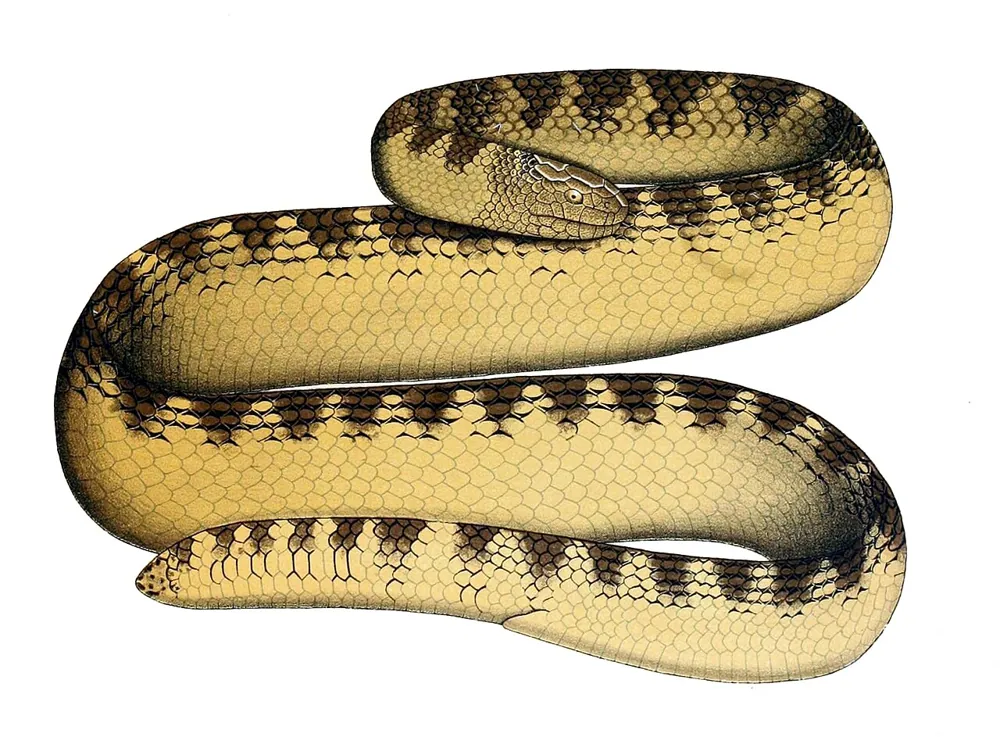
 No anndirto nde
- Its head shields are regular and symmetrical.1
- Its smooth scales on the back are arranged in 17 rows around the middle of the body.1
- It has 141 to 149 distinct belly scales (ventrals) along its body and 27 to 30 scales under its tail (subcaudals).1
- Adults can reach a snout to vent length (the distance from the tip of the snout to the vent) of about 1 m.1
Doole tooke
Tooke ina yalta e ñiiƴe mum si nde ŋatii.
Hol ko tooke mum (ŋatol walla fiɗol) waɗata?
Unlike most sea snakes, it has lost its fangs, and its venom glands have shrunk and are almost entirely non-functional. Its venom is much weaker than that of related sea snakes, because a small change in one of its venom genes reduces the venom's toxicity.1
Hol no nde woni bone e yimɓe?
Bone e yimɓe: Ina muusaIna waawi muusude sanne, kono ɓadii abada wonaa bone mawɗo.Because it has no fangs and its venom is very weak, its bite is unlikely to be a serious threat to people.1
 Si nde ŋatii
- Ɗigginde e daranɗinde (pressure immobilisation): haɓɓu bandeeji elastik ɗigginiiɗo dow ŋatol, refti haɓɓu koyngal walla junngo ngal fof haa dow, haɓɓu leggal tiiɗngal (splint) e mum, ngam neɗɗo oo wona ɗoon tawa dillaani fey haa ballal arta.
- Yaltin neɗɗo oo e ndiyam, yahra mo asibiti law.
Sahaa fof, noddu lamba ballal yaawngal (112, 000, 911) ko adii. Ɗum ko ballal arano kuuɓal, wonaa wasiyya doktaa. Aslu ballal arano
 Reen hoore maa
- Taa memu, taa nanngu, taa aaɓnu dabbaare ladde abada, hay pamaro, hay si ina wayi no ɗaanii walla maayii.
- Accu nde nokku. Si a fottii e gooto, deeƴu, ruttu caggal seeɗa seeɗa, accu nde yaha laawol mum.
- Si gooto e majji ŋatii ma: deeƴu, taa dillu, noddu lamba ballal yaawngal (112, 000, 911) walla yah asibiti law. Siftor no nde wayri, foto ina walla.
Nde ɗaɓɓaaki ma. Nde huutora tooke mum ngam nanngude ñaamdu walla reende hoore mum, nde ɓuri yiɗde suuɗaade. Ɓeydu anndude no reentorto
Hol to e aduna?
Hol no nde mawni?
Hol no nde juuti?
 juuti no ullundi galle 2, hinere haa laaci
 juuti no ayaba 6 jokkondiraaɗi
 ina waawi lumbaade njuuteendi pisin mawɗo (50 m) nder sakan 47
Hol no Spine-tailed sea snake mawni, fottindaade e AAN?
Hiisa tan nder browser maa. Alaa ko mooftetee walla ko neletee.
Hol no nde yaawi?
Anndal
It feeds almost exclusively on fish eggs, which is very unusual among sea snakes.1
Only one other species of sea snake, Emydocephalus annulatus, shares this egg-only diet.1
It has strong throat muscles, reduced teeth and a much smaller body than most other sea snakes, all linked to its special diet.1
It gives birth to live young, even though it is a snake that hatches its eggs inside the body.1
Ngam ganduɓe tooke
Ɗo anndal iwi
- Aipysurus eydouxii (Wikipedia (CC BY-SA 4.0))
- Aipysurus eydouxii (iNaturalist): inɗe e tolnugol.
- Venom Wiki: darja bone, mawnude woowaaɗo e miijo yaawre ko amen. Ndaar no min hiisirta ɗum: No min betiri bone.
Kala anndal e ngoo hello ina jogii limre hollirnde iwdi mum. Si min juumii, accu min, min yiɗɓe dabbaaji, wonaa jaridaa ganndal. Wiy min e [email protected] min feewnitay.
 Yaare nden ina heege! Venom Wiki ko golle neɗɗo gooto: meere, tawa tallaaji alaa, trackers alaa. Ballal pamarngal ina walla heddinde ɗum e internet.Ñaamnu yaare nden
Goɗɗi e fedde wootere: Ɓoɗɗi baharu
 Beaked sea snake
 Belcher's sea snake
 Black-banded sea krait
 Blue-lipped sea krait
 Dubois' sea snake
 Olive sea snake
Ina wona kadi e: Baharu Indiya
 Box jellyfish OstireliyaJellyfish e fiɗooji baharuWarooɗoTaa memu
 Wiinde cone geographyCone snail e octopusWarooɗo
 Ɗirkuure taakeeje bulaaje mawndeCone snail e octopusWarooɗo
 Ɗirkuure taakeeje bulaaje worgoCone snail e octopusWarooɗo
 Hawksbill sea turtleDabbaaji goɗɗi tooke memde walla ñaamdeIna waawi warde
 Irukandji jellyfishJellyfish e fiɗooji baharuIna waawi wardeTaa memu