
 Afirik
 Asiya
Asiya Turai
Turai Amerik Worgo
 Australiya e Oseaniya
 Antarktika
 Baharu Pasifik
 Baharu Atlantik
 Baharu Indiya
 Baharu Arktik
 Baharu Mediterane
 Baharu Boɗeeru
 Baharu Karibiya
 Baharu Koral
 Baharu Ciina Worgo
 Baharu Filipin
 Baharu Andaman
 Baharu Rewo
 Baharu Timor e Arafura
 Baharu Bengal
 Baharu Kaliforniya
Tarantula hawk
 Ina fiɗa
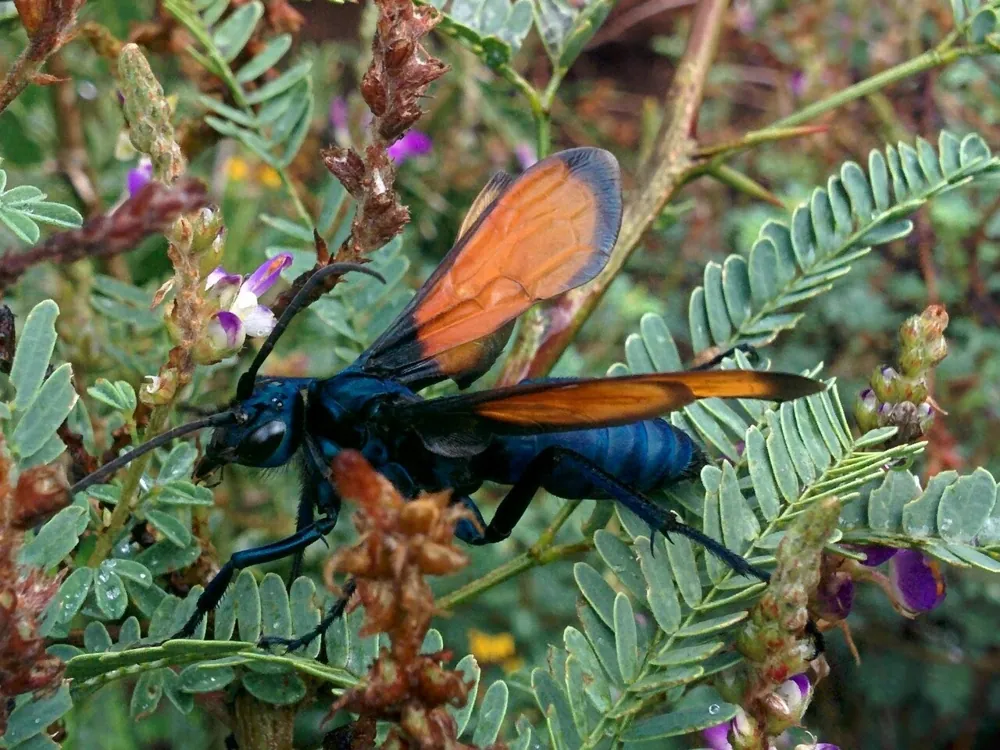
The tarantula hawk is a very large wasp that hunts tarantulas, which are big hairy spiders. It lives from the southern United States through Mexico and Central America to northern South America, and also on the Caribbean islands. Its sting is among the most painful of any insect.1

 No anndirto nde
- Black and orange colours, with several colour forms: an orange-winged form, a black-winged form, and in northern South America a form with a dark wing base, dark amber patches and a pale wing tip1
- Females are 30–51 mm long; males are 24–40 mm long1
- Jerky movements and a strong odour1
- Males have 12 antennal segments, which separates them from other Pepsis species, which have 131
Ina jiiɓindiree e: The black-winged form is hard to tell apart from Pepsis mexicana, but that species is always noticeably smaller. The robber fly Wyliea mydas copies the tarantula hawk's black body and bright orange wings, and makes stinging movements, but it cannot sting.1
Doole tooke
Tooke ina yalta e fiɗirgal.
Hol ko tooke mum (ŋatol walla fiɗol) waɗata?
Tarantula hawks produce large amounts of venom. A sting causes immediate, intense pain that is short-lived, and it is among the greatest pain recorded for any stinging insect. The venom itself is not very toxic, so its defence works almost entirely through pain.1
Hol no nde woni bone e yimɓe?
Bone e yimɓe: Ina muusaIna waawi muusude sanne, kono ɓadii abada wonaa bone mawɗo.Only females can sting. The sting is considered the second most painful of any insect sting, scoring 4.0 on the Schmidt sting pain index, compared with 4.0+ for the bullet ant.1
Hol ko nde waɗata si nde hulii?
Its black and orange colours, jerky behaviour and strong odour warn predators that it can sting.1
 Si nde fiɗii
- Ittu fiɗirgal nyaaku e ɗiwtude ngal, ɓuuɓnu nokku oo.
- Si neɗɗo oo ina tampa foofde, yeeso walla daande mum ina ɓutta, walla ina yiɗi waasude hakkille, ɗum ko musiiba allergy: noddu lamba ballal yaawngal, huutoro allura adrenaline mum (adrenaline pen) si o jogii.
Sahaa fof, noddu lamba ballal yaawngal (112, 000, 911) ko adii. Ɗum ko ballal arano kuuɓal, wonaa wasiyya doktaa. Aslu ballal arano
 Reen hoore maa
- Taa memu, taa nanngu, taa aaɓnu dabbaare ladde abada, hay pamaro, hay si ina wayi no ɗaanii walla maayii.
- Accu nde nokku. Si a fottii e gooto, deeƴu, ruttu caggal seeɗa seeɗa, accu nde yaha laawol mum.
- Si gooto e majji fiɗii ma: deeƴu, taa dillu, noddu lamba ballal yaawngal (112, 000, 911) walla yah asibiti law. Siftor no nde wayri, foto ina walla.
Nde ɗaɓɓaaki ma. Nde huutora tooke mum ngam nanngude ñaamdu walla reende hoore mum, nde ɓuri yiɗde suuɗaade. Ɓeydu anndude no reentorto
Hol to e aduna?
Hol no nde mawni?
Hol no nde juuti?
 ɓuri famɗude njuuteendi feɗeendu maa pamaru
 ina waawi diwde dow nokku fijo bal fof nder sakan 8,4
Hol no Tarantula hawk mawni, fottindaade e AAN?
Hiisa tan nder browser maa. Alaa ko mooftetee walla ko neletee.
Hol no nde yaawi?


Anndal
The female chooses the spider's size and sex for her eggs. Fertilised eggs go on large spiders and become females, and unfertilised eggs go on male spiders and become males.1
Roadrunners sometimes steal the tarantula from a wasp and leave the wasp unharmed. Others beat the wasp against the ground before eating it.1
The tarantula hawk is the state insect of New Mexico. Almost 10,000 schoolchildren voted for it, and it was made official by a law signed in 1989.1
Wasps of the genus Pepsis are important pollinators of milkweeds, which are poisonous to grazing livestock.1
Feññinoowo goonga
Fenaande: The tarantula hawk's sting is dangerous mainly because its venom is strongly poisonous.
Goonga: The venom itself is not very toxic. Its main defence is the intense pain of the sting.1
Ɗo anndal iwi
- Pepsis grossa (Wikipedia (CC BY-SA 4.0))
- Pepsis grossa (iNaturalist): inɗe e tolnugol.
- Venom Wiki: darja bone, mawnude woowaaɗo e miijo yaawre ko amen. Ndaar no min hiisirta ɗum: No min betiri bone.
Kala anndal e ngoo hello ina jogii limre hollirnde iwdi mum. Si min juumii, accu min, min yiɗɓe dabbaaji, wonaa jaridaa ganndal. Wiy min e [email protected] min feewnitay.
 Yaare nden ina heege! Venom Wiki ko golle neɗɗo gooto: meere, tawa tallaaji alaa, trackers alaa. Ballal pamarngal ina walla heddinde ɗum e internet.Ñaamnu yaare nden
Goɗɗi e fedde wootere: Nyaakuuje, zanzaro e zanzaro mawɓe
 Executioner waspNyaakuuje, zanzaro e zanzaro mawɓeIna haani doktaa
 Warrior waspNyaakuuje, zanzaro e zanzaro mawɓeIna haani doktaa
 Bald-faced hornetNyaakuuje, zanzaro e zanzaro mawɓeIna muusa tan
 Cow killer velvet antNyaakuuje, zanzaro e zanzaro mawɓeIna muusa tan
 Eastern cicada killerNyaakuuje, zanzaro e zanzaro mawɓeAlaa bone
 Armadillo waspNyaakuuje, zanzaro e zanzaro mawɓeIna haani doktaa
 Terciopelo
 Eastern coral snake
 Eastern diamondback rattlesnake
 Eyelash viper
 Timber rattlesnake
 Western diamondback rattlesnake
.jpg)