
 Afirik
 Asiya
Asiya Turai
Turai Amerik Worgo
 Australiya e Oseaniya
 Antarktika
 Baharu Pasifik
 Baharu Atlantik
 Baharu Indiya
 Baharu Arktik
 Baharu Mediterane
 Baharu Boɗeeru
 Baharu Karibiya
 Baharu Koral
 Baharu Ciina Worgo
 Baharu Filipin
 Baharu Andaman
 Baharu Rewo
 Baharu Timor e Arafura
 Baharu Bengal
 Baharu Kaliforniya
Wheel bug
 Ina ŋata
The wheel bug is a large assassin bug with a wheel-shaped crest on its back. It is the only wheel bug found in the United States, and it hunts caterpillars and beetles. Gardeners value it because it helps keep pests down.1
 No anndirto nde
- Adults are grey to brownish grey, and black shortly after moulting.1
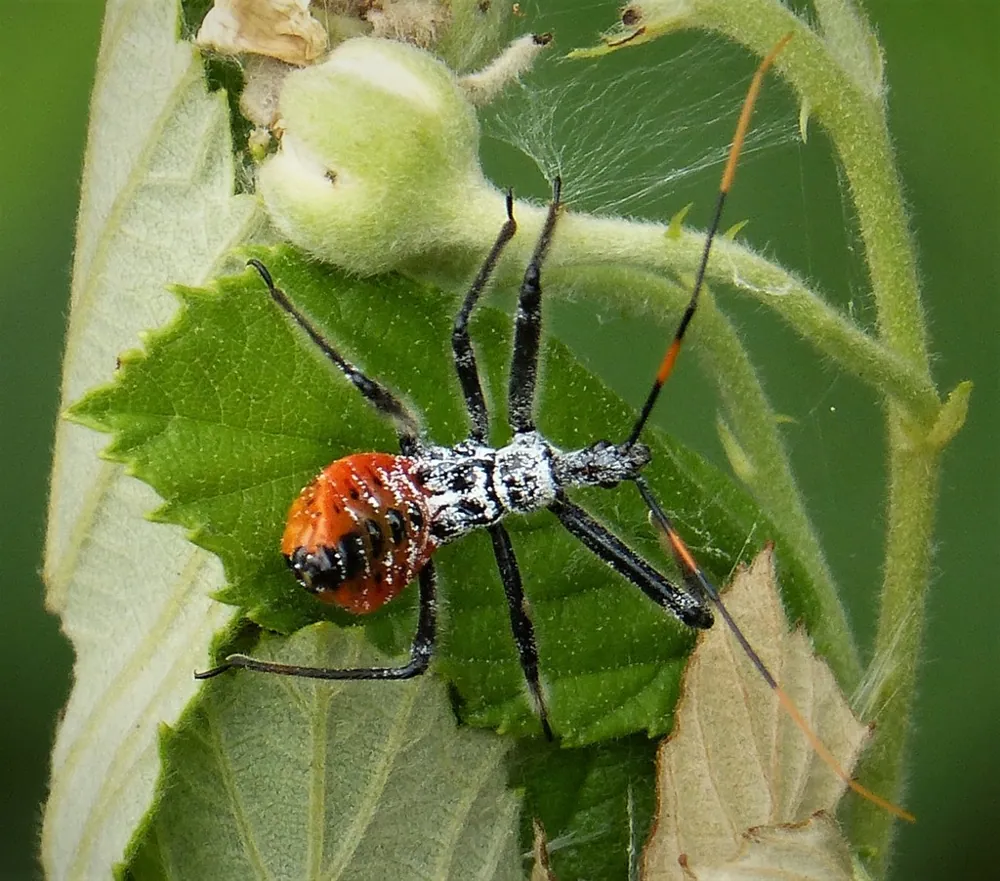
- Adults have a wheel-shaped or cog-shaped ridge on the back of the thorax. Young nymphs do not have this wheel yet.1
- Nymphs have a bright red or orange abdomen.1
- Adults can grow up to 38 mm long. Females are somewhat larger than males.1
- They move and fly slowly, and make a noisy buzzing sound in flight.1
Doole tooke
Tooke ina yalta e ñiiƴe mum si nde ŋatii.
Hol ko tooke mum (ŋatol walla fiɗol) waɗata?
The bug injects enzymes into its prey that paralyse it and dissolve its insides. Its bite is not considered highly venomous. In people, the bite causes a wound that is very painful and lingering, with the area becoming hot and irritated, and numbness that can last for days.1
Hol no nde woni bone e yimɓe?
Bone e yimɓe: Ina muusaIna waawi muusude sanne, kono ɓadii abada wonaa bone mawɗo.The bite is not considered highly venomous, so it is not serious in the short term. Discomfort may last for two weeks, and in some cases up to six months. Longer-lasting problems are often linked to allergic reactions or repeated infections of the wound.1
Hol ko nde waɗata si nde hulii?
When threatened, it relies on camouflage, its bite, or unpleasant odours from two scent glands in its abdomen.1
 Si nde ŋatii
- Ngam leeɓi gilɗi fiɗooji: ittu ɗi e selotef, refti lootu nguru. Taa momtu.
- Ngam ŋatol: lootu e ɓuuɓnu. Heɓu ballal doktaa si neɗɗo oo ɓanndu mum welaani walla ƴiiƴam ina yalta mo ko newi.
Sahaa fof, noddu lamba ballal yaawngal (112, 000, 911) ko adii. Ɗum ko ballal arano kuuɓal, wonaa wasiyya doktaa. Aslu ballal arano
 Reen hoore maa
- Taa memu, taa nanngu, taa aaɓnu dabbaare ladde abada, hay pamaro, hay si ina wayi no ɗaanii walla maayii.
- Accu nde nokku. Si a fottii e gooto, deeƴu, ruttu caggal seeɗa seeɗa, accu nde yaha laawol mum.
- Si gooto e majji ŋatii ma: deeƴu, taa dillu, noddu lamba ballal yaawngal (112, 000, 911) walla yah asibiti law. Siftor no nde wayri, foto ina walla.
Nde ɗaɓɓaaki ma. Nde huutora tooke mum ngam nanngude ñaamdu walla reende hoore mum, nde ɓuri yiɗde suuɗaade. Ɓeydu anndude no reentorto
Hol to e aduna?
Hol no nde mawni?
Hol no nde juuti?
 juuti ɓadii no kilip kaayit
Hol no Wheel bug mawni, fottindaade e AAN?
Hiisa tan nder browser maa. Alaa ko mooftetee walla ko neletee.
Hol no nde yaawi?


Anndal
It is cannibalistic. Nymphs may prey on each other, and a female may feed on the male after mating.1
It can make a sound by rubbing the tip of its beak in a groove under its thorax. The purpose is unknown, but it may be a way of communicating.1
Nymphs are predators as soon as they hatch, but the wheel only appears after the final moult into adulthood.1
It can prey on useful insects such as lady beetles and honey bees, as well as pests.1
It is one of the largest true bugs in North America.1
In a laboratory test, parasitic wasps attacked 10 of 12 egg clusters, stopping many eggs from hatching normally.1
Ngam ganduɓe tooke
- Innde ganndal
- Arilus cristatus
- Fedde
- Gilɗi leeɓi e dabbaaji pamari
- Besngu
- Reduviidae2
- Tolno
- Hemiptera
- Nahiyaaji
- Amerik Rewo
- Ɓikkoy
- After mating in autumn, a female lays 40 to 200 small, brown, cylindrical eggs in a glued cluster on trees, bushes, twigs and other objects. The eggs hatch the following spring.1
- Bone e yimɓe
- 2 / 5: Ina muusa3
Ɗo anndal iwi
- Arilus cristatus (Wikipedia (CC BY-SA 4.0))
- Arilus cristatus (iNaturalist): inɗe e tolnugol.
- Venom Wiki: darja bone, mawnude woowaaɗo e miijo yaawre ko amen. Ndaar no min hiisirta ɗum: No min betiri bone.
Kala anndal e ngoo hello ina jogii limre hollirnde iwdi mum. Si min juumii, accu min, min yiɗɓe dabbaaji, wonaa jaridaa ganndal. Wiy min e [email protected] min feewnitay.
 Yaare nden ina heege! Venom Wiki ko golle neɗɗo gooto: meere, tawa tallaaji alaa, trackers alaa. Ballal pamarngal ina walla heddinde ɗum e internet.Ñaamnu yaare nden
Goɗɗi e fedde wootere: Gilɗi leeɓi e dabbaaji pamari
 Giant water bugGilɗi leeɓi e dabbaaji pamariIna muusa tan
 Puss caterpillarGilɗi leeɓi e dabbaaji pamariIna muusa tanTaa memu
 Saddleback caterpillarGilɗi leeɓi e dabbaaji pamariIna muusa tanTaa memu
 Giant vinegaroonGilɗi leeɓi e dabbaaji pamariAlaa bone
 Rhodnius kissing bugGilɗi leeɓi e dabbaaji pamariIna haani doktaa
 Black-waved flannel mothGilɗi leeɓi e dabbaaji pamariIna muusa tanTaa memu
 Terciopelo
 Eastern coral snake
 Eastern diamondback rattlesnake
 Eyelash viper
 Timber rattlesnake
 Western diamondback rattlesnake