
 Afrik
Afrik Aazi
Aazi Orop
Orop Amerik Worgo
 Ostaraali e Oseyaani
 Antarktik
 Geec Pasifik
 Geec Atlantik
 Geec Enndo
 Geec Arktik
 Geec Mediteraane
 Geec Boɗeejo
 Geec Karayib
 Geec Korayl
 Geec Siin Worgo
 Geec Filipiin
 Geec Andaman
 Geec Rewo
 Geec Timor e Arafura
 Gulf Bengal
 Gulf Kaliforni
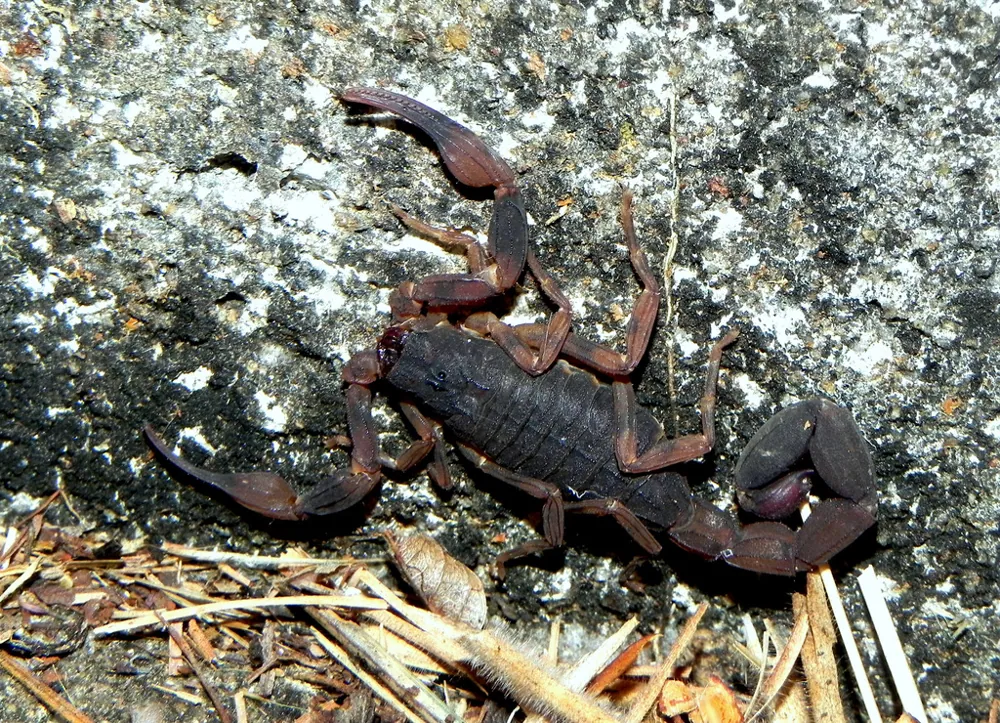
Brazilian brown scorpion
 Jukkugol
The Brazilian brown scorpion is a venomous scorpion found in South America. It lives mostly in Brazil, Argentina and Paraguay, and is very common in farming areas. It matters because it is one of the scorpions most often linked to stings in rural places.1


 No anndirte ngal
Doole tooke
Tooke ngal ina yaltira jukkirgal.
Hol ko tooke ŋatgol mum waɗata?
Its venom is neurotoxic, meaning it attacks the nerves. Symptoms include severe pain, swelling, sweating, lethargy, fast heart rate, pulmonary (lung) oedema, difficulty breathing, pancreatitis, nausea, vomiting and changes in blood pressure. The venom's LD50 is 0.5 mg/kg, a measure of how toxic it is to test animals.1
Hol no bone mum heewiri e yimɓe?
Bone e yimɓe: Ina tiiɗiJukkugol ina sokli doktoor. Maayde ina famɗi sanne.It is the main cause of scorpion sting cases in rural areas and is often ranked the second most toxic of its kind, behind only T. serrulatus.1
Hol ko ngal waɗata so ina hula?
It is not aggressive and avoids humans, but if threatened it will defend itself with its sting.1
 So ina jukka
- Ɓuuɓnu nokku jukkaaɗo oo e galaas, haɗ neɗɗo oo dillaade. Heɓ ballal cafrol law, ɓuri noon e sukaaɓe: yaare goɗɗe ina mbara sukaaɓe.
Adii fof noddu nimero urgence (112, 000, 911). Ɗum ko anndinal ballal adiingal, wonaa saaraangal doktoor. Ko adii e ballal adiingal
 Reen hoore maa
- Wota a meem, wota a nanngu, wota a ñiŋŋu kullal ladde haa abada, hay so ngal ina famɗi, hay so ina nanndi e ɗaaniingal walla maayngal.
- Accu ngal nokku. So a fotti e ngal, deƴƴu, ruttu ɓaawo seeɗa seeɗa, accu ngal yaha laawol mum.
- So gooto jukkii ma: deƴƴu, wota a dillu, noddu nimero urgence (112, 000, 911) walla yahu opitaal law. Jogo e hakkille no ngal nanndi, natal ina walla.
Ngal faalaaka gaañde ma. Ina huutoroo tooke mum ngam nanngude ñaamdu walla reenaade, ina ɓuri yiɗde suuɗaade. Ɓeydu anndude no reentortoo
Hol to e aduna?
Hol no mawniri?
Hol no juutiri?
 juutde no kaaɗe mahirɗe 2 ɗaɓɓondiraaɗe
 ina waawi taƴde 100 meeteer e segonde 260 (neɗɗo ɓurɗo yaawde ina sokli 9,6)
Hol no Brazilian brown scorpion mawniri, so fooɗondiraama e AN?
Limgal tan e navigatoor maa. Alaa ko danndetee walla ko neldetee.
Hol no yaawiri?


Humpito
It is often called the second most toxic scorpion of its kind, after T. serrulatus.1
Females can give birth to as many as 25 young in one litter.1
It is common in farmland, which is why it causes many stings in rural areas.1
The most common toxin in its venom is Tb1, which makes up about 10% of the soluble venom.1
Ngam ganduɓe tooke
Ɗo humpito iwri
- Tityus bahiensis (Wikipedia (CC BY-SA 4.0))
- Tityus bahiensis (iNaturalist): inɗe e ceergal.
- Venom Wiki: tolno bone, mawnude heewnde e miijo yaawde ko amen. Yiy no men keɓirta ɗum: No men tolnirta bone.
Kala humpito e ngoo hello ina jogii limoore hollirnde iwdi mum. So men juumii, yaafo, men ko yiɗɓe kulle, wonaa jaaynde ganndal. Wiy men e [email protected], men feewnita.
 Yaare nden ina weelaa! Venom Wiki ko golle neɗɗo gooto: yoɓetaake, alaa ko jeeyetee, alaa rewɓe. Ndokkal seeɗa ina walla ngam heddude e enternet.Ñaam yaare nden
 Brazilian yellow scorpion
 Amazonian black scorpion
 Caracas scorpion
 Panamanian black scorpion
 Zulia scorpion
 Amazon forest scorpion
 Faaɓru tooke kaŋŋe
 Terciopelo
 Brazilian wandering spider
 Eyelash viper
 Golden lancehead
 South American bushmaster