
 Afrik
Afrik Aazi
Aazi Orop
Orop Amerik Worgo
 Ostaraali e Oseyaani
 Antarktik
 Geec Pasifik
 Geec Atlantik
 Geec Enndo
 Geec Arktik
 Geec Mediteraane
 Geec Boɗeejo
 Geec Karayib
 Geec Korayl
 Geec Siin Worgo
 Geec Filipiin
 Geec Andaman
 Geec Rewo
 Geec Timor e Arafura
 Gulf Bengal
 Gulf Kaliforni
Terciopelo
 Ŋatgol
The terciopelo is a large pit viper, one of the biggest vipers in the world. It lives from north-east Mexico through Central America to northern South America. It is important to know because it causes more envenomated snakebites than any other snake in its range.1



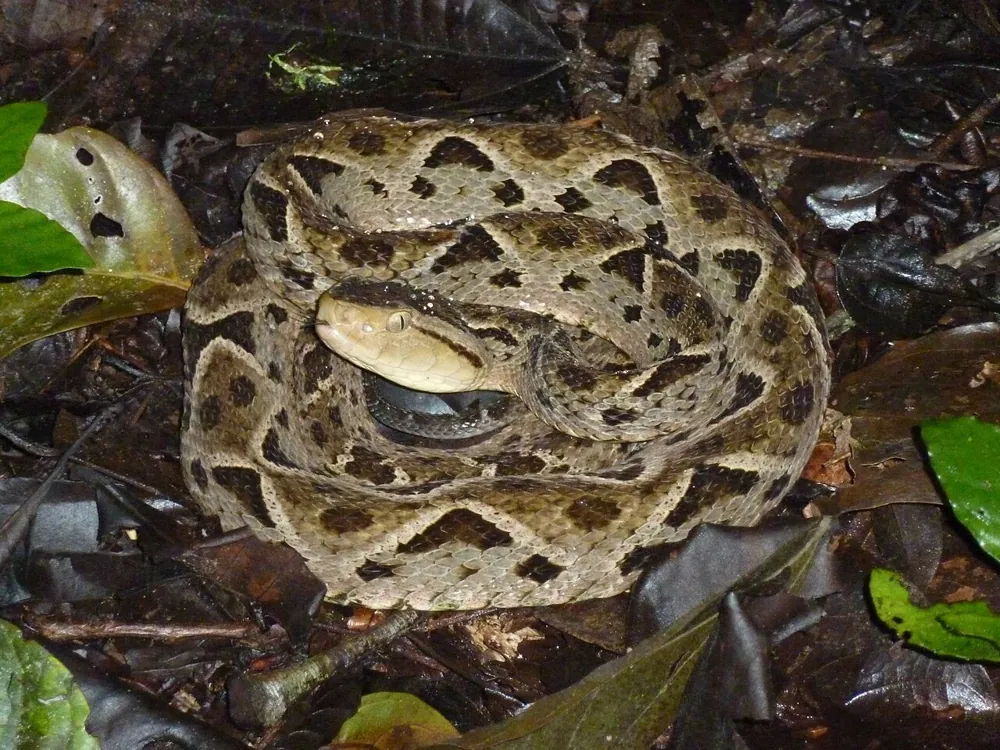
 No anndirte ngal
- Broad, flattened head that is clearly set apart from the neck1
- Light to dark brown, olive, grey or nearly black body1
- Often a yellowish zig-zag line on each side of the body1
- Dark triangles with pale edges along the sides of the body1
- Pale yellow, cream or whitish grey underside with dark blotches1
Ina heewi waylondireede e: Bothrops atrox is similar in colour, but it usually has yellow or rust-like tones and rectangular or trapezoidal blotches. The terciopelo is often more uniformly brown or grey, with the zig-zag pattern on its sides.1
Doole tooke
Tooke ngal ina yaltira ñiiƴe mum so ina ŋata.
Hol no bone mum heewiri e yimɓe?
Bone e yimɓe: BareejoWootere e kulle ɓurɗe bone e aduna.It is considered one of the most dangerous snakes in its range because it is large, has big fangs and a potent venom, and lives close to people. It is responsible for the most envenomated snakebites within its range. Bites usually happen only when the snake is cornered, pursued or threatened.1
Hol ko ngal waɗata so ina hula?
When cornered or threatened, it may perform an S-shaped coiled display and can be very defensive, sometimes suddenly reversing direction to attack.1
 So ina ŋata
- Haɗ neɗɗo oo dillaade, deƴƴin mo, jogo terɗe ŋataaɗe ɗee e toownde ɓernde, ittu jabbe e kala ko tiiɗi, yahra mo opitaal law.
Adii fof noddu nimero urgence (112, 000, 911). Ɗum ko anndinal ballal adiingal, wonaa saaraangal doktoor. Ko adii e ballal adiingal
 Reen hoore maa
- Wota a meem, wota a nanngu, wota a ñiŋŋu kullal ladde haa abada, hay so ngal ina famɗi, hay so ina nanndi e ɗaaniingal walla maayngal.
- Accu ngal nokku. So a fotti e ngal, deƴƴu, ruttu ɓaawo seeɗa seeɗa, accu ngal yaha laawol mum.
- So gooto ŋatii ma: deƴƴu, wota a dillu, noddu nimero urgence (112, 000, 911) walla yahu opitaal law. Jogo e hakkille no ngal nanndi, natal ina walla.
Ngal faalaaka gaañde ma. Ina huutoroo tooke mum ngam nanngude ñaamdu walla reenaade, ina ɓuri yiɗde suuɗaade. Ɓeydu anndude no reentortoo
Hol to e aduna?
Hol no mawniri?
Hol no juutiri?
Hol no teddiri?
 juutde no dawaaɗi 2,5, hinere haa lawol
 juutde no banaanaaji 14 sammondiraaɗi
 hedde teddude no ullundu galle
 ina waawi taƴde 100 meeteer e segonde 86 (neɗɗo ɓurɗo yaawde ina sokli 9,6)
Hol no Terciopelo mawniri, so fooɗondiraama e AN?
Limgal tan e navigatoor maa. Alaa ko danndetee walla ko neldetee.
Hol no yaawiri?


Humpito
Juveniles can lure prey by waving brightly coloured tail tips. Only males have bright tail tips, though both sexes show this behaviour.1
It is one of the largest vipers in the world, and it is often called 'the ultimate pit-viper' by herpetologists.1
Females are much bigger than males. The two sexes are born the same size, but females grow much faster from about 7 to 12 months of age.1
Its home range is small for a pit viper, averaging between about 3.7 and 6 hectares.1
Feññinoowo fenaande
Fenaande: Fer-de-lance is the name of one single snake species.
Goonga: The name fer-de-lance has been used informally for several Bothrops species, including this one. Herpetologists now prefer the name terciopelo for Bothrops asper.1
Ɗo humpito iwri
- Bothrops asper (Wikipedia (CC BY-SA 4.0))
- Bothrops asper (iNaturalist): inɗe e ceergal.
- Venom Wiki: tolno bone, mawnude heewnde e miijo yaawde ko amen. Yiy no men keɓirta ɗum: No men tolnirta bone.
Kala humpito e ngoo hello ina jogii limoore hollirnde iwdi mum. So men juumii, yaafo, men ko yiɗɓe kulle, wonaa jaaynde ganndal. Wiy men e [email protected], men feewnita.
 Yaare nden ina weelaa! Venom Wiki ko golle neɗɗo gooto: yoɓetaake, alaa ko jeeyetee, alaa rewɓe. Ndokkal seeɗa ina walla ngam heddude e enternet.Ñaam yaare nden
 Eyelash viper
 Golden lancehead
 South American bushmaster
 Cottonmouth
 Eastern copperhead
 Common lancehead
 Eastern coral snake
 Eastern diamondback rattlesnake
 Timber rattlesnake
 Western diamondback rattlesnake
 Arizona bark scorpion
 Brown recluse