
 Afrik
Afrik Aazi
Aazi Orop
Orop Amerik Worgo
 Ostaraali e Oseyaani
 Antarktik
 Geec Pasifik
 Geec Atlantik
 Geec Enndo
 Geec Arktik
 Geec Mediteraane
 Geec Boɗeejo
 Geec Karayib
 Geec Korayl
 Geec Siin Worgo
 Geec Filipiin
 Geec Andaman
 Geec Rewo
 Geec Timor e Arafura
 Gulf Bengal
 Gulf Kaliforni
Brown centipede
 Ŋatgol
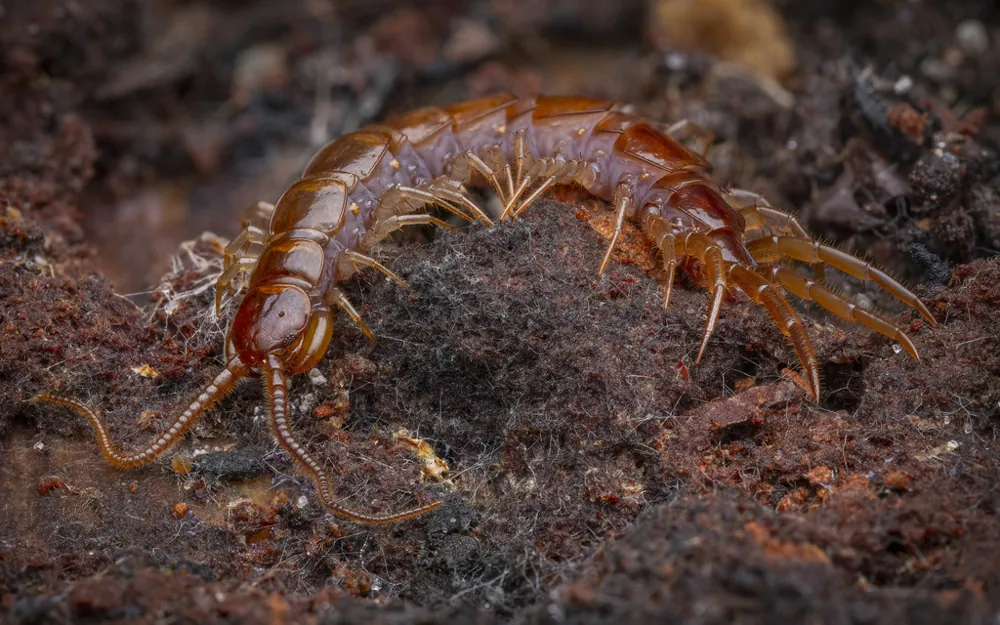
The brown centipede is a small, common centipede with a chestnut brown body. It lives in the upper layers of soil, under rocks and rotting logs, across Europe, North America and the Hawaiian Islands. It is venomous, but its bite is not dangerous to people.1



 No anndirte ngal
- Chestnut brown body1
- Adults are 18 to 30 mm long and up to 4 mm wide1
- Legs have no stripes1
- Runs extremely quickly for cover when uncovered1
Ina heewi waylondireede e: It is similar to several other European centipedes, especially the striped centipede (Lithobius variegatus). The brown centipede does not have stripes on its legs.1
Doole tooke
Tooke ngal ina yaltira ñiiƴe mum so ina ŋata.
Hol ko tooke ŋatgol mum waɗata?
Its venom is used to overpower prey such as insects and spiders. In people, a bite causes at most brief, localised pain.1
Hol no bone mum heewiri e yimɓe?
Bone e yimɓe: HoyɗoNo jukkugol ñaaki walla ko ɓuri famɗude. Ko ɓuri heewde alaa bone e yimɓe.It is considered harmless to humans. Its small size means it rarely breaks the skin.1
Hol ko ngal waɗata so ina hula?
When uncovered, it runs away extremely quickly to find cover.1
 So ina ŋata
- Loot nokku ŋataaɗo oo, ɓuuɓnu mo walla naatnu mo e ndiyam guleeɗam seeɗa ngam muusu ngu, heɓ ballal cafrol so ɗum ɓurii bonde.
Adii fof noddu nimero urgence (112, 000, 911). Ɗum ko anndinal ballal adiingal, wonaa saaraangal doktoor. Ko adii e ballal adiingal
 Reen hoore maa
- Wota a meem, wota a nanngu, wota a ñiŋŋu kullal ladde haa abada, hay so ngal ina famɗi, hay so ina nanndi e ɗaaniingal walla maayngal.
- Accu ngal nokku. So a fotti e ngal, deƴƴu, ruttu ɓaawo seeɗa seeɗa, accu ngal yaha laawol mum.
- So gooto ŋatii ma: deƴƴu, wota a dillu, noddu nimero urgence (112, 000, 911) walla yahu opitaal law. Jogo e hakkille no ngal nanndi, natal ina walla.
Ngal faalaaka gaañde ma. Ina huutoroo tooke mum ngam nanngude ñaamdu walla reenaade, ina ɓuri yiɗde suuɗaade. Ɓeydu anndude no reentortoo
Hol to e aduna?
Hol no mawniri?
Hol no juutiri?
 hedde juutde no ñippirde kaayitaaje
Hol no Brown centipede mawniri, so fooɗondiraama e AN?
Limgal tan e navigatoor maa. Alaa ko danndetee walla ko neldetee.
Hol no yaawiri?


Humpito
Feññinoowo fenaande
Fenaande: Any centipede with venom is dangerous to people.
Goonga: Although it has venom, this centipede is considered harmless to humans. Its small size means it rarely breaks the skin, and bites cause at most brief, localised pain.1
Ngam ganduɓe tooke
- Innde ganndal
- Lithobius forficatus
- Fedde
- Bukka-koyɗe
- Ɓesngu
- Lithobiidae2
- Ordre
- Lithobiomorpha
- Leyɗe mawɗe
- Orop
- Ɓiɓɓe tokooso
- It hatches from an egg with seven pairs of legs. It gains body segments and a new pair of legs each time it moults, up to a maximum of 15 pairs in adults.1
- Juuteendi nguurndam
- hedde duuɓi 61
- Bone e yimɓe
- 1 / 5: Hoyɗo3
Ɗo humpito iwri
- Lithobius forficatus (Wikipedia (CC BY-SA 4.0))
- Lithobius forficatus (iNaturalist): inɗe e ceergal.
- Venom Wiki: tolno bone, mawnude heewnde e miijo yaawde ko amen. Yiy no men keɓirta ɗum: No men tolnirta bone.
Kala humpito e ngoo hello ina jogii limoore hollirnde iwdi mum. So men juumii, yaafo, men ko yiɗɓe kulle, wonaa jaaynde ganndal. Wiy men e [email protected], men feewnita.
 Yaare nden ina weelaa! Venom Wiki ko golle neɗɗo gooto: yoɓetaake, alaa ko jeeyetee, alaa rewɓe. Ndokkal seeɗa ina walla ngam heddude e enternet.Ñaam yaare nden
Goɗɗe e nder fedde wootere: Bukka-koyɗe
 Mediterranean banded centipedeBukka-koyɗeIna muusi tan
 House centipedeBukka-koyɗeAlaa bone
 Western Mediterranean centipedeBukka-koyɗeIna muusi tan
 Peruvian giant centipedeBukka-koyɗeIna sokli doktoor
 Chinese red-headed centipedeBukka-koyɗeIna sokli doktoor
 Giant Australian centipedeBukka-koyɗeIna muusi tan
Ina wuuri kadi e: Orop
 Common European adderƁoɗɗi wipeerIna sokli doktoor
 Spanish flyKulle goɗɗe jogiiɗe tooke ɓannduIna sokli doktoorWota a meem
 Common waspÑaaki, ɗuggi e ɗuggi mawɗiIna muusi tan
 European hornetÑaaki, ɗuggi e ɗuggi mawɗiIna muusi tan
 Fire salamanderÑaari tooke, ñaari e newtsIna muusi tanWota a meem
 Western honey beeÑaaki, ɗuggi e ɗuggi mawɗiIna muusi tan