
 Afrik
Afrik Aazi
Aazi Orop
Orop Amerik Worgo
 Ostaraali e Oseyaani
 Antarktik
 Geec Pasifik
 Geec Atlantik
 Geec Enndo
 Geec Arktik
 Geec Mediteraane
 Geec Boɗeejo
 Geec Karayib
 Geec Korayl
 Geec Siin Worgo
 Geec Filipiin
 Geec Andaman
 Geec Rewo
 Geec Timor e Arafura
 Gulf Bengal
 Gulf Kaliforni
Deathstalker
 Jukkugol
The deathstalker is a yellow scorpion that lives in deserts and scrubland from North Africa across the Middle East to Central Asia. It is one of the most dangerous scorpions in the world, and its venom is being studied as a possible way to help treat brain tumours.1
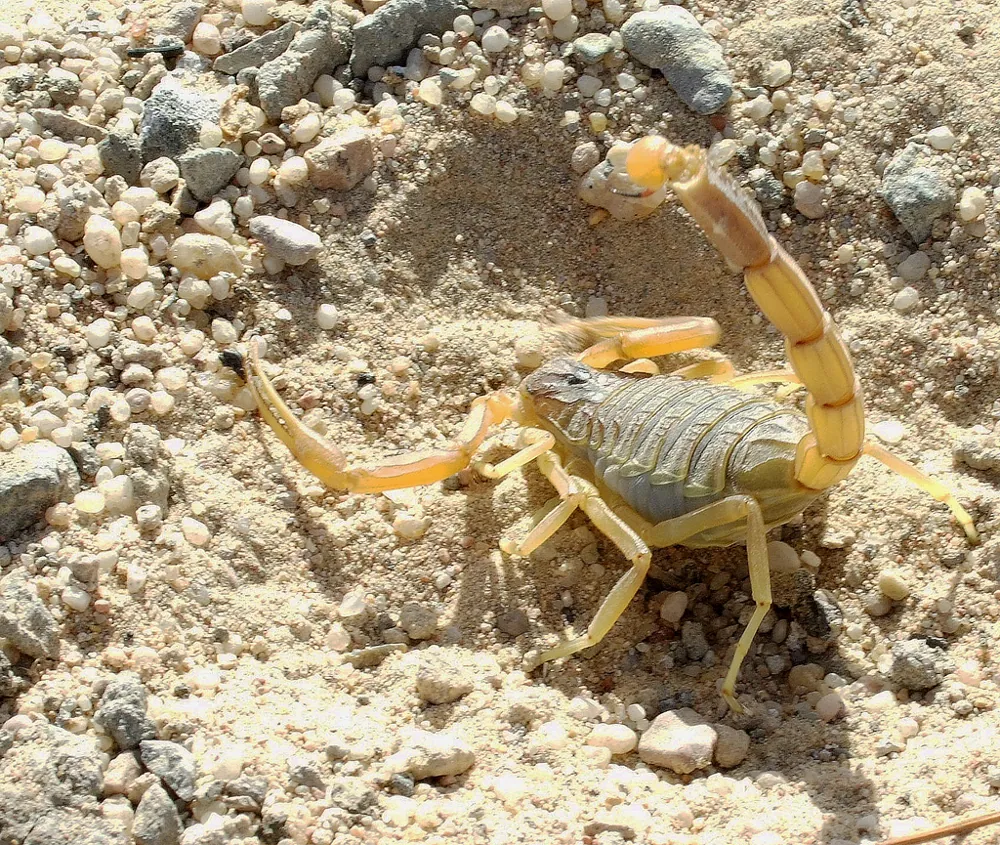
 No anndirte ngal
Doole tooke
Tooke ngal ina yaltira jukkirgal.
Hol ko tooke ŋatgol mum waɗata?
The venom is a powerful mixture of neurotoxins, which attack the nerves. Its named components include chlorotoxin, charybdotoxin, scyllatoxin and agitoxins. A sting is extraordinarily painful. There is also a high rate of pancreatitis (inflammation of the pancreas) after envenomation, and any sting carries a risk of anaphylaxis, a severe allergic reaction.1
Hol no bone mum heewiri e yimɓe?
Bone e yimɓe: BareejoWootere e kulle ɓurɗe bone e aduna.The deathstalker is one of the most dangerous scorpion species. Its venom has a low lethal dose, but a sting normally would not kill a healthy adult. Young children, elderly people and those who are infirm, such as people with heart conditions or allergies, are at much greater risk. If a sting proves deadly, the usual cause of death is pulmonary edema, which is fluid build-up in the lungs.1
 Kabaaru moƴƴo: doktooruuji ina njogii lekki (sérum antivenimeux) walla safaara ngam ɗum.1
 So ina jukka
- Envenomation is considered a medical emergency, even with treatment. Antivenom exists, but the venom is unusually resistant to treatment and typically needs large doses. Medical help should be sought urgently.1
- Ɓuuɓnu nokku jukkaaɗo oo e galaas, haɗ neɗɗo oo dillaade. Heɓ ballal cafrol law, ɓuri noon e sukaaɓe: yaare goɗɗe ina mbara sukaaɓe.
Adii fof noddu nimero urgence (112, 000, 911). Ɗum ko anndinal ballal adiingal, wonaa saaraangal doktoor. Ko adii e ballal adiingal
 Reen hoore maa
- Wota a meem, wota a nanngu, wota a ñiŋŋu kullal ladde haa abada, hay so ngal ina famɗi, hay so ina nanndi e ɗaaniingal walla maayngal.
- Accu ngal nokku. So a fotti e ngal, deƴƴu, ruttu ɓaawo seeɗa seeɗa, accu ngal yaha laawol mum.
- So gooto jukkii ma: deƴƴu, wota a dillu, noddu nimero urgence (112, 000, 911) walla yahu opitaal law. Jogo e hakkille no ngal nanndi, natal ina walla.
Ngal faalaaka gaañde ma. Ina huutoroo tooke mum ngam nanngude ñaamdu walla reenaade, ina ɓuri yiɗde suuɗaade. Ɓeydu anndude no reentortoo
Hol to e aduna?
Hol no mawniri?
Hol no juutiri?
 juutde no kaaɗe mahirɗe 2,5 ɗaɓɓondiraaɗe
 ina waawi taƴde 100 meeteer e segonde 210 (neɗɗo ɓurɗo yaawde ina sokli 9,6)
Hol no Deathstalker mawniri, so fooɗondiraama e AN?
Limgal tan e navigatoor maa. Alaa ko danndetee walla ko neldetee.
Hol no yaawiri?


Humpito
Its venom contains chlorotoxin, a peptide that has shown potential for treating human brain tumours.1
In preclinical animal trials, the paint could highlight clusters of as few as 200 cancer cells, while the lower limit for standard MRI was above 500,000.1
In 2015, clinical trials began on chlorotoxin with a fluorescent molecule attached, used as a brain tumour "paint" to mark cancer cells during surgery.1
There is some evidence that other venom components may help regulate insulin and could be used to treat diabetes.1
Feññinoowo fenaande
Fenaande: A deathstalker sting always kills.
Goonga: A sting normally would not kill a healthy adult, but young children, the elderly and people with certain health conditions are at much greater risk.1
Ɗo humpito iwri
- Deathstalker (Wikipedia (CC BY-SA 4.0))
- Leiurus quinquestriatus (iNaturalist): inɗe e ceergal.
- Venom Wiki: tolno bone, mawnude heewnde e miijo yaawde ko amen. Yiy no men keɓirta ɗum: No men tolnirta bone.
Kala humpito e ngoo hello ina jogii limoore hollirnde iwdi mum. So men juumii, yaafo, men ko yiɗɓe kulle, wonaa jaaynde ganndal. Wiy men e [email protected], men feewnita.
 Yaare nden ina weelaa! Venom Wiki ko golle neɗɗo gooto: yoɓetaake, alaa ko jeeyetee, alaa rewɓe. Ndokkal seeɗa ina walla ngam heddude e enternet.Ñaam yaare nden
 Fat-tailed scorpion
 Emperor scorpion
 Indian red scorpion
 Arabian fat-tailed scorpion
 Transvaal thick-tailed scorpion
 Chinese scorpion
 Black mamba
 Egyptian cobra
 Mbaa-ndiyam (Puff adder)
 Boomslang
 Gaboon viper
 Western honey bee