
 Afrik
Afrik Aazi
Aazi Orop
Orop Amerik Worgo
 Ostaraali e Oseyaani
 Antarktik
 Geec Pasifik
 Geec Atlantik
 Geec Enndo
 Geec Arktik
 Geec Mediteraane
 Geec Boɗeejo
 Geec Karayib
 Geec Korayl
 Geec Siin Worgo
 Geec Filipiin
 Geec Andaman
 Geec Rewo
 Geec Timor e Arafura
 Gulf Bengal
 Gulf Kaliforni
Giant house spider
 Ŋatgol
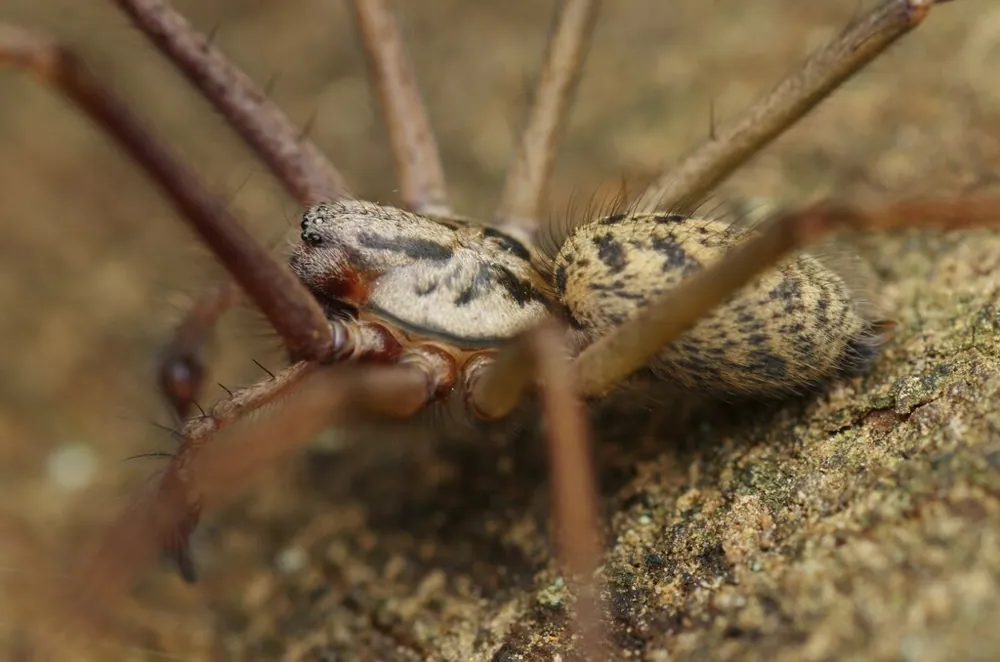
The giant house spider is a large, brown spider that often lives indoors, especially in Europe, where it is native. It is also found in parts of North America, where it was introduced. Its bite is not considered dangerous to people or pets.1
 No anndirte ngal
- Mainly dark-brown body, in earthy tones of brown and muddy-red or yellow.1
- A lighter arrow-shaped marking on the front part of the body (the sternum), with three light spots on each side.1
- A lighter middle line on the abdomen, with six light spots on each side.1
- Conspicuously hairy legs, palps and abdomen.1
- Females reach up to 18.5 mm in body length. Males are slightly smaller, at around 12 to 15 mm. Males have larger palps and a slimmer abdomen than females.1
Ina heewi waylondireede e: The giant house spider has the same colouring as the domestic house spider, Tegenaria domestica. The two closest relatives, E. duellica and E. saeva, look the same as E. atrica. The three species can only be separated by microscopic measurements of the body parts.1
Doole tooke
Tooke ngal ina yaltira ñiiƴe mum so ina ŋata.
Hol no bone mum heewiri e yimɓe?
Bone e yimɓe: HoyɗoNo jukkugol ñaaki walla ko ɓuri famɗude. Ko ɓuri heewde alaa bone e yimɓe.Bites are not considered dangerous to humans or pets.1
 So ina ŋata
- Loot nokku ŋataaɗo oo, waɗ galaas e mum ngam muusu ngu. Heɓ ballal cafrol so muusu ngu ina tiiɗi, ina saakoo walla neɗɗo oo ina wiya wonaa e jam.
Adii fof noddu nimero urgence (112, 000, 911). Ɗum ko anndinal ballal adiingal, wonaa saaraangal doktoor. Ko adii e ballal adiingal
 Reen hoore maa
- Wota a meem, wota a nanngu, wota a ñiŋŋu kullal ladde haa abada, hay so ngal ina famɗi, hay so ina nanndi e ɗaaniingal walla maayngal.
- Accu ngal nokku. So a fotti e ngal, deƴƴu, ruttu ɓaawo seeɗa seeɗa, accu ngal yaha laawol mum.
- So gooto ŋatii ma: deƴƴu, wota a dillu, noddu nimero urgence (112, 000, 911) walla yahu opitaal law. Jogo e hakkille no ngal nanndi, natal ina walla.
Ngal faalaaka gaañde ma. Ina huutoroo tooke mum ngam nanngude ñaamdu walla reenaade, ina ɓuri yiɗde suuɗaade. Ɓeydu anndude no reentortoo
Hol to e aduna?
Hol no mawniri?
Hol no juutiri?
 ɓuri hondu maa tokooso rabbaɗde
 ina waawi taƴde 100 meeteer e segonde 190 (neɗɗo ɓurɗo yaawde ina sokli 9,6)
Hol no Giant house spider mawniri, so fooɗondiraama e AN?
Limgal tan e navigatoor maa. Alaa ko danndetee walla ko neldetee.
Hol no yaawiri?


Humpito
The eyes are all the same size and sit in two rows. They contain few visual cells, so the spider can probably only tell light from dark.1
Until 2018, the giant house spider was treated as one species. Research then showed three separate species, which can only be told apart under a microscope.1
Males wander while searching for females during mating season, which runs from late summer into autumn. This is when they are most often noticed.1
Males have no Y chromosome. Males carry X1 and X2, and females carry two pairs of X chromosomes. This form of sex determination is the most common in spiders and is probably the ancestral form.1
Ɗo humpito iwri
- Eratigena atrica (Wikipedia (CC BY-SA 4.0))
- Eratigena atrica (iNaturalist): inɗe e ceergal.
- Venom Wiki: tolno bone, mawnude heewnde e miijo yaawde ko amen. Yiy no men keɓirta ɗum: No men tolnirta bone.
Kala humpito e ngoo hello ina jogii limoore hollirnde iwdi mum. So men juumii, yaafo, men ko yiɗɓe kulle, wonaa jaaynde ganndal. Wiy men e [email protected], men feewnita.
 Yaare nden ina weelaa! Venom Wiki ko golle neɗɗo gooto: yoɓetaake, alaa ko jeeyetee, alaa rewɓe. Ndokkal seeɗa ina walla ngam heddude e enternet.Ñaam yaare nden
Goɗɗe e nder fedde wootere: Araañeeji
 Mediterranean black widow
 Diving bell spider
 European yellow sac spider
 Noble false widow
 Tarantula wolf spider
 Daddy long-legs spider
Ina wuuri kadi e: Orop
 Common European adderƁoɗɗi wipeerIna sokli doktoor
 Spanish flyKulle goɗɗe jogiiɗe tooke ɓannduIna sokli doktoorWota a meem
 Common waspÑaaki, ɗuggi e ɗuggi mawɗiIna muusi tan
 European hornetÑaaki, ɗuggi e ɗuggi mawɗiIna muusi tan
 Fire salamanderÑaari tooke, ñaari e newtsIna muusi tanWota a meem
 Western honey beeÑaaki, ɗuggi e ɗuggi mawɗiIna muusi tan