
 Afrik
Afrik Aazi
Aazi Orop
Orop Amerik Worgo
 Ostaraali e Oseyaani
 Antarktik
 Geec Pasifik
 Geec Atlantik
 Geec Enndo
 Geec Arktik
 Geec Mediteraane
 Geec Boɗeejo
 Geec Karayib
 Geec Korayl
 Geec Siin Worgo
 Geec Filipiin
 Geec Andaman
 Geec Rewo
 Geec Timor e Arafura
 Gulf Bengal
 Gulf Kaliforni
Eastern diamondback rattlesnake
 Ŋatgol
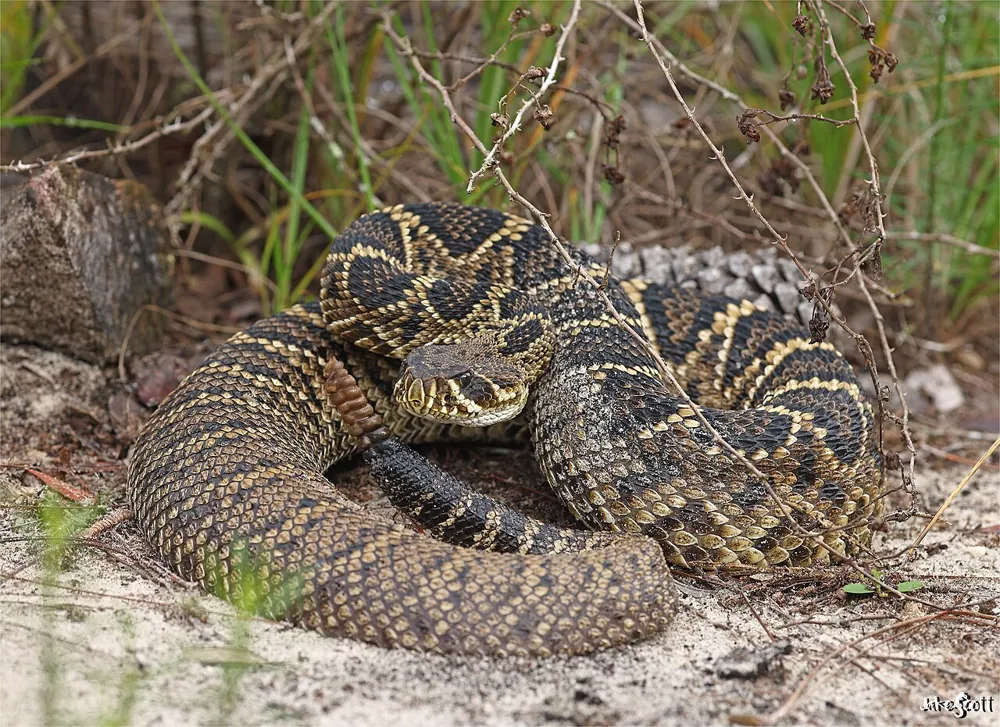
The eastern diamondback rattlesnake is a pit viper that lives in the southeastern United States. It is the largest rattlesnake species and one of the heaviest venomous snakes in the Americas. Its diamond-patterned back and loud rattle make it easy to recognise, and it is widely regarded as one of the most dangerous venomous snakes in North America.1



 No anndirte ngal
- Dark brown to black diamond-shaped blotches on a brownish, grey or olive background, each outlined with cream or yellowish scales1
- A dark stripe runs from behind each eye to the mouth corner, edged above and below by white or yellow stripes1
- A rattle of hollow segments at the tail tip, which break off and are replaced when the snake sheds1
- Five to ten bands around the tail, below the diamond pattern1
- A large, heavy body, with adults often around 1.1 to 1.7 m long1
Doole tooke
Tooke ngal ina yaltira ñiiƴe mum so ina ŋata.
Hol ko tooke ŋatgol mum waɗata?
Its venom contains more than 100 different toxins, and about 40 have been identified, making it one of the most studied snake venoms. The venom contains a thrombin-like enzyme called crotalase, which clots fibrinogen, a protein needed for blood clotting. The estimated human lethal dose is 100 to 150 mg.1
Hol no bone mum heewiri e yimɓe?
Bone e yimɓe: Bone sanneIna waawi warde neɗɗo mo safraaka.It has a reputation as the most dangerous venomous snake in North America. It is not usually aggressive, but it is large and powerful. Reported mortality from untreated bites is 10 to 20% in some studies and 30% in another, and it is a major cause of fatal snakebites within its range.1
Hol ko ngal waɗata so ina hula?
When threatened, it raises the front half of its body in an S-shaped coil, rattles loudly, and can strike to at least a third of its body length.1
 So ina ŋata
- Haɗ neɗɗo oo dillaade, deƴƴin mo, jogo terɗe ŋataaɗe ɗee e toownde ɓernde, ittu jabbe e kala ko tiiɗi, yahra mo opitaal law.
Adii fof noddu nimero urgence (112, 000, 911). Ɗum ko anndinal ballal adiingal, wonaa saaraangal doktoor. Ko adii e ballal adiingal
 Reen hoore maa
- Wota a meem, wota a nanngu, wota a ñiŋŋu kullal ladde haa abada, hay so ngal ina famɗi, hay so ina nanndi e ɗaaniingal walla maayngal.
- Accu ngal nokku. So a fotti e ngal, deƴƴu, ruttu ɓaawo seeɗa seeɗa, accu ngal yaha laawol mum.
- So gooto ŋatii ma: deƴƴu, wota a dillu, noddu nimero urgence (112, 000, 911) walla yahu opitaal law. Jogo e hakkille no ngal nanndi, natal ina walla.
Ngal faalaaka gaañde ma. Ina huutoroo tooke mum ngam nanngude ñaamdu walla reenaade, ina ɓuri yiɗde suuɗaade. Ɓeydu anndude no reentortoo
Hol to e aduna?
Hol no mawniri?
Hol no juutiri?
Hol no teddiri?
 juutde no ulluuɗi galle 5, hinere haa lawol
 juutde no banaanaaji 13 sammondiraaɗi
 ina waawi taƴde 100 meeteer e segonde 86 (neɗɗo ɓurɗo yaawde ina sokli 9,6)
Hol no Eastern diamondback rattlesnake mawniri, so fooɗondiraama e AN?
Limgal tan e navigatoor maa. Alaa ko danndetee walla ko neldetee.
Hol no yaawiri?


Humpito
It is the largest rattlesnake species. One specimen shot in 1946 measured 2.4 m and weighed 15.4 kg.1
In proportion to its length, it has the longest fangs of any rattlesnake, with fangs of over 25 mm expected in a 2.4 m adult.1
It can strike its prey within a tenth of a second.1
It can swim well and has been seen crossing water sometimes miles from land.1
Although mainly ground-dwelling, it has been spotted up to 10 m above the ground in bushes and trees.1
Males are usually larger than females, which is a rare pattern called reverse sexual size dimorphism.1
Feññinoowo fenaande
Fenaande: The eastern diamondback must rattle before it strikes.
Goonga: It can strike while completely silent. Some individuals stay quiet even when approached closely.1
Ngam ganduɓe tooke
- Innde ganndal
- Crotalus adamanteus
- Fedde
- Ɓoɗɗi wulloori
- Ɓesngu
- Viperidae2
- Ordre
- Squamata
- Leyɗe mawɗe
- Amerik Rewo
- Ɓiɓɓe tokooso
- It gives birth to live young, between 4 and 28 at a time, usually from July to early October. The newborns are 30 to 36 cm long and look like adults, except they have a small button instead of a rattle.1
- Hol no ngal woniri e ladde
- Least Concern on the IUCN Red List (2001), but its population trend is down. It is under review for the US Endangered Species List, and it is considered endangered in North Carolina.1
- Bone e yimɓe
- 4 / 5: Bone sanne3
Ɗo humpito iwri
- Eastern diamondback rattlesnake (Wikipedia (CC BY-SA 4.0))
- Crotalus adamanteus (iNaturalist): inɗe e ceergal.
- Venom Wiki: tolno bone, mawnude heewnde e miijo yaawde ko amen. Yiy no men keɓirta ɗum: No men tolnirta bone.
Kala humpito e ngoo hello ina jogii limoore hollirnde iwdi mum. So men juumii, yaafo, men ko yiɗɓe kulle, wonaa jaaynde ganndal. Wiy men e [email protected], men feewnita.
 Yaare nden ina weelaa! Venom Wiki ko golle neɗɗo gooto: yoɓetaake, alaa ko jeeyetee, alaa rewɓe. Ndokkal seeɗa ina walla ngam heddude e enternet.Ñaam yaare nden
 Timber rattlesnake
 Western diamondback rattlesnake
 Sidewinder
 Mojave rattlesnake
 Aruba rattlesnake
 Black-tailed rattlesnake
 Terciopelo
 Eastern coral snake
 Eyelash viper
 Arizona bark scorpion
 Brown recluse
 Cane toad