
 Afrik
Afrik Aazi
Aazi Orop
Orop Amerik Worgo
 Ostaraali e Oseyaani
 Antarktik
 Geec Pasifik
 Geec Atlantik
 Geec Enndo
 Geec Arktik
 Geec Mediteraane
 Geec Boɗeejo
 Geec Karayib
 Geec Korayl
 Geec Siin Worgo
 Geec Filipiin
 Geec Andaman
 Geec Rewo
 Geec Timor e Arafura
 Gulf Bengal
 Gulf Kaliforni
Venezuelan suntiger
 Ŋatgol
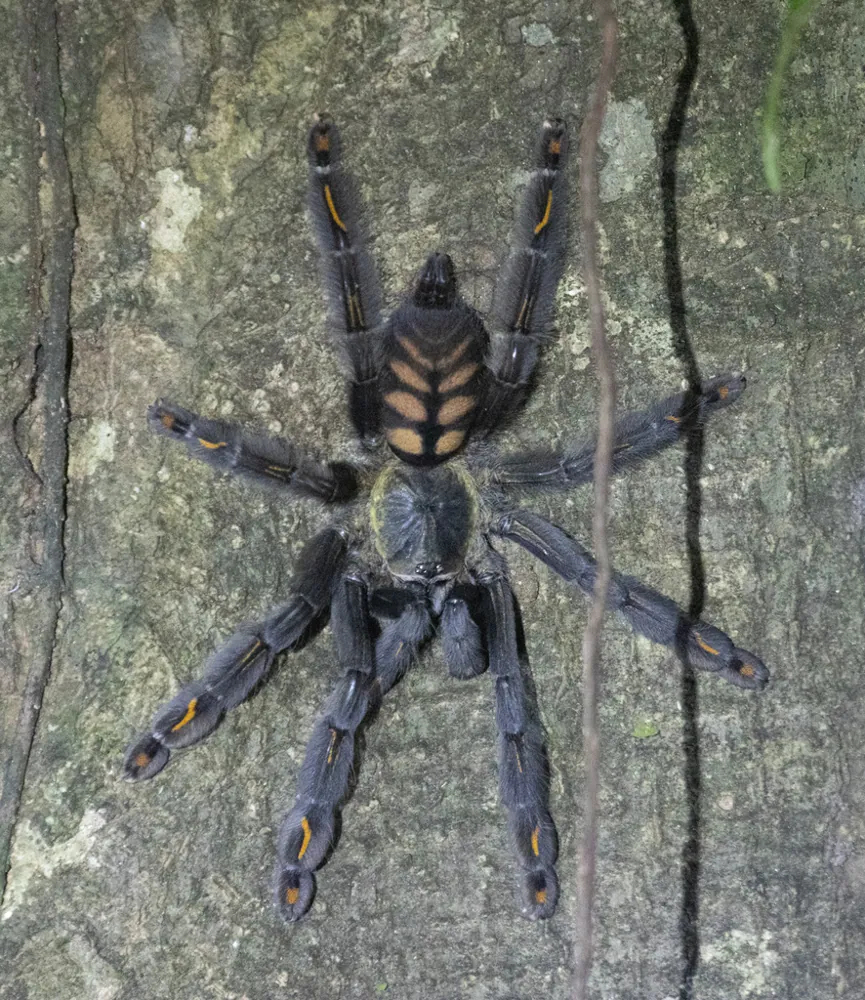
The Venezuelan suntiger is a tarantula that lives in the forests of northern South America. It spends much of its life in holes and crevices above ground, and it is a popular pet in the exotic pet trade. Its striking black and orange colours are the main reason it is so well known.1

 No anndirte ngal
- Black, with vibrant orange markings on the abdomen and legs.1
- Adults of both sexes have orange 'flame' markings on the legs, and the abdomen has a chevron pattern.1
- Once mature, the male turns entirely grey or grey-brown, keeping orange only on the tarsi (the last leg segments).1
- Mature males have much 'leggier' proportions than females.1
- Spiderlings are orange-red on the carapace (the upper body shell), with black legs and a black abdomen. They gradually gain adult colours with each moult.1
Doole tooke
Tooke ngal ina yaltira ñiiƴe mum so ina ŋata.
Hol no bone mum heewiri e yimɓe?
Bone e yimɓe: MuusɗoIna waawi muusde sanne, kono hertaani wonde huunde mawnde.Hol ko ngal waɗata so ina hula?
When threatened, it may flee into its retreat or raise its front legs and show its fangs in a threat posture. If it cannot escape, it bites. It does not throw urticating hairs, unlike most New World tarantulas.1
 So ina ŋata
- Loot nokku ŋataaɗo oo, ɓuuɓnu mo. Heɓ ballal cafrol so muusu ngu ina tiiɗi walla neɗɗo oo ina wiya wonaa e jam.
Adii fof noddu nimero urgence (112, 000, 911). Ɗum ko anndinal ballal adiingal, wonaa saaraangal doktoor. Ko adii e ballal adiingal
 Reen hoore maa
- Wota a meem, wota a nanngu, wota a ñiŋŋu kullal ladde haa abada, hay so ngal ina famɗi, hay so ina nanndi e ɗaaniingal walla maayngal.
- Accu ngal nokku. So a fotti e ngal, deƴƴu, ruttu ɓaawo seeɗa seeɗa, accu ngal yaha laawol mum.
- So gooto ŋatii ma: deƴƴu, wota a dillu, noddu nimero urgence (112, 000, 911) walla yahu opitaal law. Jogo e hakkille no ngal nanndi, natal ina walla.
Ngal faalaaka gaañde ma. Ina huutoroo tooke mum ngam nanngude ñaamdu walla reenaade, ina ɓuri yiɗde suuɗaade. Ɓeydu anndude no reentortoo
Hol to e aduna?
Hol no mawniri?
Hol no juutiri?
 juutde no kaaɗe mahirɗe 4 ɗaɓɓondiraaɗe
 ina waawi taƴde 100 meeteer e segonde 210 (neɗɗo ɓurɗo yaawde ina sokli 9,6)
Hol no Venezuelan suntiger mawniri, so fooɗondiraama e AN?
Limgal tan e navigatoor maa. Alaa ko danndetee walla ko neldetee.
Hol no yaawiri?


Humpito
Adult males change colour dramatically after their final moult, turning from black with orange to mostly grey.1
The undersides of its tarsi and metatarsi are iridescent, and they are visible during its threat display, which probably helps the display work.1
Psalmopoeus species lack the urticating hairs that most New World tarantulas use to defend themselves.1
Mature males spin special sperm webs, onto which they deposit sperm and then store it in their palpal bulbs (copulatory organs) ready for mating.1
The species is classed as a Psalmopoeus because it has stridulatory setae, also called a lyra, on its maxillae. No other described New World species has this trait.1
Ɗo humpito iwri
- Psalmopoeus irminia (Wikipedia (CC BY-SA 4.0))
- Psalmopoeus irminia (iNaturalist): inɗe e ceergal.
- Venom Wiki: tolno bone, mawnude heewnde e miijo yaawde ko amen. Yiy no men keɓirta ɗum: No men tolnirta bone.
Kala humpito e ngoo hello ina jogii limoore hollirnde iwdi mum. So men juumii, yaafo, men ko yiɗɓe kulle, wonaa jaaynde ganndal. Wiy men e [email protected], men feewnita.
 Yaare nden ina weelaa! Venom Wiki ko golle neɗɗo gooto: yoɓetaake, alaa ko jeeyetee, alaa rewɓe. Ndokkal seeɗa ina walla ngam heddude e enternet.Ñaam yaare nden
Goɗɗe e nder fedde wootere: Taranteel e funnel-web
 Goliath birdeaterTaranteel e funnel-webIna muusi tan
 Brazilian salmon pink birdeaterTaranteel e funnel-webAlaa bone
 Chilean rose tarantulaTaranteel e funnel-webAlaa bone
 Greenbottle blue tarantulaTaranteel e funnel-webAlaa bone
 Pinktoe tarantulaTaranteel e funnel-webAlaa bone
 Brazilian funnel-web spiderTaranteel e funnel-webIna sokli doktoor
 Faaɓru tooke kaŋŋe
 Terciopelo
 Brazilian wandering spider
 Eyelash viper
 Golden lancehead
 South American bushmaster