
 Afirka
 Asiya
Asiya Turai
Turai Kudancin Amurka
 Ostareliya da Oceania
 Antatika
 Tekun Pasifik
 Tekun Atlantika
 Tekun Indiya
 Tekun Arctic
 Bahar Rum
 Bahar Maliya
 Tekun Caribbean
 Tekun Coral
 Tekun Kudancin China
 Tekun Philippines
 Tekun Andaman
 Tekun Arewa
 Tekun Timor da Arafura
 Gaɓar Tekun Bengal
 Gaɓar Tekun California
Cane toad
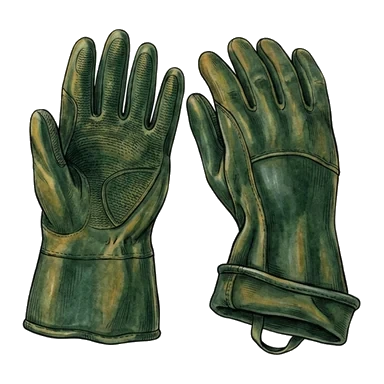 Guba a fatarsa
The cane toad is a large toad that is very poisonous to many animals. It is native to South and mainland Central America, but people have moved it to islands in Oceania and the Caribbean and to northern Australia. It matters because it spreads quickly and harms native wildlife and pets.1
 Yadda za ka gane shi
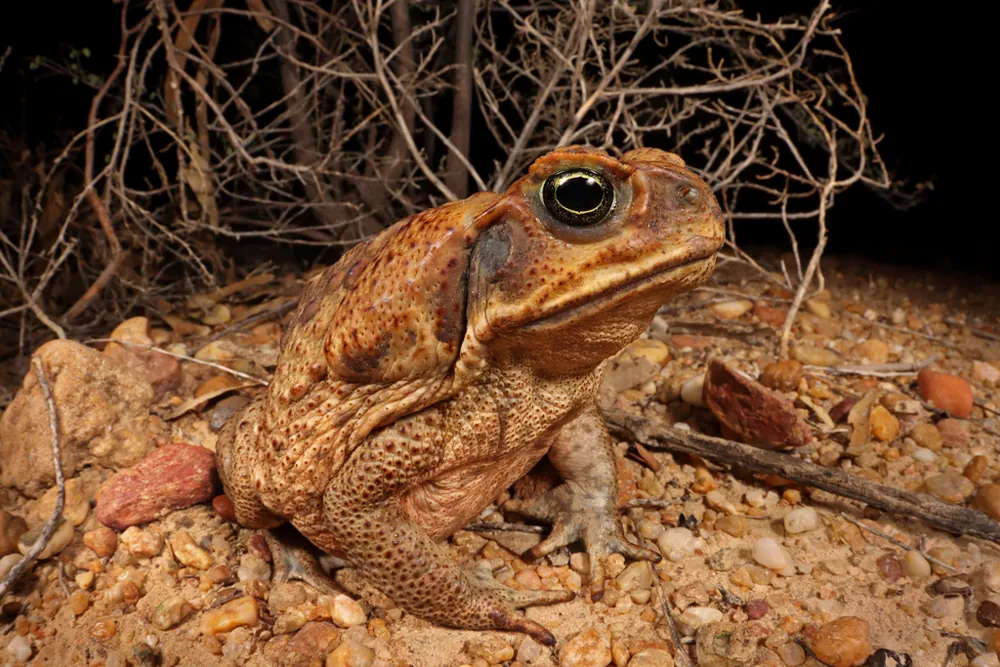
- Very large, with adults usually 10 to 15 cm long1
- Dry, warty skin with distinct ridges above the eyes that run down the snout1
- A large parotoid gland (a swollen gland) behind each eye1
- Grey, yellowish, red-brown or olive-brown skin, often with patterns1
- Horizontal pupils and golden irises1
Ana yawan rikita shi da: In Australia, adults can be confused with large native frogs, but these lack the large parotoid glands and the ridge between the nostril and eye. The giant burrowing frog has vertical pupils and silver-grey irises, while the cane toad has horizontal pupils and golden irises. In the United States, the southern toad has two bulbs in front of the parotoid glands.1
Ƙarfin guba
Fatarsa tana da guba. Yana da haɗari a taɓa shi, a lasa shi ko a ci shi.
Me gubarsa take yi?
The toad's glands secrete a milky-white fluid called bufotoxin when it is threatened. Components of bufotoxin are toxic to many animals. In dogs, signs of poisoning include excessive drooling, extremely red gums, head-shaking, crying and loss of coordination.1
Yaya haɗarinsa yake ga mutane?
Haɗari ga mutane: Mai tsananiIdan wani ya taɓa shi ko ya ci shi, a je wurin likita. Mutuwa ba kasafai take faruwa ba.The toxic skin can kill many wild and domestic animals. Dogs are especially at risk from licking or biting the toad. Human deaths have also been recorded after people ate cane toads.1
Me yake yi idan ya ji tsoro?
When threatened, it releases bufotoxin from its glands.1
 Idan wani ya taɓa shi ko ya ci shi
- Idan wani ya taɓa ɗaya: a wanke hannaye sosai kuma kada a taɓa idanu ko baki. Idan yaro ko dabbar gida ya lasa ko ya ci ɗaya: ka kira cibiyar guba ko lambar gaggawa.
Kullum ka fara kiran lambar gaggawa (112, 000, 911). Wannan jagorar agajin gaggawa ce ta gaba ɗaya, ba shawarar likita ba. Muhimman abubuwan agajin gaggawa
 Kiyaye lafiya
- Kada ka taɓa, kada ka kama, kada ka tsokani dabbar daji, ko da ƙarama ce, kuma ko da tana kama da tana barci ko ta mutu.
- Ka ba shi sarari. Idan ka haɗu da ɗaya, ka natsu, ka koma baya a hankali kuma ka bar shi ya bi hanyarsa.
- Idan ka taɓa shi ko ka ci shi: kada ka goge idanunka ko bakinka, ka wanke hannayenka kuma ka nemi taimakon likita.
Ba ya neman cutar da kai. Gubarsa tana nan ne kawai don kada wani abu ya cinye shi. Ƙarin bayani game da kiyaye lafiya
Yaya girmansa yake?
Yaya tsawonsa yake?
 tsawon tubalan gini na wasa 8 a jere
 zai iya gudun mita 100 cikin daƙiƙa 180 (mutum mafi sauri yana buƙatar 9,6)
Yaya girman Cane toad yake idan aka kwatanta da KAI?
Lissafi ne kawai a cikin burauzarka. Ba a adana komai ko a aika ko'ina.
Yaya saurinsa yake?


Bayanai
Young toads lose the toxicity they had as eggs and tadpoles, and they only develop their poison glands later. Only an estimated 0.5% of cane toads reach adulthood.1
In Australia, tadpoles have evolved to be more likely to eat their siblings than tadpoles in South America.1
A female can lay thousands of eggs in one spawn, in strings up to 20 metres long.1
In the wild, cane toads can live 10 to 15 years, and one captive toad was reported to have lived 35 years.1
The cane toad is considered the largest species in the Bufonidae, the toad family.1
Cane toads eat both living and dead matter, which is unusual among frogs and toads.1
Mai karya tatsuniya
Tatsuniya: The name 'marine toad' suggests that cane toads live in the sea.
Gaskiya: Cane toads do not live in the sea. The name came from a mistaken belief by an early naturalist.1
Don ƙwararru a kan dafi
Inda bayanan suka fito
- Cane toad (Wikipedia (CC BY-SA 4.0))
- Rhinella marina (iNaturalist): sunaye da rarrabuwa.
- Venom Wiki: matakin haɗari, girman al'ada da ƙiyasin sauri namu ne. Ga yadda muke lissafa su: Yadda muke auna haɗari.
Kowane bayani a wannan shafi yana da lamba da ke nuna tushensa. Idan mun yi kuskure, ka yi haƙuri, mu masoya dabbobi ne, ba mujallar kimiyya ba. Ka gaya mana a [email protected] kuma za mu gyara.
 Kunama tana jin yunwa! Venom Wiki aikin mutum ɗaya ne: kyauta, ba talla kuma ba masu bin diddigi. Ɗan ƙaramin kyauta yana taimakawa wajen ci gaba da kasancewarsa a intanet.Ciyar da kunama
Ƙari daga rukuni ɗaya: Kwaɗi masu guba, toad da newt
 Golden poison frogKwaɗi masu guba, toad da newtMai kisaKada ka taɓa
 Dyeing poison dart frogKwaɗi masu guba, toad da newtCiwo kawaiKada ka taɓa
 Strawberry poison-dart frogKwaɗi masu guba, toad da newtCiwo kawaiKada ka taɓa
 Black-legged poison frogKwaɗi masu guba, toad da newtNa iya kisaKada ka taɓa
 California newtKwaɗi masu guba, toad da newtNa iya kisaKada ka taɓa
 Rough-skinned newtKwaɗi masu guba, toad da newtNa iya kisaKada ka taɓa
 Terciopelo
 Eastern coral snake
 Eastern diamondback rattlesnake
 Eyelash viper
 Timber rattlesnake
 Western diamondback rattlesnake