
 Afrịka
 Eshia
Eshia Yurop
Yurop Ndịda Amerika
 Ọstrelia na Oshenia
 Antaktika
 Oké Osimiri Pasifik
 Oké Osimiri Atlantik
 Oké Osimiri India
 Oké Osimiri Arktik
 Osimiri Mediterenian
 Osimiri Uhie
 Osimiri Karibịan
 Osimiri Coral
 Osimiri Ndịda China
 Osimiri Filipin
 Osimiri Andaman
 Osimiri Ugwu (North Sea)
 Osimiri Timor na Arafura
 Ọwara Bengal
 Ọwara California
Ethiopian mountain adder
 Ịta
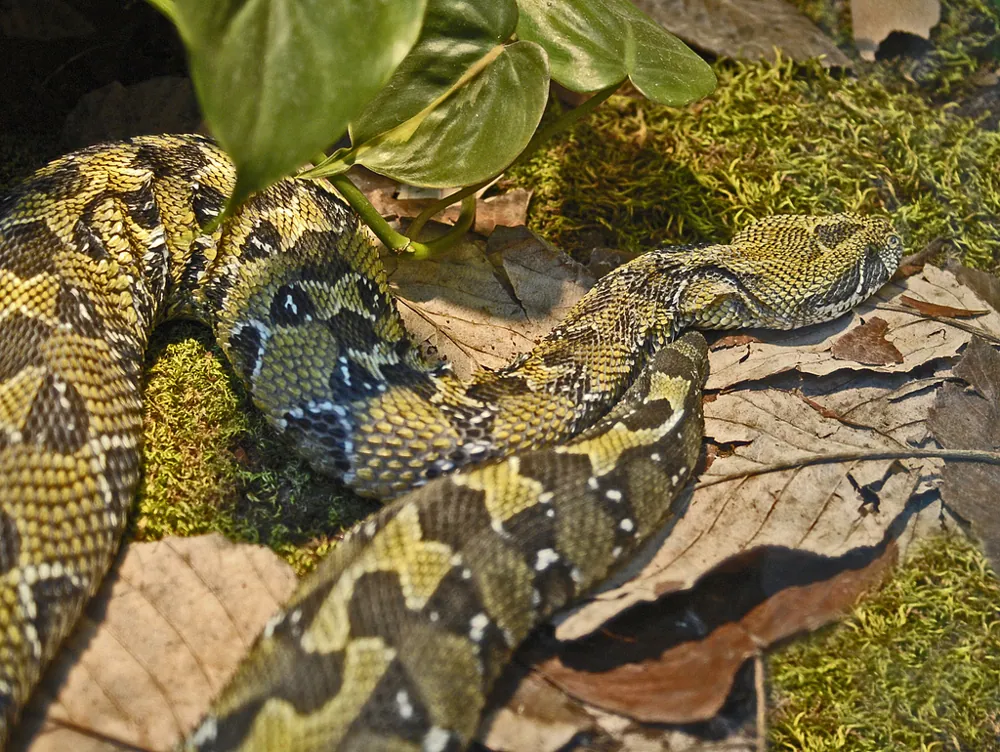
ỊtaThe Ethiopian mountain adder is a large venomous viper that lives only in Ethiopia. It has a broad head and striking geometric patterns along its back. Scientists knew very little about it for many years, and it is still being studied.1
 Otú ị ga-esi mata ya
- It is large, with a broad, flat, triangular head that is distinct from its thin neck.1
- A pattern of black hexagons or diamonds runs down the centre of the back, linked by yellow butterfly-shaped markings.1
- Black triangular spots with white centres run down the upper flanks, and greenish-grey triangles with yellow edges sit on the lower flanks.1
- The head is brown with a dark triangle between the eyes and a dark hammer shape behind it.1
- The upper lip scales are white, and the chin and throat are white with black speckling.1
Ike nsị
Nsị na-esi n'eze nsị ya ma ọ bụ eze ya apụta mgbe ọ na-ata.
Gịnị ka nsị ọ na-agba na-eme?
Its venom was essentially unknown until recently, so its toxicity and make-up are still poorly understood. It is assumed to cause at least some of the bites reported in the densely populated areas where it lives. The venom can be neutralised by SAIMR antivenom.1
Kedu otú o si dị egwu nye mmadụ?
Ihe ize ndụ nye mmadụ: Ọ dị egwu nke ukwuuỌ nwere ike igbu onye na-enwetaghị ọgwụgwọ.Local people regard it as very dangerous. The only well-documented bite involved a herpetologist from Texas in 2009, who was bitten on the finger by a young captive snake and survived.1
 Ozi ọma: ndị dọkịta nwere ọgwụ (antivenom) ma ọ bụ ọgwụgwọ maka nke a.1
Gịnị ka ọ na-eme mgbe ụjọ tụrụ ya?
In the one living specimen studied, it was less irritable than the puff adder and was not inclined to strike, but it hissed when teased and struggled furiously when restrained.1
 Ọ bụrụ na ọ tara
- Mee ka onye ahụ ghara imegharị ahụ, dịkwa jụụ, debe aka ma ọ bụ ụkwụ ahụ ọ tara n'ogo obi, wepụ mgbanaka na ihe ndị kekọrọ ahụ ike, kpọga ya ụlọ ọgwụ ngwa ngwa.
Na-ebu ụzọ kpọọ nọmba mberede gị mgbe niile (112, 000, 911). Nke a bụ ndụmọdụ enyemaka mbụ n'ozuzu, ọ bụghị ndụmọdụ ọgwụ. Isi ihe enyemaka mbụ
 Nọrọ na nchekwa
- Emetụla anụ ọhịa aka, ejidela ya, emekwala ya ihe ọjọọ, ọbụna obere, ọbụna ma ọ dị ka ọ na-ehi ụra ma ọ bụ nwụọ anwụ.
- Nye ya ohere. Ọ bụrụ na ị zutere otu, dị jụụ, laghachi azụ nwayọ, hapụ ya ka ọ gaa ụzọ ya.
- Ọ bụrụ na otu tara gị: dị jụụ, emegharịla ahụ, kpọọ nọmba mberede gị (112, 000, 911) ma ọ bụ gaa ụlọ ọgwụ ngwa ngwa. Cheta ka o si dị, foto na-enye aka.
Ọ naghị achụ gị. Ọ na-eji nsị ya ejide nri ma ọ bụ chebe onwe ya, ọ ga-akakwa mma n'anya ya ịzo onwe ya. Ihe ndị ọzọ gbasara ịnọ na nchekwa
Ọ hà aṅaa?
Kedu otú o si dị ogologo?
 dị ogologo dị ka nwamba ụlọ 2.5 site n'imi ruo n'ọdụ
 dị ogologo dị ka unere 7 a tọgbọrọ n'ahịrị
 nwere ike ịgba ọsọ mita 100 n'ime sekọnd 100 (mmadụ kacha ọsọ chọrọ 9,6)
Kedu otú Ethiopian mountain adder si hà ma e jiri ya tụnyere GỊ?
Naanị mgbakọ na mwepụ n'ime browser gị. Ọ dịghị ihe echekwara ma ọ bụ ezigara ebe ọ bụla.
Kedu otú o si agba ọsọ?


Eziokwu
The first specimen known to science was a road kill on the east side of the Rift Valley in Ethiopia.1
In 1995, the species was known from only three specimens.1
In 2007, an exporter transported 20 of these snakes to the United States.1
In 2014, the San Diego Zoo became the first U.S. zoo to successfully breed the species in captivity.1
Ebe eziokwu ndị a si
- Bitis parviocula (Wikipedia (CC BY-SA 4.0))
- Bitis parviocula (iNaturalist): aha na nhazi ọkwa.
- Venom Wiki: ọkwa ihe ize ndụ, nha nkịtị na nchepụta ọsọ bụ nke anyị. Lee otú anyị si achọpụta ha: Otú anyị si atụ ihe ize ndụ.
Eziokwu ọ bụla dị na peeji a nwere nọmba na-egosi ebe o si. Ọ bụrụ na anyị mehiere ihe, ndo, anyị bụ ndị hụrụ anụmanụ n'anya, ọ bụghị akwụkwọ akụkọ sayensị. Gwa anyị na [email protected], anyị ga-edozi ya.
 Akpị agụụ na-agụ! Venom Wiki bụ ọrụ otu onye: n'efu, na-enweghị mgbasa ozi na ndị na-esochi gị. Obere onyinye na-enyere aka idebe ya n'ịntanetị.Nye akpị nri
 Puff adder
 Gaboon viper
 Northeast African carpet viper
 West African carpet viper
 Rhinoceros viper
 West African Gaboon viper
 Black mamba
 Deathstalker
 Egyptian cobra
 Boomslang
 Fat-tailed scorpion
 Western honey bee