
 Afrịka
 Eshia
Eshia Yurop
Yurop Ndịda Amerika
 Ọstrelia na Oshenia
 Antaktika
 Oké Osimiri Pasifik
 Oké Osimiri Atlantik
 Oké Osimiri India
 Oké Osimiri Arktik
 Osimiri Mediterenian
 Osimiri Uhie
 Osimiri Karibịan
 Osimiri Coral
 Osimiri Ndịda China
 Osimiri Filipin
 Osimiri Andaman
 Osimiri Ugwu (North Sea)
 Osimiri Timor na Arafura
 Ọwara Bengal
 Ọwara California
Puff adder
 Ịta
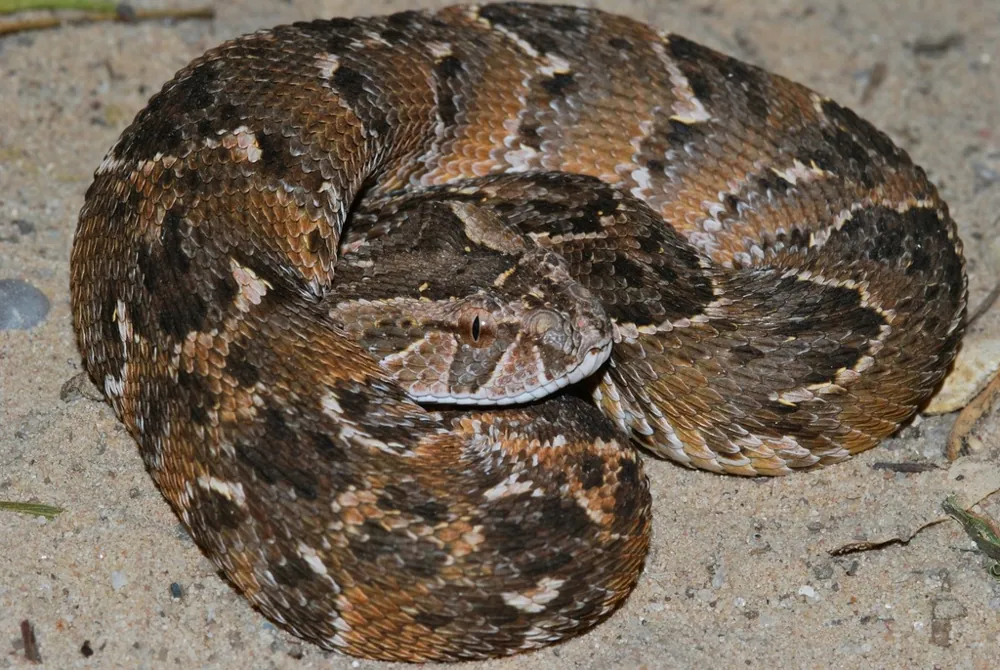
ỊtaThe puff adder is a large, stout viper that lives across most of Africa and parts of the Arabian Peninsula. It is one of the most dangerous snakes in Africa because it lives in places where many people live and work, and it has very potent venom. Its camouflage hides it well, so it is easy to step near without seeing it.1



 Otú ị ga-esi mata ya
- Stout, heavy body. Usually about 1.0 m long including the tail.1
- Two dark bands across the top of the head, and two dark bars running from each eye down the sides of the head.1
- Back is straw yellow, light brown, orange or reddish brown, with 18–22 dark brown to black chevron-shaped bands running down the back and tail.1
- In some populations, the body is heavily flecked with brown and black, giving a dusty-brown or blackish look.1
- Males from highland East Africa and the Western Cape of South Africa often have a striking yellow-and-black pattern.1
Ike nsị
Nsị na-esi n'eze nsị ya ma ọ bụ eze ya apụta mgbe ọ na-ata.
Gịnị ka nsị ọ na-agba na-eme?
Its venom is cytotoxic, which means it destroys body tissue. Bites cause severe pain, swelling, bleeding under the skin and, in serious cases, tissue death that can spread and lead to gangrene. Other symptoms include shock, nausea, vomiting, dizziness and periods of semi-consciousness. Death can occur in about 25 hours from a dose of around 100 mg, and deaths usually come 2–4 days after a bite from complications.1
Kedu otú o si dị egwu nye mmadụ?
Ihe ize ndụ nye mmadụ: Na-egbu egbuOtu n'ime anụmanụ kacha dị egwu n'ụwa.It is responsible for more snakebite deaths in Africa than any other African snake. This is due to its wide range, common presence near people, large size, potent venom and aggressive temperament. Deaths are uncommon in untreated cases, but severe bites can be fatal, with one report giving a 52% mortality rate. Most deaths are linked to poor medical care.1
Gịnị ka ọ na-eme mgbe ụjọ tụrụ ya?
When disturbed, it hisses loudly and continuously, coils tightly with the front of its body in a taut S shape, and may back away towards cover before striking suddenly and fast.1
 Ọ bụrụ na ọ tara
- Mee ka onye ahụ ghara imegharị ahụ, dịkwa jụụ, debe aka ma ọ bụ ụkwụ ahụ ọ tara n'ogo obi, wepụ mgbanaka na ihe ndị kekọrọ ahụ ike, kpọga ya ụlọ ọgwụ ngwa ngwa.
Na-ebu ụzọ kpọọ nọmba mberede gị mgbe niile (112, 000, 911). Nke a bụ ndụmọdụ enyemaka mbụ n'ozuzu, ọ bụghị ndụmọdụ ọgwụ. Isi ihe enyemaka mbụ
 Nọrọ na nchekwa
- Emetụla anụ ọhịa aka, ejidela ya, emekwala ya ihe ọjọọ, ọbụna obere, ọbụna ma ọ dị ka ọ na-ehi ụra ma ọ bụ nwụọ anwụ.
- Nye ya ohere. Ọ bụrụ na ị zutere otu, dị jụụ, laghachi azụ nwayọ, hapụ ya ka ọ gaa ụzọ ya.
- Ọ bụrụ na otu tara gị: dị jụụ, emegharịla ahụ, kpọọ nọmba mberede gị (112, 000, 911) ma ọ bụ gaa ụlọ ọgwụ ngwa ngwa. Cheta ka o si dị, foto na-enye aka.
Ọ naghị achụ gị. Ọ na-eji nsị ya ejide nri ma ọ bụ chebe onwe ya, ọ ga-akakwa mma n'anya ya ịzo onwe ya. Ihe ndị ọzọ gbasara ịnọ na nchekwa
Ọ hà aṅaa?
Kedu otú o si dị ogologo?
Kedu otú o si dị arọ?
 dị ogologo dị ka nwamba ụlọ 4 site n'imi ruo n'ọdụ
 dị ogologo dị ka unere 11 a tọgbọrọ n'ahịrịọ dị arọ ihe dị ka nwamba ụlọ
 nwere ike ịgba ọsọ mita 100 n'ime sekọnd 97 (mmadụ kacha ọsọ chọrọ 9,6)
Kedu otú Puff adder si hà ma e jiri ya tụnyere GỊ?
Naanị mgbakọ na mwepụ n'ime browser gị. Ọ dịghị ihe echekwara ma ọ bụ ezigara ebe ọ bụla.
Kedu otú o si agba ọsọ?


Eziokwu
A female in a Czech zoo gave birth to 156 young, the largest litter recorded for any snake species.1
Its fangs are long and can penetrate deeply, and the force of its strike can kill prey by physical trauma alone.1
A large adult can produce between 150 and 350 mg of venom at a time, with a maximum of 750 mg.1
Dogs and meerkats, which hunt by scent, find it hard to detect because of a form of olfactory crypsis, meaning it hides its scent.1
It is one of the most toxic vipers based on LD50 (the dose that kills half of test animals in a study).1
It is a good swimmer and climber, and one specimen was found 4.6 m above the ground in a dense tree.1
Onye na-ekpughe akụkọ ụgha
Akụkọ ụgha: Puff adders are fast, aggressive snakes that chase people.
Eziokwu: They are normally sluggish and rely on camouflage for protection. They strike when disturbed, but they do not usually pursue people.1
Maka ndị ọkachamara nsị
Ebe eziokwu ndị a si
- Puff adder (Wikipedia (CC BY-SA 4.0))
- Bitis arietans (iNaturalist): aha na nhazi ọkwa.
- Venom Wiki: ọkwa ihe ize ndụ, nha nkịtị na nchepụta ọsọ bụ nke anyị. Lee otú anyị si achọpụta ha: Otú anyị si atụ ihe ize ndụ.
Eziokwu ọ bụla dị na peeji a nwere nọmba na-egosi ebe o si. Ọ bụrụ na anyị mehiere ihe, ndo, anyị bụ ndị hụrụ anụmanụ n'anya, ọ bụghị akwụkwọ akụkọ sayensị. Gwa anyị na [email protected], anyị ga-edozi ya.
 Akpị agụụ na-agụ! Venom Wiki bụ ọrụ otu onye: n'efu, na-enweghị mgbasa ozi na ndị na-esochi gị. Obere onyinye na-enyere aka idebe ya n'ịntanetị.Nye akpị nri
 Indian saw-scaled viper
 Agwọ Russell
 Gaboon viper
 Common European adder
 Eastern Russell's viper
 Northeast African carpet viper
 Black mamba
 Deathstalker
 Egyptian cobra
 Boomslang
 Fat-tailed scorpion
 Western honey bee