
 Afrịka
 Eshia
Eshia Yurop
Yurop Ndịda Amerika
 Ọstrelia na Oshenia
 Antaktika
 Oké Osimiri Pasifik
 Oké Osimiri Atlantik
 Oké Osimiri India
 Oké Osimiri Arktik
 Osimiri Mediterenian
 Osimiri Uhie
 Osimiri Karibịan
 Osimiri Coral
 Osimiri Ndịda China
 Osimiri Filipin
 Osimiri Andaman
 Osimiri Ugwu (North Sea)
 Osimiri Timor na Arafura
 Ọwara Bengal
 Ọwara California
Flat rock scorpion
 Ịgba
ỊgbaThe flat rock scorpion is a scorpion that lives on rocky hillsides in southern Africa. It is venomous, but its sting is very mild, and it is sold as an exotic pet. It is special because its flattened body lets it slip into tiny cracks in the rocks.1

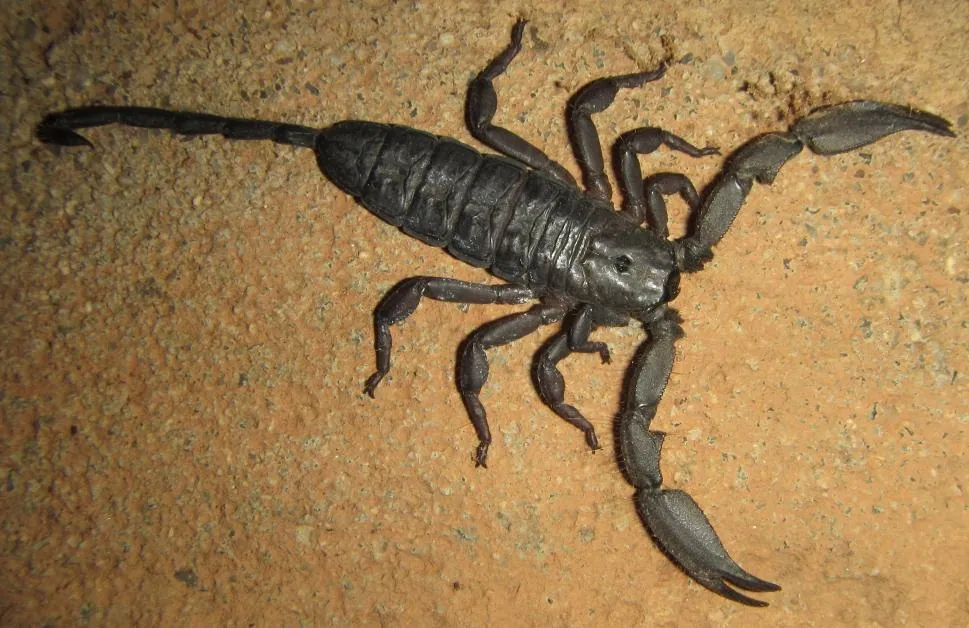
 Otú ị ga-esi mata ya
- Flattened body, which helps it move in narrow rock cracks1
- Black carapace (shield on the front of the body), pedipalps and tail1
- Pale to yellow legs and pincers (chelae)1
- Small tail and stinger compared with other scorpions of similar size1
- Very reclusive, so it is usually unseen unless its hiding place is disturbed1
A na-agwakọkarị ya na: It may be confused with Hadogenes bicolor.1
Ike nsị
Nsị na-esi na ndụdụ ya apụta.
Gịnị ka nsị ọ na-agba na-eme?
Its venom is very mild. Laboratory LD50 figures between 1800 and 2667 mg/kg are high, which points to low toxicity. The sting causes pain that lasts only several minutes.1
Kedu otú o si dị egwu nye mmadụ?
Ihe ize ndụ nye mmadụ: ObereDị ka ịgba aṅụ ma ọ bụ nke na-erughị ya. Ọ fọrọ nke nta ka ọ ghara ịdị njọ nye mmadụ.Its sting is mild, and the pain lasts only several minutes.1
Gịnị ka ọ na-eme mgbe ụjọ tụrụ ya?
It will usually try to flee before fighting, and it stings only as a last defence.1
 Ọ bụrụ na ọ gbaa
- Jiri akpa ice mee ka ebe ọ gbara jụọ oyi, mekwa ka onye ahụ nọrọ jụụ n'emegharịghị ahụ. Chọọ enyemaka ọgwụ ngwa ngwa, karịsịa maka ụmụaka: ụfọdụ akpị nwere ike igbu ụmụaka.
Na-ebu ụzọ kpọọ nọmba mberede gị mgbe niile (112, 000, 911). Nke a bụ ndụmọdụ enyemaka mbụ n'ozuzu, ọ bụghị ndụmọdụ ọgwụ. Isi ihe enyemaka mbụ
 Nọrọ na nchekwa
- Emetụla anụ ọhịa aka, ejidela ya, emekwala ya ihe ọjọọ, ọbụna obere, ọbụna ma ọ dị ka ọ na-ehi ụra ma ọ bụ nwụọ anwụ.
- Nye ya ohere. Ọ bụrụ na ị zutere otu, dị jụụ, laghachi azụ nwayọ, hapụ ya ka ọ gaa ụzọ ya.
- Ọ bụrụ na otu gbaa gị: dị jụụ, emegharịla ahụ, kpọọ nọmba mberede gị (112, 000, 911) ma ọ bụ gaa ụlọ ọgwụ ngwa ngwa. Cheta ka o si dị, foto na-enye aka.
Ọ naghị achụ gị. Ọ na-eji nsị ya ejide nri ma ọ bụ chebe onwe ya, ọ ga-akakwa mma n'anya ya ịzo onwe ya. Ihe ndị ọzọ gbasara ịnọ na nchekwa
Ọ hà aṅaa?
Kedu otú o si dị ogologo?
 dị ogologo dị ka blọk egwuregwu 6 n'ahịrị
 nwere ike ịgba ọsọ mita 100 n'ime sekọnd 100 (mmadụ kacha ọsọ chọrọ 9,6)
Kedu otú Flat rock scorpion si hà ma e jiri ya tụnyere GỊ?
Naanị mgbakọ na mwepụ n'ime browser gị. Ọ dịghị ihe echekwara ma ọ bụ ezigara ebe ọ bụla.
Kedu otú o si agba ọsọ?


Eziokwu
It is highly territorial. When kept close together in captivity, individuals will fight to the death, and it shows cannibalism.1
Venom analysis has found 121 novel venom peptides, which may be medically valuable for ion channel-associated diseases and infections caused by antibiotic-resistant pathogens.1
It was once regarded as the scorpion with the longest recorded body length, reaching up to 20 cm. Heterometrus swammerdami now holds the record at 23 cm.1
It can dig quickly, clearing soil and gravel from under a stone ledge to make a new den. It uses its tail to sweep the dirt away.1
Its flattened body lets it move into the small cracks and crevices of rocky outcrops.1
Ebe eziokwu ndị a si
- Hadogenes troglodytes (Wikipedia (CC BY-SA 4.0))
- Hadogenes troglodytes (iNaturalist): aha na nhazi ọkwa.
- Venom Wiki: ọkwa ihe ize ndụ, nha nkịtị na nchepụta ọsọ bụ nke anyị. Lee otú anyị si achọpụta ha: Otú anyị si atụ ihe ize ndụ.
Eziokwu ọ bụla dị na peeji a nwere nọmba na-egosi ebe o si. Ọ bụrụ na anyị mehiere ihe, ndo, anyị bụ ndị hụrụ anụmanụ n'anya, ọ bụghị akwụkwọ akụkọ sayensị. Gwa anyị na [email protected], anyị ga-edozi ya.
 Akpị agụụ na-agụ! Venom Wiki bụ ọrụ otu onye: n'efu, na-enweghị mgbasa ozi na ndị na-esochi gị. Obere onyinye na-enyere aka idebe ya n'ịntanetị.Nye akpị nri
 Deathstalker
 Fat-tailed scorpion
 Emperor scorpion
 Arabian fat-tailed scorpion
 Transvaal thick-tailed scorpion
 European yellow-tailed scorpion
 Black mamba
 Egyptian cobra
 Puff adder
 Boomslang
 Gaboon viper
 Western honey bee