
 Afrịka
 Eshia
Eshia Yurop
Yurop Ndịda Amerika
 Ọstrelia na Oshenia
 Antaktika
 Oké Osimiri Pasifik
 Oké Osimiri Atlantik
 Oké Osimiri India
 Oké Osimiri Arktik
 Osimiri Mediterenian
 Osimiri Uhie
 Osimiri Karibịan
 Osimiri Coral
 Osimiri Ndịda China
 Osimiri Filipin
 Osimiri Andaman
 Osimiri Ugwu (North Sea)
 Osimiri Timor na Arafura
 Ọwara Bengal
 Ọwara California
Glory of the sea cone
 Ịgba
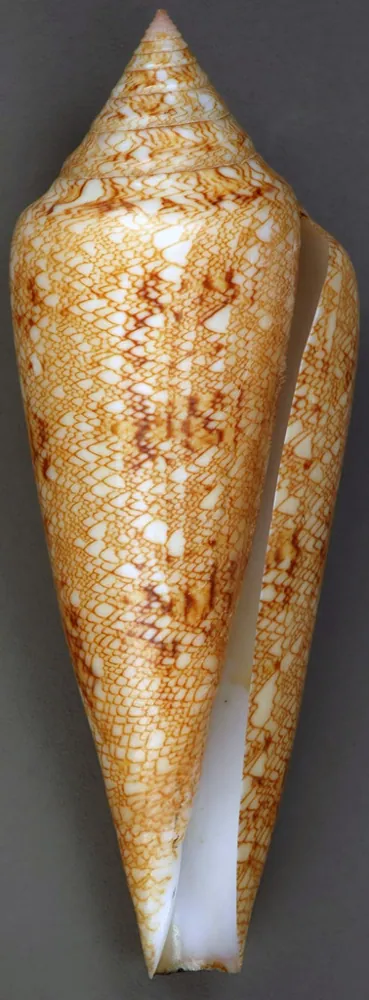
ỊgbaThe Glory of the Sea Cone is a sea snail with a striking shell, part of the cone snail family. It lives in the warm waters of the Pacific and Indian Oceans. It is special because collectors once thought it was the rarest shell in the world.1
 Otú ị ga-esi mata ya
- A relatively large, slender shell with a tall spire1
- Typical shell length is 8 to 12 cm, and it can reach 16 cm1
- A fine net-like pattern of orange-brown lines that enclose triangular spaces1
- Two or three bands of chestnut, hieroglyphic-like markings across the body1
- Tan colouring that can range from light golden to deep dark brown1
A na-agwakọkarị ya na: It is sometimes confused with the common Textile cone, and it has a similarity to the Bengal cone.1
Ike nsị
Nsị na-esi na ndụdụ ya apụta.
Kedu otú o si dị egwu nye mmadụ?
Ihe ize ndụ nye mmadụ: Ọ dị njọỊgba ya chọrọ dọkịta. Ọnwụ anaghị adịkarị ma ọlị. Ọ bụrụ na ọ gbaa
- Mkpakọ na nkwụsi ahụ (pressure immobilisation): jiri bandeji na-agbatị agbatị (elastic bandage) kee ebe ọ tara nke ọma, wee kee ya gaa n'elu aka ma ọ bụ ụkwụ ahụ niile, jiri splint (osisi nkwado) kwado ya, mee ka onye ahụ ghara imegharị ahụ ma ọlị ruo mgbe enyemaka bịarutere.
- Octopus nwere mgbanaka acha anụnụ anụnụ ma ọ bụ ejula cone nwere ike ime ka mmadụ kwụsị iku ume mgbe ọ ka maara ihe: kpọọ maka enyemaka, dịkwa njikere inye ya ume nnapụta (ifu ume n'ọnụ ya) ruo mgbe ndị ụgbọ ndị ọrịa bịarutere were ọrụ ahụ.
Na-ebu ụzọ kpọọ nọmba mberede gị mgbe niile (112, 000, 911). Nke a bụ ndụmọdụ enyemaka mbụ n'ozuzu, ọ bụghị ndụmọdụ ọgwụ. Isi ihe enyemaka mbụ
 Nọrọ na nchekwa
- Emetụla anụ ọhịa aka, ejidela ya, emekwala ya ihe ọjọọ, ọbụna obere, ọbụna ma ọ dị ka ọ na-ehi ụra ma ọ bụ nwụọ anwụ.
- Nye ya ohere. Ọ bụrụ na ị zutere otu, dị jụụ, laghachi azụ nwayọ, hapụ ya ka ọ gaa ụzọ ya.
- Ọ bụrụ na otu gbaa gị: dị jụụ, emegharịla ahụ, kpọọ nọmba mberede gị (112, 000, 911) ma ọ bụ gaa ụlọ ọgwụ ngwa ngwa. Cheta ka o si dị, foto na-enye aka.
Ọ naghị achụ gị. Ọ na-eji nsị ya ejide nri ma ọ bụ chebe onwe ya, ọ ga-akakwa mma n'anya ya ịzo onwe ya. Ihe ndị ọzọ gbasara ịnọ na nchekwa
Ebee n'ụwa?
Ọ hà aṅaa?
Kedu otú o si dị ogologo?
 dị ogologo dị ka blọk egwuregwu 5 n'ahịrị
 nwayọ karịa ejula ubi
Kedu otú Glory of the sea cone si hà ma e jiri ya tụnyere GỊ?
Naanị mgbakọ na mwepụ n'ime browser gị. Ọ dịghị ihe echekwara ma ọ bụ ezigara ebe ọ bụla.
Kedu otú o si agba ọsọ?

Eziokwu
For about two centuries, this shell was regarded as the rarest shell in the world.1
Specimens were once valued in the thousands of U.S. dollars and were generally owned only by museums and wealthy private collectors.1
Today, shells can often be found from retailers or online auction sites for less than $100 U.S.1
Its habitat was not discovered until 1969.1
Improvements in diving technology, such as scuba, led to the discovery of far more shells.1
Onye na-ekpughe akụkọ ụgha
Akụkọ ụgha: A collector bought one at auction in 1792 and destroyed it to keep the value of another one he owned.
Eziokwu: This is an urban legend, a popular story that has spread among collectors. It is not an established fact.1
Ebe eziokwu ndị a si
- Conus gloriamaris (Wikipedia (CC BY-SA 4.0))
- Conus gloriamaris (iNaturalist): aha na nhazi ọkwa.
- Venom Wiki: ọkwa ihe ize ndụ, nha nkịtị na nchepụta ọsọ bụ nke anyị. Lee otú anyị si achọpụta ha: Otú anyị si atụ ihe ize ndụ.
Eziokwu ọ bụla dị na peeji a nwere nọmba na-egosi ebe o si. Ọ bụrụ na anyị mehiere ihe, ndo, anyị bụ ndị hụrụ anụmanụ n'anya, ọ bụghị akwụkwọ akụkọ sayensị. Gwa anyị na [email protected], anyị ga-edozi ya.
 Akpị agụụ na-agụ! Venom Wiki bụ ọrụ otu onye: n'efu, na-enweghị mgbasa ozi na ndị na-esochi gị. Obere onyinye na-enyere aka idebe ya n'ịntanetị.Nye akpị nri
Ndị ọzọ si n'otu ahụ: Ejula cone na octopus
 Geography coneEjula cone na octopusNa-egbu egbu
 Greater blue-ringed octopusEjula cone na octopusNa-egbu egbu
 Southern blue-ringed octopusEjula cone na octopusNa-egbu egbu
 Blue sea dragonEjula cone na octopusNaanị na-afụ ụfụ
 Common octopusEjula cone na octopusAdịghị njọ
 Giant Pacific octopusEjula cone na octopusAdịghị njọ
Ọ na-ebikwa na: Oké Osimiri Pasifik
 Australian box jellyfishJelifish na anụ osimiri na-agba agbaNa-egbu egbuEmetụla ya aka
 Japanese pufferfishAnụmanụ ndị ọzọ nwere nsị n'ahụNa-egbu egbu
 Hawksbill sea turtleAnụmanụ ndị ọzọ nwere nsị n'ahụNwere ike igbu mmadụ
 Irukandji jellyfishJelifish na anụ osimiri na-agba agbaNwere ike igbu mmadụEmetụla ya aka
 Reef stonefishAzụ na-agba nsịNwere ike igbu mmadụEmetụla ya aka
 Crown-of-thorns starfishUrchin, kpakpando osimiri na ikpuruỌ chọrọ dọkịtaEmetụla ya aka