
 Afrịka
 Eshia
Eshia Yurop
Yurop Ndịda Amerika
 Ọstrelia na Oshenia
 Antaktika
 Oké Osimiri Pasifik
 Oké Osimiri Atlantik
 Oké Osimiri India
 Oké Osimiri Arktik
 Osimiri Mediterenian
 Osimiri Uhie
 Osimiri Karibịan
 Osimiri Coral
 Osimiri Ndịda China
 Osimiri Filipin
 Osimiri Andaman
 Osimiri Ugwu (North Sea)
 Osimiri Timor na Arafura
 Ọwara Bengal
 Ọwara California
Monarch butterfly
 Nwere nsị ma e rie ya
The monarch is one of the best-known butterflies in North America, with a black, orange and white pattern that is easy to spot. Its wings are poisonous if eaten, so it is a warning to predators. Some monarchs make a huge southward journey each autumn, covering thousands of miles.1


 Otú ị ga-esi mata ya
- Black, orange and white wing pattern that is easy to recognise.1
- Wingspan of 8.9 to 10.2 cm.1
- Caterpillars are pale green or grey-white when very young, with a large black head.1
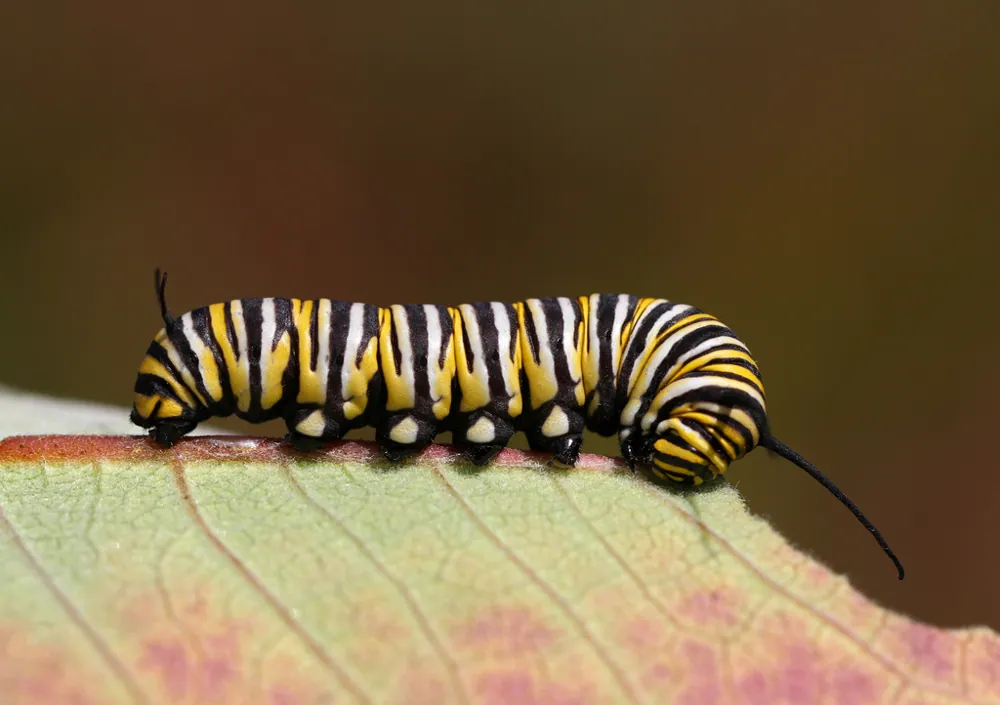
- Older caterpillars have white, yellow and black bands, plus black tentacles.1
A na-agwakọkarị ya na: The viceroy butterfly is similar in colour and pattern but is much smaller. It also has an extra black stripe across each hindwing.1
Ike nsị
Ọ na-emerụ ahụ naanị ma ihe riri ya.
Kedu otú o si dị egwu nye mmadụ?
Ihe ize ndụ nye mmadụ: ObereDị ka ịgba aṅụ ma ọ bụ nke na-erughị ya. Ọ fọrọ nke nta ka ọ ghara ịdị njọ nye mmadụ.Gịnị ka ọ na-eme mgbe ụjọ tụrụ ya?
Its bright black, orange and white pattern serves as a warning coloration to predators, and the viceroy butterfly copies it.1
 Ọ bụrụ na mmadụ metụrụ ya aka ma ọ bụ rie ya
- Ọ bụrụ na mmadụ riri ya ma ọ bụ nwee mgbaàmà mgbe o risịrị ya: kpọọ nọmba mberede gị ma ọ bụ ụlọ ọrụ ndụmọdụ nsị (poison centre) ozugbo.
Na-ebu ụzọ kpọọ nọmba mberede gị mgbe niile (112, 000, 911). Nke a bụ ndụmọdụ enyemaka mbụ n'ozuzu, ọ bụghị ndụmọdụ ọgwụ. Isi ihe enyemaka mbụ
 Nọrọ na nchekwa
- Emetụla anụ ọhịa aka, ejidela ya, emekwala ya ihe ọjọọ, ọbụna obere, ọbụna ma ọ dị ka ọ na-ehi ụra ma ọ bụ nwụọ anwụ.
- Nye ya ohere. Ọ bụrụ na ị zutere otu, dị jụụ, laghachi azụ nwayọ, hapụ ya ka ọ gaa ụzọ ya.
- Ọ bụrụ na i metụrụ ya aka ma ọ bụ rie ya: ehichala anya gị ma ọ bụ ọnụ gị, saa aka gị, chọọkwa enyemaka ọgwụ.
Ọ naghị achụ gị. Nsị ya dị naanị ka ihe ọ bụla ghara iri ya. Ihe ndị ọzọ gbasara ịnọ na nchekwa
Ọ hà aṅaa?
Kedu otú o si dị ogologo?
 dị ogologo dị ka blọk egwuregwu 3 n'ahịrị
 nwere ike ife gafee ọdụ egwuregwu bọọlụ dum n'ime sekọnd 42
Kedu otú Monarch butterfly si hà ma e jiri ya tụnyere GỊ?
Naanị mgbakọ na mwepụ n'ime browser gị. Ọ dịghị ihe echekwara ma ọ bụ ezigara ebe ọ bụla.
Kedu otú o si agba ọsọ?


Eziokwu
Eastern North American monarchs migrate south each autumn to Florida and Mexico, covering thousands of miles, and return north in spring over several generations.1
A female monarch can lay eggs weighing up to her own body mass in total, even though each egg is only about 1/1000 of her mass.1
Fewer than 10% of monarch eggs and caterpillars commonly survive to adulthood, because of weather, predators, parasites and disease.1
Monarchs can develop from egg to adult in as little as 25 days in warm summer weather, but may take as long as seven weeks in cool spring conditions.1
A monarch caterpillar can travel up to 10 metres from its milkweed plant to find a safe place to pupate.1
The monarch was the first butterfly to have its genome sequenced, a draft of 273 million base pairs containing 16,866 protein-coding genes.1
Onye na-ekpughe akụkọ ụgha
Akụkọ ụgha: Monarch butterflies are genetically modified organisms.
Eziokwu: A 2015 study found genes from wasp bracoviruses in the North American monarch's genome. This led to articles calling monarchs genetically modified, but they are not genetically modified in the usual sense.1
Maka ndị ọkachamara nsị
- Aha sayensị
- Danaus plexippus
- Otu
- Anụmanụ ndị ọzọ nwere nsị n'ahụ
- Ezinụlọ
- Nymphalidae2
- Usoro
- Lepidoptera
- Kọntinent dị iche iche
- Ugwu Amerika, Ndịda Amerika
- Ụmụ ọhụrụ
- Females lay eggs singly, usually on the underside of young milkweed leaves, with 300 to 500 eggs over two to five weeks, and up to 1,180 eggs in total.1
- Ihe ize ndụ nye mmadụ
- 1 / 5: Obere3
Ebe eziokwu ndị a si
- Monarch butterfly (Wikipedia (CC BY-SA 4.0))
- Danaus plexippus (iNaturalist): aha na nhazi ọkwa.
- Venom Wiki: ọkwa ihe ize ndụ, nha nkịtị na nchepụta ọsọ bụ nke anyị. Lee otú anyị si achọpụta ha: Otú anyị si atụ ihe ize ndụ.
Eziokwu ọ bụla dị na peeji a nwere nọmba na-egosi ebe o si. Ọ bụrụ na anyị mehiere ihe, ndo, anyị bụ ndị hụrụ anụmanụ n'anya, ọ bụghị akwụkwọ akụkọ sayensị. Gwa anyị na [email protected], anyị ga-edozi ya.
 Akpị agụụ na-agụ! Venom Wiki bụ ọrụ otu onye: n'efu, na-enweghị mgbasa ozi na ndị na-esochi gị. Obere onyinye na-enyere aka idebe ya n'ịntanetị.Nye akpị nri
Ndị ọzọ si n'otu ahụ: Anụmanụ ndị ọzọ nwere nsị n'ahụ
 Striped blister beetleAnụmanụ ndị ọzọ nwere nsị n'ahụNaanị na-afụ ụfụEmetụla ya aka
 Eastern lubber grasshopperAnụmanụ ndị ọzọ nwere nsị n'ahụAdịghị njọ
 Japanese pufferfishAnụmanụ ndị ọzọ nwere nsị n'ahụNa-egbu egbu
 Hawksbill sea turtleAnụmanụ ndị ọzọ nwere nsị n'ahụNwere ike igbu mmadụ
 Spanish flyAnụmanụ ndị ọzọ nwere nsị n'ahụỌ chọrọ dọkịtaEmetụla ya aka
 Greenland sharkAnụmanụ ndị ọzọ nwere nsị n'ahụNaanị na-afụ ụfụ
 Terciopelo
 Eastern coral snake
 Eastern diamondback rattlesnake
 Eyelash viper
 Timber rattlesnake
 Western diamondback rattlesnake