
 Afrịka
 Eshia
Eshia Yurop
Yurop Ndịda Amerika
 Ọstrelia na Oshenia
 Antaktika
 Oké Osimiri Pasifik
 Oké Osimiri Atlantik
 Oké Osimiri India
 Oké Osimiri Arktik
 Osimiri Mediterenian
 Osimiri Uhie
 Osimiri Karibịan
 Osimiri Coral
 Osimiri Ndịda China
 Osimiri Filipin
 Osimiri Andaman
 Osimiri Ugwu (North Sea)
 Osimiri Timor na Arafura
 Ọwara Bengal
 Ọwara California
Mount Kenya bush viper
 Ịta
ỊtaThe Mount Kenya bush viper is a venomous snake with a striking black and yellow pattern. It lives only in Kenya, in two small, separate areas of forest. Its bite can cause serious swelling and bleeding problems, so it is important to know it.1



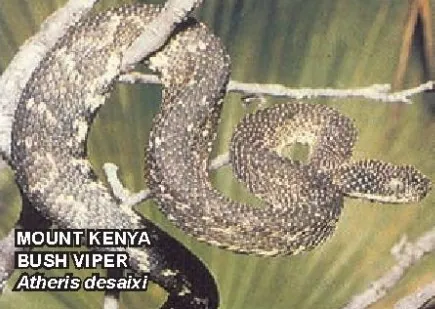
 Otú ị ga-esi mata ya
- Ground colour is greenish-black to charcoal-black, with each scale tipped in yellow or yellowish-green, giving a speckled look.1
- Some scales form a series of loops along the sides, which may join into zigzag patterns towards the back.1
- The underside is yellow near the front, fading to purplish-black towards the rear and under the tail.1
- Young snakes are mainly yellow with a white-tipped tail. They darken as they grow and reach adult colours at about 30 cm.1
- Adults are usually 40 to 60 cm long, including the tail.1
Ike nsị
Nsị na-esi n'eze nsị ya ma ọ bụ eze ya apụta mgbe ọ na-ata.
Gịnị ka nsị ọ na-agba na-eme?
Its venom contains powerful anticoagulants, which are substances that stop blood from clotting properly. A bite causes significant swelling and pain. Poor clotting may be severe enough to need blood transfusions.1
Kedu otú o si dị egwu nye mmadụ?
Ihe ize ndụ nye mmadụ: Ọ dị njọỊta ya chọrọ dọkịta. Ọnwụ anaghị adịkarị ma ọlị.In the one recorded bite, a Kenyan collector was bitten on a finger by an adult snake. The bite caused significant swelling and pain, and he made a full recovery. The snakes are relatively large for their genus, so a bite should be taken seriously.1
Gịnị ka ọ na-eme mgbe ụjọ tụrụ ya?
When captured, it strikes readily and struggles vigorously. It may also give a threat display, rubbing its coils and keeled scales together to make a loud hiss.1
 Ọ bụrụ na ọ tara
- Because the venom can stop blood clotting, any bite should be treated as serious and needs urgent medical care. In the one recorded bite, a tourniquet was applied and an unknown antivenin was given, but the antivenin probably made no difference.1
- Mee ka onye ahụ ghara imegharị ahụ, dịkwa jụụ, debe aka ma ọ bụ ụkwụ ahụ ọ tara n'ogo obi, wepụ mgbanaka na ihe ndị kekọrọ ahụ ike, kpọga ya ụlọ ọgwụ ngwa ngwa.
Na-ebu ụzọ kpọọ nọmba mberede gị mgbe niile (112, 000, 911). Nke a bụ ndụmọdụ enyemaka mbụ n'ozuzu, ọ bụghị ndụmọdụ ọgwụ. Isi ihe enyemaka mbụ
 Nọrọ na nchekwa
- Emetụla anụ ọhịa aka, ejidela ya, emekwala ya ihe ọjọọ, ọbụna obere, ọbụna ma ọ dị ka ọ na-ehi ụra ma ọ bụ nwụọ anwụ.
- Nye ya ohere. Ọ bụrụ na ị zutere otu, dị jụụ, laghachi azụ nwayọ, hapụ ya ka ọ gaa ụzọ ya.
- Ọ bụrụ na otu tara gị: dị jụụ, emegharịla ahụ, kpọọ nọmba mberede gị (112, 000, 911) ma ọ bụ gaa ụlọ ọgwụ ngwa ngwa. Cheta ka o si dị, foto na-enye aka.
Ọ naghị achụ gị. Ọ na-eji nsị ya ejide nri ma ọ bụ chebe onwe ya, ọ ga-akakwa mma n'anya ya ịzo onwe ya. Ihe ndị ọzọ gbasara ịnọ na nchekwa
Ọ hà aṅaa?
Kedu otú o si dị ogologo?
 dị ogologo dị ka unere 4 a tọgbọrọ n'ahịrị
 nwere ike ịgba ọsọ mita 100 n'ime sekọnd 110 (mmadụ kacha ọsọ chọrọ 9,6)
Kedu otú Mount Kenya bush viper si hà ma e jiri ya tụnyere GỊ?
Naanị mgbakọ na mwepụ n'ime browser gị. Ọ dịghị ihe echekwara ma ọ bụ ezigara ebe ọ bụla.
Kedu otú o si agba ọsọ?


Eziokwu
Its coloration gives it excellent camouflage in the forest, so it is very hard to spot.1
Its speckled, looped pattern changes from juvenile yellow to adult black and yellow as it grows.1
It is arboreal, which means it lives in trees and bushes, moving slowly and deliberately among the branches.1
Captive snakes soon calm down, and their threat display disappears.1
Maka ndị ọkachamara nsị
- Aha sayensị
- Atheris desaixi
- Otu
- Viper na adder
- Ezinụlọ
- Viperidae2
- Usoro
- Squamata
- Kọntinent dị iche iche
- Afrịka
- Ụmụ ọhụrụ
- It gives birth to live young. One recorded female gave birth to 13 offspring in August, each measuring 17 to 21 cm.1
- Otú ọ na-eme n'ọhịa
- Endangered on the IUCN Red List (as of 2019). Listed in Appendix II of CITES, so international trade is regulated by permit.1
- Ihe ize ndụ nye mmadụ
- 3 / 5: Ọ dị njọ3
Ebe eziokwu ndị a si
- Atheris desaixi (Wikipedia (CC BY-SA 4.0))
- Atheris desaixi (iNaturalist): aha na nhazi ọkwa.
- Venom Wiki: ọkwa ihe ize ndụ, nha nkịtị na nchepụta ọsọ bụ nke anyị. Lee otú anyị si achọpụta ha: Otú anyị si atụ ihe ize ndụ.
Eziokwu ọ bụla dị na peeji a nwere nọmba na-egosi ebe o si. Ọ bụrụ na anyị mehiere ihe, ndo, anyị bụ ndị hụrụ anụmanụ n'anya, ọ bụghị akwụkwọ akụkọ sayensị. Gwa anyị na [email protected], anyị ga-edozi ya.
 Akpị agụụ na-agụ! Venom Wiki bụ ọrụ otu onye: n'efu, na-enweghị mgbasa ozi na ndị na-esochi gị. Obere onyinye na-enyere aka idebe ya n'ịntanetị.Nye akpị nri
 Puff adder
 Gaboon viper
 Northeast African carpet viper
 West African carpet viper
 Rhinoceros viper
 West African Gaboon viper
 Black mamba
 Deathstalker
 Egyptian cobra
 Boomslang
 Fat-tailed scorpion
 Western honey bee