
 Afrịka
 Eshia
Eshia Yurop
Yurop Ndịda Amerika
 Ọstrelia na Oshenia
 Antaktika
 Oké Osimiri Pasifik
 Oké Osimiri Atlantik
 Oké Osimiri India
 Oké Osimiri Arktik
 Osimiri Mediterenian
 Osimiri Uhie
 Osimiri Karibịan
 Osimiri Coral
 Osimiri Ndịda China
 Osimiri Filipin
 Osimiri Andaman
 Osimiri Ugwu (North Sea)
 Osimiri Timor na Arafura
 Ọwara Bengal
 Ọwara California
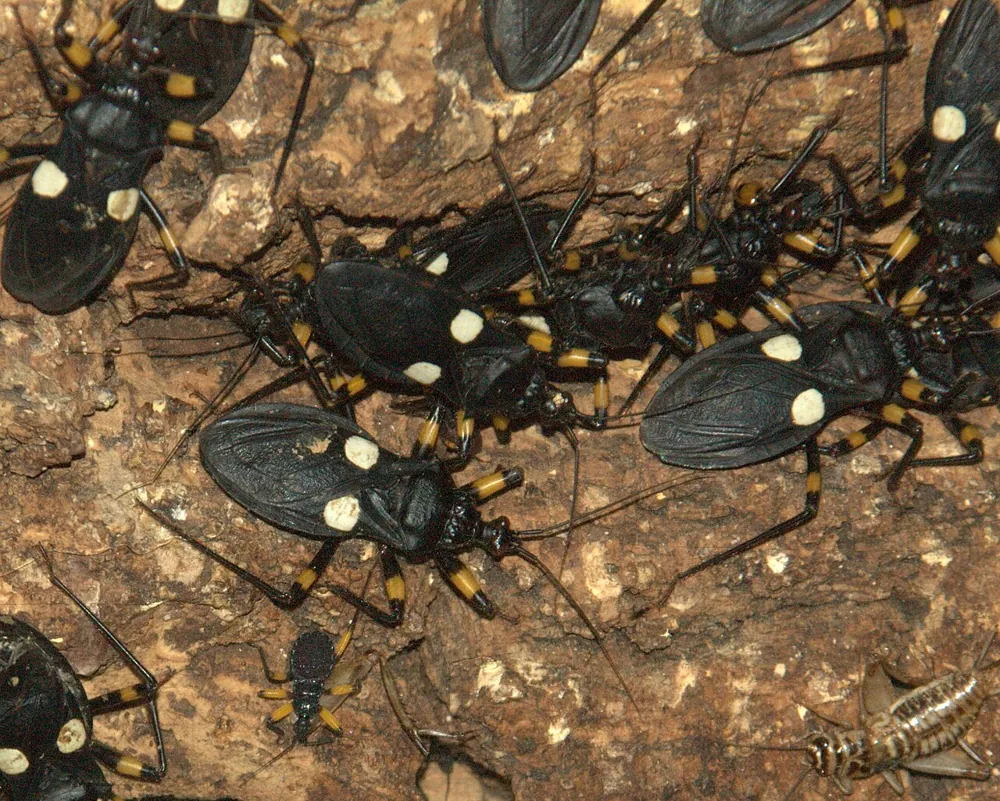
White-spotted assassin bug
 Ịta
ỊtaThe white-spotted assassin bug is a venomous true bug from tropical Africa. It hunts insects and other small creatures, and it can give a bite that is more painful than a bee sting. It lives in damp tropical forests, often in hollow tree stumps and rotting logs.1



 Otú ị ga-esi mata ya
Ike nsị
Nsị na-esi n'eze nsị ya ma ọ bụ eze ya apụta mgbe ọ na-ata.
Gịnị ka nsị ọ na-agba na-eme?
Its saliva is injected into prey, where it turns the prey's tissues to liquid so the bug can drink them. It can also spit venom, which can cause temporary blindness in humans.1
Kedu otú o si dị egwu nye mmadụ?
Ihe ize ndụ nye mmadụ: Na-afụ ụfụỌ nwere ike ịfụ ụfụ nke ukwuu, mana ọ naghị adịkarị njọ.If disturbed, it can deliver a defensive bite that is more painful than a bee sting. Its spitting venom can cause temporary blindness.1
Gịnị ka ọ na-eme mgbe ụjọ tụrụ ya?
When disturbed, it may bite, or spit venom.1
 Ọ bụrụ na ọ tara
- Maka ajị ikpuru na-agba agba: jiri teepu na-arapara arapara wepụ ha, wee saa akpụkpọ ahụ. Ehichala ya.
- Maka ịta: saa ya, mee ka ọ jụọ oyi. Chọọ enyemaka ọgwụ ma ọ bụrụ na ahụ adịghị onye ahụ mma ma ọ bụ na ọbara na-agba ya ngwa ngwa.
Na-ebu ụzọ kpọọ nọmba mberede gị mgbe niile (112, 000, 911). Nke a bụ ndụmọdụ enyemaka mbụ n'ozuzu, ọ bụghị ndụmọdụ ọgwụ. Isi ihe enyemaka mbụ
 Nọrọ na nchekwa
- Emetụla anụ ọhịa aka, ejidela ya, emekwala ya ihe ọjọọ, ọbụna obere, ọbụna ma ọ dị ka ọ na-ehi ụra ma ọ bụ nwụọ anwụ.
- Nye ya ohere. Ọ bụrụ na ị zutere otu, dị jụụ, laghachi azụ nwayọ, hapụ ya ka ọ gaa ụzọ ya.
- Ọ bụrụ na otu tara gị: dị jụụ, emegharịla ahụ, kpọọ nọmba mberede gị (112, 000, 911) ma ọ bụ gaa ụlọ ọgwụ ngwa ngwa. Cheta ka o si dị, foto na-enye aka.
Ọ naghị achụ gị. Ọ na-eji nsị ya ejide nri ma ọ bụ chebe onwe ya, ọ ga-akakwa mma n'anya ya ịzo onwe ya. Ihe ndị ọzọ gbasara ịnọ na nchekwa
Ọ hà aṅaa?
Kedu otú o si dị ogologo?
 ọ dị ogologo ihe dị ka pepa klip
Kedu otú White-spotted assassin bug si hà ma e jiri ya tụnyere GỊ?
Naanị mgbakọ na mwepụ n'ime browser gị. Ọ dịghị ihe echekwara ma ọ bụ ezigara ebe ọ bụla.
Kedu otú o si agba ọsọ?


Eziokwu
Onye na-ekpughe akụkọ ụgha
Akụkọ ụgha: Females can breed without mating, through parthenogenesis.
Eziokwu: This was once thought to be true but has recently been shown not to be. Unmated females lay eggs, but the eggs are infertile.1
Maka ndị ọkachamara nsị
- Aha sayensị
- Platymeris biguttatus
- Otu
- Ikpuru ajị na ụmụ ahụhụ
- Ezinụlọ
- Reduviidae2
- Usoro
- Hemiptera
- Kọntinent dị iche iche
- Afrịka
- Ụmụ ọhụrụ
- Unmated females lay eggs, but these eggs are infertile. Hatchlings are called nymphs, and they look like small adults.1
- Ogologo ndụ
- ihe dị ka afọ 21
- Ihe ize ndụ nye mmadụ
- 2 / 5: Na-afụ ụfụ3
Ebe eziokwu ndị a si
- Platymeris biguttatus (Wikipedia (CC BY-SA 4.0))
- Platymeris biguttatus (iNaturalist): aha na nhazi ọkwa.
- Venom Wiki: ọkwa ihe ize ndụ, nha nkịtị na nchepụta ọsọ bụ nke anyị. Lee otú anyị si achọpụta ha: Otú anyị si atụ ihe ize ndụ.
Eziokwu ọ bụla dị na peeji a nwere nọmba na-egosi ebe o si. Ọ bụrụ na anyị mehiere ihe, ndo, anyị bụ ndị hụrụ anụmanụ n'anya, ọ bụghị akwụkwọ akụkọ sayensị. Gwa anyị na [email protected], anyị ga-edozi ya.
 Akpị agụụ na-agụ! Venom Wiki bụ ọrụ otu onye: n'efu, na-enweghị mgbasa ozi na ndị na-esochi gị. Obere onyinye na-enyere aka idebe ya n'ịntanetị.Nye akpị nri
Ndị ọzọ si n'otu ahụ: Ikpuru ajị na ụmụ ahụhụ
 Pine processionaryIkpuru ajị na ụmụ ahụhụNaanị na-afụ ụfụEmetụla ya aka
 Red-spotted assassin bugIkpuru ajị na ụmụ ahụhụNaanị na-afụ ụfụ
 Giant silkworm moth caterpillarIkpuru ajị na ụmụ ahụhụNwere ike igbu mmadụEmetụla ya aka
 Vinchuca kissing bugIkpuru ajị na ụmụ ahụhụỌ chọrọ dọkịta
 Giant water bugIkpuru ajị na ụmụ ahụhụNaanị na-afụ ụfụ
 Oak processionaryIkpuru ajị na ụmụ ahụhụNaanị na-afụ ụfụEmetụla ya aka
 Black mamba
 Deathstalker
 Egyptian cobra
 Puff adder
 Boomslang
 Fat-tailed scorpion