
 Africa
 Asia
Asia Europa
 Sud America
 Australia e Oceania
 Antartide
 Oceano Pacifico
 Oceano Atlantico
 Oceano Indiano
 Oceano Artico
 Mar Mediterraneo
 Mar Rosso
 Mar dei Caraibi
 Mar dei Coralli
 Mar Cinese Meridionale
 Mar delle Filippine
 Mare delle Andamane
 Mare del Nord
 Mar di Timor e Mar degli Arafura
 Golfo del Bengala
 Golfo di California
Common eastern bumble bee
 Punture
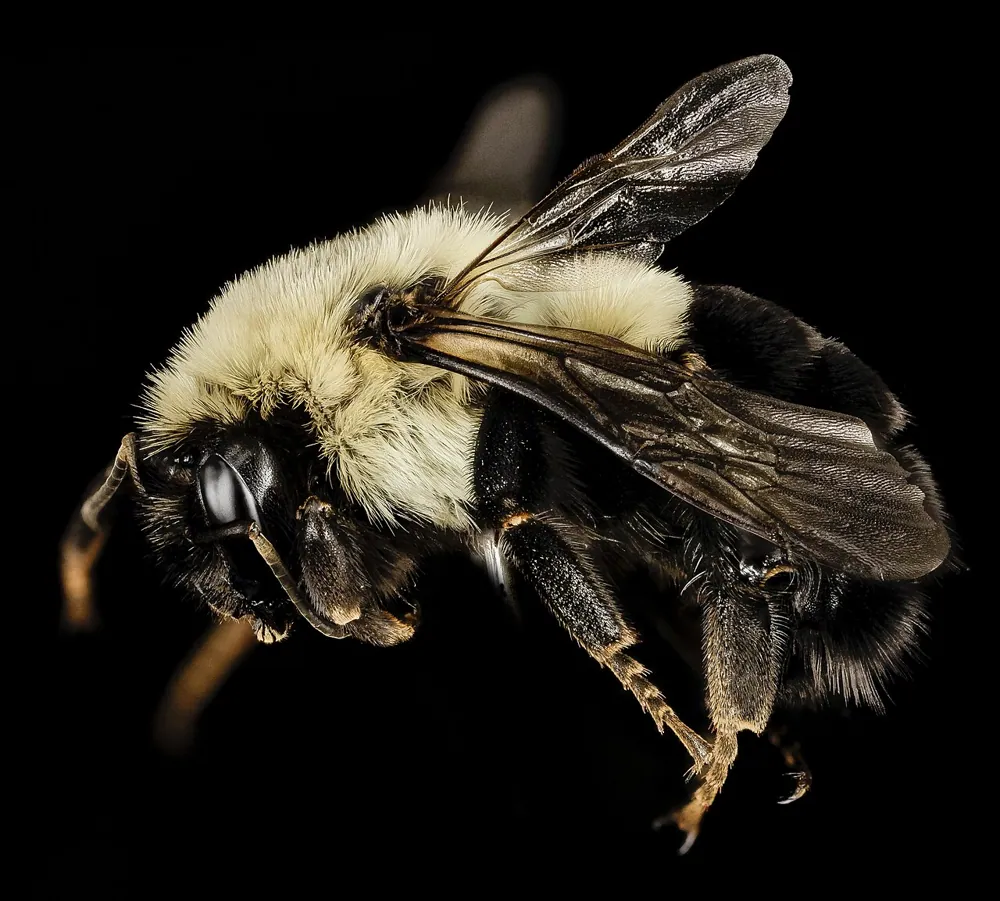
The common eastern bumblebee is a furry, black and yellow bee. It is the most commonly seen bumblebee across much of eastern North America, including towns, cities and fields. Its visits to flowers help pollinate many crops, so it matters to farmers and gardeners.1

 Come riconoscerlo
- Queens and workers are black with a yellow thorax (the middle part of the body) and a yellow first abdominal segment (the first part of the rear body).1
- Males have a yellow face and head, and their coloring is slightly different from queens and workers.1
- They have short, even hair and a long, rectangular body.1
- Queens are the largest, at 17 to 23 mm long. Workers measure 8.5 to 16 mm and males 12 to 18 mm.1
Spesso confuso con: They look similar to Bombus bimaculatus, B. perplexus, B. vagans, B. sandersoni and B. separatus.1
Potere del veleno
Il veleno esce da un pungiglione.
Quanto è pericoloso per le persone?
Pericolo per le persone: LieveCome una puntura d'ape o meno. In pratica innocuo per le persone. Se punge
- Raschia via il pungiglione d'ape e raffredda la zona.
- Se la persona fa fatica a respirare, ha il viso o la gola gonfi, o si sente svenire, è un'emergenza allergica: chiama il numero di emergenza e usa il suo autoiniettore di adrenalina, se ne ha uno.
Chiama sempre prima il numero di emergenza (112, 000, 911). Queste sono indicazioni generali di primo soccorso, non consigli medici. Primo soccorso di base
 Stai al sicuro
- Non toccare, catturare o stuzzicare mai un animale selvatico, anche se è piccolo e anche se sembra addormentato o morto.
- Lasciagli spazio. Se ne incontri uno, resta calmo, indietreggia piano e lascialo andare per la sua strada.
- Se uno ti punge: resta calmo, stai fermo, chiama il numero di emergenza (112, 000, 911) o vai subito in ospedale. Ricorda com'era, una foto aiuta.
Non ce l'ha con te. Usa il veleno per procurarsi il cibo o per difendersi, e preferisce di gran lunga nascondersi. Altro su come stare al sicuro
Dove nel mondo?
Quanto è grande?
Quanto è lungo?
 lungo più o meno come una graffetta
 potrebbe attraversare in volo un intero campo da calcio in 15 secondi
Quanto è grande Common eastern bumble bee rispetto a TE?
Solo calcoli nel tuo browser. Niente viene salvato o inviato da nessuna parte.
Quanto è veloce?


Informazioni
Queen bees can stay underwater for up to a week without drowning, which may help them survive floods or wet winters.1
Foragers use traplining, visiting flowers in the same repeatable order. This saves time and energy.1
Foraging bees share information about good food sources with other bees in the nest.1
Inside the nest, smaller workers stay near the centre and feed the young, while bigger workers work as foragers and guards on the outside.1
Commercially raised colonies are used to pollinate tomatoes, blueberries, raspberries and pumpkins in greenhouses.1
Per gli esperti di veleni
- Nome scientifico
- Bombus impatiens
- Gruppo
- Api, vespe e calabroni
- Famiglia
- Apidae2
- Ordine
- Hymenoptera
- Continenti
- Nord America
- Cuccioli
- A queen can lay about 2000 eggs in one season, but only about half of them survive to become adults. The eggs are laid in clumps throughout the nest.1
- Pericolo per le persone
- 1 / 5: Lieve3
Da dove vengono le informazioni
- Bombus impatiens (Wikipedia (CC BY-SA 4.0))
- Bombus impatiens (iNaturalist): nomi e classificazione.
- Venom Wiki: il livello di pericolo, la taglia tipica e la stima della velocità sono nostri. Guarda come li calcoliamo: Come valutiamo il pericolo.
Ogni informazione in questa pagina ha un numero che rimanda alla sua fonte. Se abbiamo sbagliato qualcosa, scusa, siamo appassionati di animali, non una rivista scientifica. Scrivici a [email protected] e lo correggeremo.
 Lo scorpione ha fame! Venom Wiki è un progetto di una sola persona: gratis, senza pubblicità e senza tracker. Una piccola mancia aiuta a tenerlo online.Dai da mangiare allo scorpione
Altri dello stesso gruppo: Api, vespe e calabroni
 Tarantula hawkApi, vespe e calabroniFa solo male
 Executioner waspApi, vespe e calabroniServe un medico
 Warrior waspApi, vespe e calabroniServe un medico
 Bald-faced hornetApi, vespe e calabroniFa solo male
 Cow killer velvet antApi, vespe e calabroniFa solo male
 Eastern cicada killerApi, vespe e calabroniInnocuo
 Terciopelo
 Eastern coral snake
 Eastern diamondback rattlesnake
 Eyelash viper
 Timber rattlesnake
 Western diamondback rattlesnake
.jpg)