
 Africa
 Asia
Asia Europa
 Sud America
 Australia e Oceania
 Antartide
 Oceano Pacifico
 Oceano Atlantico
 Oceano Indiano
 Oceano Artico
 Mar Mediterraneo
 Mar Rosso
 Mar dei Caraibi
 Mar dei Coralli
 Mar Cinese Meridionale
 Mar delle Filippine
 Mare delle Andamane
 Mare del Nord
 Mar di Timor e Mar degli Arafura
 Golfo del Bengala
 Golfo di California
Eastern yellowjacket
 Punture
The eastern yellowjacket is a black and yellow wasp that lives in eastern North America. It builds paper nests, many of them underground, and lives in large family groups called colonies. People often meet it around recreational areas and buildings, and it can give a painful sting if its nest is threatened.1
 Come riconoscerlo
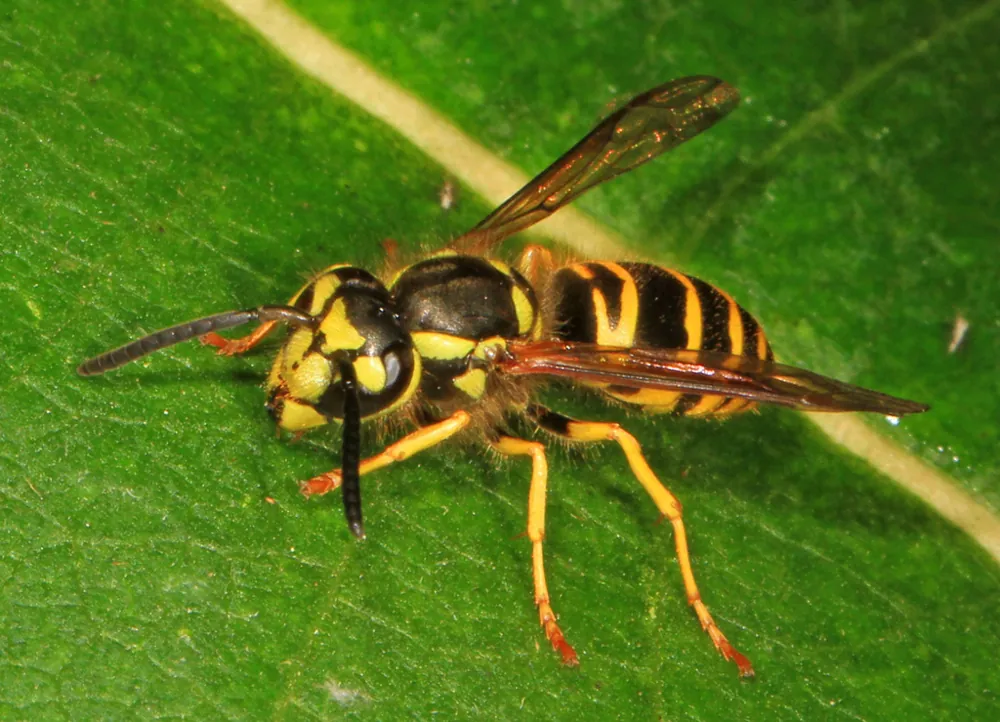
- Black and yellow lines on the head, thorax and abdomen1
- Length of about 12.7 to 15.9 mm1
- Spots on the head, which give the species its scientific name1
- Queens have one flared black line nearest the thorax, followed by thinner black lines, with two black dots between each line1
Spesso confuso con: It can be told apart from other wasp species by its smaller size and its abdominal pattern. Other yellowjacket species are also black and yellow, and in most areas where it lives, this is the most common yellowjacket species.1
Potere del veleno
Il veleno esce da un pungiglione.
Cosa fa il suo veleno?
Its sting is painful. Wasps, bees, ants and sawflies (the order Hymenoptera) are the leading cause of anaphylaxis in humans, a severe allergic reaction. These reactions are usually triggered by proteins in the venom. Peptides called vespulakinins were first found in this species and are insecticidal, meaning they kill insects.1
Quanto è pericoloso per le persone?
Pericolo per le persone: DolorosoPuò fare davvero male, ma non è quasi mai grave.It is known to inflict painful stings and defends its nest aggressively. Its nests are often treated as a pest because they are found so often in recreational and residential areas.1
Cosa fa quando ha paura?
When threatened, workers release an alarm pheromone that calls others to attack. Wasps near the nest entrance circle in a zigzag pattern and fly straight at the target.1
 Se punge
- Raschia via il pungiglione d'ape e raffredda la zona.
- Se la persona fa fatica a respirare, ha il viso o la gola gonfi, o si sente svenire, è un'emergenza allergica: chiama il numero di emergenza e usa il suo autoiniettore di adrenalina, se ne ha uno.
Chiama sempre prima il numero di emergenza (112, 000, 911). Queste sono indicazioni generali di primo soccorso, non consigli medici. Primo soccorso di base
 Stai al sicuro
- Non toccare, catturare o stuzzicare mai un animale selvatico, anche se è piccolo e anche se sembra addormentato o morto.
- Lasciagli spazio. Se ne incontri uno, resta calmo, indietreggia piano e lascialo andare per la sua strada.
- Se uno ti punge: resta calmo, stai fermo, chiama il numero di emergenza (112, 000, 911) o vai subito in ospedale. Ricorda com'era, una foto aiuta.
Non ce l'ha con te. Usa il veleno per procurarsi il cibo o per difendersi, e preferisce di gran lunga nascondersi. Altro su come stare al sicuro
Dove nel mondo?
Quanto è grande?
Quanto è lungo?
Quanto pesa?
 più corto del tuo dito mignolo
 così leggero che non lo sentiresti sulla mano
 potrebbe attraversare in volo un intero campo da calcio in 16 secondi
Quanto è grande Eastern yellowjacket rispetto a TE?
Solo calcoli nel tuo browser. Niente viene salvato o inviato da nessuna parte.
Quanto è veloce?


Informazioni
A large nest can have 10,000 to 15,000 cells, and about a third of them are queen cells.1
The nest envelope is made from chewed, decaying wood mixed with saliva, which makes it fragile.1
The species is a host for a social parasite, Vespula squamosa, which can take over its nests.1
Males gather in groups around prominent trees and bushes, where they patrol and wait for queens.1
Queens can mate with several males, and both queens and males can mate more than once.1
Per gli esperti di veleni
- Nome scientifico
- Vespula maculifrons
- Gruppo
- Api, vespe e calabroni
- Famiglia
- Vespidae2
- Ordine
- Hymenoptera
- Continenti
- Nord America
- Cuccioli
- A queen founds a new colony in spring by laying eggs in the first cells. The eggs hatch into workers, which then build and enlarge the nest.1
- Pericolo per le persone
- 2 / 5: Doloroso3
Da dove vengono le informazioni
- Eastern yellowjacket (Wikipedia (CC BY-SA 4.0))
- Vespula maculifrons (iNaturalist): nomi e classificazione.
- Venom Wiki: il livello di pericolo, la taglia tipica e la stima della velocità sono nostri. Guarda come li calcoliamo: Come valutiamo il pericolo.
Ogni informazione in questa pagina ha un numero che rimanda alla sua fonte. Se abbiamo sbagliato qualcosa, scusa, siamo appassionati di animali, non una rivista scientifica. Scrivici a [email protected] e lo correggeremo.
 Lo scorpione ha fame! Venom Wiki è un progetto di una sola persona: gratis, senza pubblicità e senza tracker. Una piccola mancia aiuta a tenerlo online.Dai da mangiare allo scorpione
Altri dello stesso gruppo: Api, vespe e calabroni
 Tarantula hawkApi, vespe e calabroniFa solo male
 Executioner waspApi, vespe e calabroniServe un medico
 Warrior waspApi, vespe e calabroniServe un medico
 Bald-faced hornetApi, vespe e calabroniFa solo male
 Cow killer velvet antApi, vespe e calabroniFa solo male
 Eastern cicada killerApi, vespe e calabroniInnocuo
 Terciopelo
 Eastern coral snake
 Eastern diamondback rattlesnake
 Eyelash viper
 Timber rattlesnake
 Western diamondback rattlesnake