
 Afirika
 Asiya
Asiya Bulaaya
 Amerika ey'Obukiikaddyo
 Awusitureeliya ne Oseyaniya
 Antakitika
 Oseyani ya Pasifiki
 Oseyani ya Atlantiki
 Oseyani y'e Buyindi
 Oseyani ya Arakitiki
 Ennyanja ya Mediterenia
 Ennyanja Emmyufu
 Ennyanja ya Karibiyani
 Ennyanja ya Korali
 Ennyanja ya China ey'Obukiikaddyo
 Ennyanja ya Bufilipino
 Ennyanja ya Andaman
 Ennyanja ey'Obukiikakkono (North Sea)
 Ennyanja ya Timor ne Arafura
 Ekikono kya Bengal
 Ekikono kya Kalifoniya
Black mamba
 Kiruma
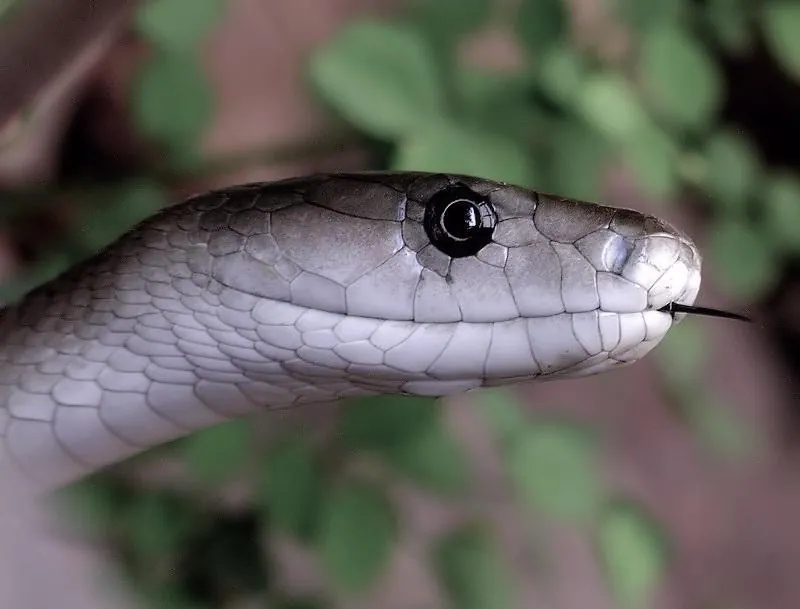
The black mamba is a long, fast, highly venomous snake that lives in parts of sub-Saharan Africa. It can climb trees as well as move across the ground. It is one of the most feared snakes in Africa because its venom acts quickly.1


 Engeri y'okukitegeera
- Long, slender body with a coffin-shaped head and a slight brow ridge1
- Body colour is usually olive, yellowish-brown, khaki or grey, rarely black1
- Greyish-white underbelly1
- Inside of the mouth is dark bluish-grey to nearly black, shown when threatened1
- Young snakes are paler, typically grey or olive green, and darken with age1
Kitera okutabulwa ne: It is often confused with the eastern green mamba, its closest relative. The two were once grouped together as one species before being separated.1
Amaanyi g'obusagwa
Obusagwa buyita mu mannyo gaakyo amawanvu (fangs) oba mu mannyo amalala nga kiruma.
Obusagwa bwakyo bukola ki?
Its venom is mainly neurotoxic, meaning it attacks the nerves. Symptoms often start within ten minutes of a bite. The venom is frequently fatal unless antivenom is given.1
Kirina akabi kenkana wa eri abantu?
Akabi eri abantu: KittaEmu ku nsolo ezisinga akabi mu nsi.It attacks people only when threatened or cornered. A survey in South Africa from 1957 to 1979 recorded 2,553 venomous snakebites, of which 75 were confirmed as black mamba bites. The World Health Organization classes it as a snake of medical importance.1
 Amawulire amalungi: abasawo balina eddagala (antivenom) oba obujjanjabi ku kino.1
Kikola ki nga kitidde?
When threatened, it opens its inky-black mouth, spreads a narrow neck flap, hisses and may strike several times in quick succession.1
 Bwe kiruma
- Antivenom is the treatment for a black mamba bite, so get to a hospital as fast as possible.1
- Omuntu muleke ateetambula era ateefu, ggyamu empeta n'ebintu ebinyweza, era omutwale mu ddwaliro mangu: eddagala eriwonya obusagwa (antivenom) bwe bujjanjabi.
Bulijjo sooka kuba ennamba y'ebigwa bitalaze (112, 000, 911). Buno bulagirizi bwa bujjanjabi obusooka obwa bulijjo, si kuwabula kwa musawo. Obujjanjabi obusooka obw'omusingi
 Weekuume
- Tokwatako, tokwata wadde okusoomooza ensolo ey'omu nsiko, ne bw'eba ntono, era ne bw'eba erabika nga yeebase oba nga efudde.
- Gireke n'ebbanga. Bw'osisinkana emu, beera mukkakkamu, dda emabega mpola era gireke egende mu kkubo lyayo.
- Bw'emu ekuluma: beera mukkakkamu, totambula, kuba ennamba y'ebigwa bitalaze (112, 000, 911) oba tuuka mu ddwaliro mangu. Jjukira bwe yali efaanana, ekifaananyi kiyamba.
Tekikunoonya. Kikozesa obusagwa bwakyo okukwata emmere oba okwekuuma, era kyandisinze kwekweka. Ebirala ku kwekuuma
Wa mu nsi?
Kinene kyenkana wa?
Kiwanvu kyenkana wa?
Kizitowa kyenkana wa?
 kiwanvu nga mbwa 4 okuva ku nnyindo okutuuka ku mukira
 kiwanvu nga ndiizi 25 eziteekeddwa mu lunyiriri
 kizitowa nga kkapa ey'awaka
 kyandisobodde okudduka mita 100 mu sikonda 22 (omuntu asinga embiro yeetaaga 9,6)
Black mamba kinene kyenkana wa bw'ogeraageranya ne GGWE?
Kubala bwokka mu browser yo. Tewali kitterekebwa wadde okusindikibwa wonna.
Kidduka kyenkana wa?

Ebituufu
It is the second-longest venomous snake in the world, after the king cobra. It is the longest venomous snake in Africa.1
It can lift as much as 40% of its body length off the ground, so bites can land on the upper body.1
Honey badgers and mongooses have some resistance to its venom, and they sometimes hunt mambas.1
Its digestive system can fully digest a meal in eight to ten hours.1
Its fangs can be up to 6.5 mm long.1
Its name in some tribal languages means "dassie catcher", because it sometimes hunts the rock hyrax, also called a dassie.1
Omumenyi w'enfumo
Enfumo: The black mamba is black, and it is always aggressive.
Amazima: Its skin is usually grey, olive or brown. The name comes from the dark inside of its mouth. It usually avoids people and attacks only when threatened or cornered.1
Ku bakugu mu busagwa
- Erinnya erya ssaayansi
- Dendroaspis polylepis
- Ekibinja
- Cobra, mamba ne krait
- Amaka
- Elapidae2
- Ensengeka
- Squamata
- Ssemazinga
- Afirika
- Abaana abawere
- It lays eggs. A female lays a clutch of 6 to 17 eggs, and the young are 40 to 60 cm long when they hatch.1
- Obuwangaazi
- nga emyaka 111
- Kiri kitya mu nsiko
- Least Concern1
- Akabi eri abantu
- 5 / 5: Kitta3
Ebituufu we biva
- Black mamba (Wikipedia (CC BY-SA 4.0))
- Dendroaspis polylepis (iNaturalist): amannya n'ensengeka y'ebika.
- Venom Wiki: omutendera gw'akabi, obunene obwa bulijjo n'okuteebereza kw'embiro bibyaffe. Laba engeri gye tubibalamu: Engeri gye tupimamu akabi.
Buli kituufu ku lupapula luno kirina ennamba eraga we kyava. Bwe tuba tukoze ensobi, tusonyiwe, tuli bayagazi ba nsolo, so si magazini ya ssaayansi. Tubuulire ku [email protected] tujja kugitereeza.
 Enjaba erumwa enjala! Venom Wiki pulojekiti ya muntu omu: ya bwereere, tewali birango era tewali bikulondoola. Akasiimo akatono kayamba okugikuuma ku yintaneti.Liisa enjaba
 Egyptian cobra
 Cape cobra
 Eastern green mamba
 Jameson's mamba
 Western green mamba
 Ashe's spitting cobra
 Deathstalker
 Puff adder
 Boomslang
 Fat-tailed scorpion
 Gaboon viper
 Western honey bee