
 Afirika
 Asiya
Asiya Bulaaya
 Amerika ey'Obukiikaddyo
 Awusitureeliya ne Oseyaniya
 Antakitika
 Oseyani ya Pasifiki
 Oseyani ya Atlantiki
 Oseyani y'e Buyindi
 Oseyani ya Arakitiki
 Ennyanja ya Mediterenia
 Ennyanja Emmyufu
 Ennyanja ya Karibiyani
 Ennyanja ya Korali
 Ennyanja ya China ey'Obukiikaddyo
 Ennyanja ya Bufilipino
 Ennyanja ya Andaman
 Ennyanja ey'Obukiikakkono (North Sea)
 Ennyanja ya Timor ne Arafura
 Ekikono kya Bengal
 Ekikono kya Kalifoniya
Eurasian water shrew
 Kiruma
The Eurasian water shrew is a small, dark mammal that lives close to fresh water across northern Europe and Asia. It is one of the few venomous mammals, and it uses its venom to paralyse the prey it catches in the water.1



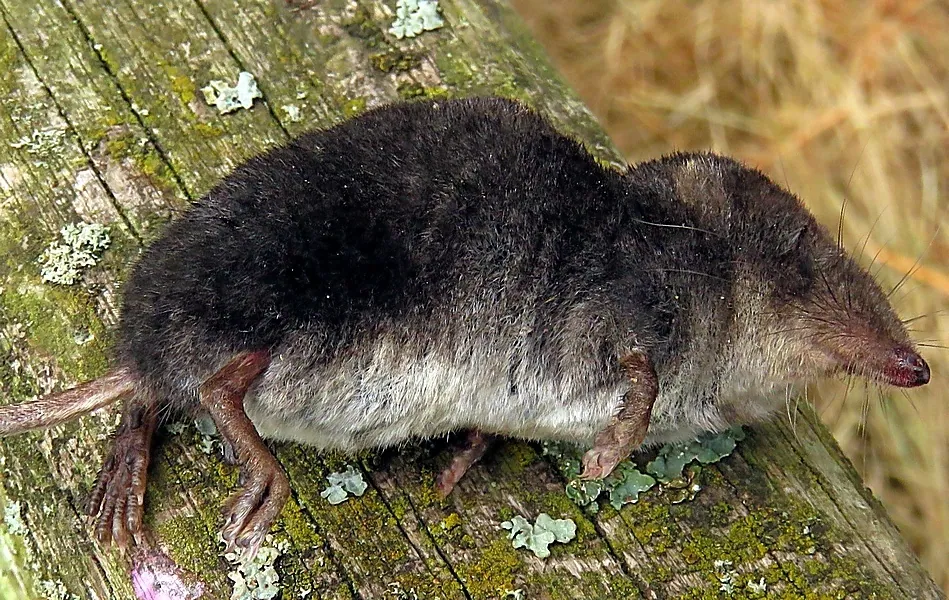
 Engeri y'okukitegeera
- Short, dark greyish-black fur on the head, back and sides1
- Dirty white underparts, sharply separated from the darker back1
- A white spot just behind the eye, and often another near the small ear1
- Black nose and a long, tapering snout1
- Sharp teeth tipped with red, and a slender tail with a keel of short white hairs underneath1
Amaanyi g'obusagwa
Obusagwa buyita mu mannyo gaakyo amawanvu (fangs) oba mu mannyo amalala nga kiruma.
Obusagwa bwakyo bukola ki?
Its saliva contains a neurotoxic venom, which attacks the nerves. It delivers this venom at the base of the skull of its prey, and the venom paralyses prey even when the prey is larger than the shrew. Tests on field voles showed the venom is lethal at a minimum dose of 15 mg per kg of body weight.1
Kirina akabi kenkana wa eri abantu?
Akabi eri abantu: KitonoNga okubojja kw'enjuki oba okutono okusingawo. Kumpi tekirina kabi eri abantu.Hantaviruses have been detected in shrews in Hungary and Poland, which raises public health concerns, although how the virus spreads is largely unknown.1
Kikola ki nga kitidde?
Its venom is thought to immobilise organisms that may threaten it.1
 Bwe kiruma
- Naaza bulungi ekiwundu era funa obuyambi bw'abasawo.
Bulijjo sooka kuba ennamba y'ebigwa bitalaze (112, 000, 911). Buno bulagirizi bwa bujjanjabi obusooka obwa bulijjo, si kuwabula kwa musawo. Obujjanjabi obusooka obw'omusingi
 Weekuume
- Tokwatako, tokwata wadde okusoomooza ensolo ey'omu nsiko, ne bw'eba ntono, era ne bw'eba erabika nga yeebase oba nga efudde.
- Gireke n'ebbanga. Bw'osisinkana emu, beera mukkakkamu, dda emabega mpola era gireke egende mu kkubo lyayo.
- Bw'emu ekuluma: beera mukkakkamu, totambula, kuba ennamba y'ebigwa bitalaze (112, 000, 911) oba tuuka mu ddwaliro mangu. Jjukira bwe yali efaanana, ekifaananyi kiyamba.
Tekikunoonya. Kikozesa obusagwa bwakyo okukwata emmere oba okwekuuma, era kyandisinze kwekweka. Ebirala ku kwekuuma
Wa mu nsi?
Kinene kyenkana wa?
Kiwanvu kyenkana wa?
Kizitowa kyenkana wa?

 kiwanvu nga bbulooka 3 ez'okuzannyisa mu lunyiriri
 kiwewuka nnyo nti tewandikiwulidde ku mukono gwo
 kyandisobodde okudduka mita 100 mu sikonda 90 (omuntu asinga embiro yeetaaga 9,6)
Eurasian water shrew kinene kyenkana wa bw'ogeraageranya ne GGWE?
Kubala bwokka mu browser yo. Tewali kitterekebwa wadde okusindikibwa wonna.
Kidduka kyenkana wa?


Ebituufu
It is one of the few venomous mammals. Its venom comes from glands at the base of its lower front teeth, and grooves along the teeth channel the venom into the bite.1
Its teeth are tipped with red because of deposits of iron, which harden the enamel of the tips.1
It can dive up to two metres underwater and stay under for about twenty seconds before it must surface to breathe.1
Its short fur holds air, so its skin stays dry while it swims.1
It has a home range of about 500 square metres, but when foraging on land it can travel up to 3 km.1
Ku bakugu mu busagwa
- Erinnya erya ssaayansi
- Neomys fodiens
- Ekibinja
- Ebisolo ebiyonsa eby'obusagwa
- Amaka
- Soricidae2
- Ensengeka
- Eulipotyphla
- Ssemazinga
- Bulaaya, Asiya
- Abaana abawere
- Litters of four to eight or more young are born after a 24-day gestation period, and females can have one or two litters a year.1
- Obuwangaazi
- nga emyaka 31
- Kiri kitya mu nsiko
- Least concern1
- Akabi eri abantu
- 1 / 5: Kitono3
Ebituufu we biva
- Eurasian water shrew (Wikipedia (CC BY-SA 4.0))
- Neomys fodiens (iNaturalist): amannya n'ensengeka y'ebika.
- Venom Wiki: omutendera gw'akabi, obunene obwa bulijjo n'okuteebereza kw'embiro bibyaffe. Laba engeri gye tubibalamu: Engeri gye tupimamu akabi.
Buli kituufu ku lupapula luno kirina ennamba eraga we kyava. Bwe tuba tukoze ensobi, tusonyiwe, tuli bayagazi ba nsolo, so si magazini ya ssaayansi. Tubuulire ku [email protected] tujja kugitereeza.
 Enjaba erumwa enjala! Venom Wiki pulojekiti ya muntu omu: ya bwereere, tewali birango era tewali bikulondoola. Akasiimo akatono kayamba okugikuuma ku yintaneti.Liisa enjaba
Ebirala okuva mu kibinja kye kimu: Ebisolo ebiyonsa eby'obusagwa
 Bengal slow lorisEbisolo ebiyonsa eby'obusagwaKiruma bwokka
 Javan slow lorisEbisolo ebiyonsa eby'obusagwaKiruma bwokka
 Pygmy slow lorisEbisolo ebiyonsa eby'obusagwaKiruma bwokka
 Sunda slow lorisEbisolo ebiyonsa eby'obusagwaKiruma bwokka
 Kayan River slow lorisEbisolo ebiyonsa eby'obusagwaKiruma bwokka
 Philippine slow lorisEbisolo ebiyonsa eby'obusagwaKiruma bwokka
Era kibeera mu: Bulaaya
 Common European adderVipers n'essalambwaKyetaaga omusawo
 Spanish flyEnsolo endala ez'obutwaKyetaaga omusawoTokwatako
 Common waspEnjuki, ennumba n'ennumba enneneKiruma bwokka
 European hornetEnjuki, ennumba n'ennumba enneneKiruma bwokka
 Fire salamanderEbikere eby'obutwa, ebikere ebinene (toads) ne newtsKiruma bwokkaTokwatako
 Western honey beeEnjuki, ennumba n'ennumba enneneKiruma bwokka