
 Afirika
 Asiya
Asiya Bulaaya
 Amerika ey'Obukiikaddyo
 Awusitureeliya ne Oseyaniya
 Antakitika
 Oseyani ya Pasifiki
 Oseyani ya Atlantiki
 Oseyani y'e Buyindi
 Oseyani ya Arakitiki
 Ennyanja ya Mediterenia
 Ennyanja Emmyufu
 Ennyanja ya Karibiyani
 Ennyanja ya Korali
 Ennyanja ya China ey'Obukiikaddyo
 Ennyanja ya Bufilipino
 Ennyanja ya Andaman
 Ennyanja ey'Obukiikakkono (North Sea)
 Ennyanja ya Timor ne Arafura
 Ekikono kya Bengal
 Ekikono kya Kalifoniya
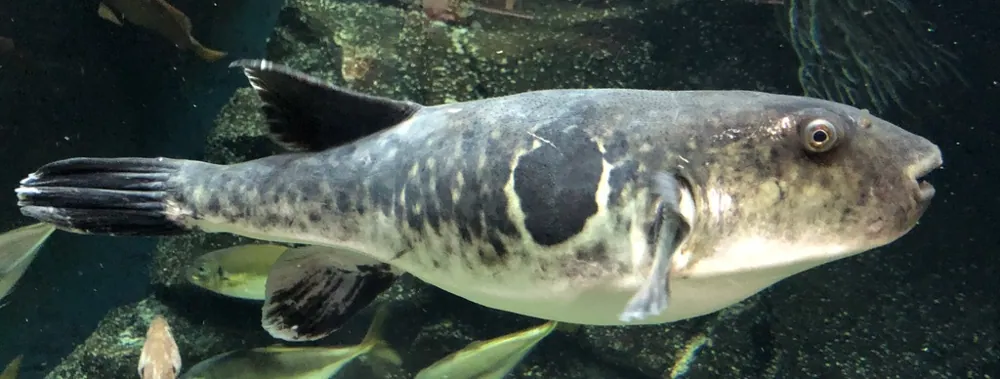
Japanese pufferfish
 Kya butwa okulya
The Japanese pufferfish, also called the tiger puffer or torafugu, is a fish that lives in cold, shallow seas off East Asia. It is famous as a food in Japan, but its liver and ovaries contain a strong toxin, so it must be prepared with great care. It is also a key animal in genetics research.1
Amaanyi g'obutwa
Kya kabi bwokka singa ekintu kikirya.
Obutwa bwakyo bukola ki?
This pufferfish is poisonous rather than venomous. Some of its organs contain tetrodotoxin, a highly toxic substance, which is concentrated in the liver and ovaries, slightly present in the intestines and flesh, and absent from the skin and testes.1
Kirina akabi kenkana wa eri abantu?
Akabi eri abantu: KittaEmu ku nsolo ezisinga akabi mu nsi.Its organs are highly toxic, so the liver and ovaries are the dangerous parts to eat. Only the flesh and skin are the parts that are safe to eat in regulated preparation.1
 Omuntu bw'aba nga akikutteko oba akiridde
- Omuntu bw'aba nga akiridde oba alina obubonero oluvannyuma lw'okukirya: kuba amangu ddala ennamba y'ebigwa bitalaze oba ekifo ekikola ku butwa (poison centre).
Bulijjo sooka kuba ennamba y'ebigwa bitalaze (112, 000, 911). Buno bulagirizi bwa bujjanjabi obusooka obwa bulijjo, si kuwabula kwa musawo. Obujjanjabi obusooka obw'omusingi
 Weekuume
- Tokwatako, tokwata wadde okusoomooza ensolo ey'omu nsiko, ne bw'eba ntono, era ne bw'eba erabika nga yeebase oba nga efudde.
- Gireke n'ebbanga. Bw'osisinkana emu, beera mukkakkamu, dda emabega mpola era gireke egende mu kkubo lyayo.
- Bw'oba okikutteko oba okiridde: tokolokota maaso go wadde akamwa, naaza engalo zo era funa obuyambi bw'abasawo.
Tekikunoonya. Obutwa bwakyo buliwo bwokka tewabaawo kikirya. Ebirala ku kwekuuma
Wa mu nsi?
Kinene kyenkana wa?
Kiwanvu kyenkana wa?
 kiwanvu nga ndiizi 2 eziteekeddwa mu lunyiriri
 kiwanvu nga bbulooka 12 ez'okuzannyisa mu lunyiriri
 kyandisobodde okuwuga obuwanvu bw'ekidiba ekinene (m 50) mu sikonda 45
Japanese pufferfish kinene kyenkana wa bw'ogeraageranya ne GGWE?
Kubala bwokka mu browser yo. Tewali kitterekebwa wadde okusindikibwa wonna.
Kidduka kyenkana wa?
Ebituufu
A genetically modified type called 22-seiki fugu, meaning 22nd-century fugu, has had four leptin receptor genes removed, which increases appetite. It grows on average 1.9 times faster than normal torafugu and is sold as food.1
Its genome is one of the smallest known among vertebrates, and it was the first vertebrate genome after the human genome to be made publicly available.1
Its genome has about 6% of the base pairs of the human genome, yet it has 22 chromosomes, close to the 23 in humans.1
It is one of the most valuable commercial fishes in Japan.1
It is used as a reference genome to help identify genes in human and other vertebrate genomes.1
Ku bakugu mu busagwa
- Erinnya erya ssaayansi
- Takifugu rubripes
- Ekibinja
- Ensolo endala ez'obutwa
- Amaka
- Tetraodontidae2
- Ensengeka
- Tetraodontiformes
- Ssemazinga
- Oseyani ya Pasifiki, Oseyani
- Abaana abawere
- Spawning takes place in estuaries. Young fish stay in river mouths and lagoons for about one year before migrating permanently to the open ocean.1
- Kiri kitya mu nsiko
- Near Threatened1
- Akabi eri abantu
- 5 / 5: Kitta3
Ebituufu we biva
- Takifugu rubripes (Wikipedia (CC BY-SA 4.0))
- Takifugu rubripes (iNaturalist): amannya n'ensengeka y'ebika.
- Venom Wiki: omutendera gw'akabi, obunene obwa bulijjo n'okuteebereza kw'embiro bibyaffe. Laba engeri gye tubibalamu: Engeri gye tupimamu akabi.
Buli kituufu ku lupapula luno kirina ennamba eraga we kyava. Bwe tuba tukoze ensobi, tusonyiwe, tuli bayagazi ba nsolo, so si magazini ya ssaayansi. Tubuulire ku [email protected] tujja kugitereeza.
 Enjaba erumwa enjala! Venom Wiki pulojekiti ya muntu omu: ya bwereere, tewali birango era tewali bikulondoola. Akasiimo akatono kayamba okugikuuma ku yintaneti.Liisa enjaba
Ebirala okuva mu kibinja kye kimu: Ensolo endala ez'obutwa
 Hawksbill sea turtleEnsolo endala ez'obutwaKisobola okutta
 Greenland sharkEnsolo endala ez'obutwaKiruma bwokka
 Silver-cheeked toadfishEnsolo endala ez'obutwaKitta
 Blackspotted pufferEnsolo endala ez'obutwaKisobola okutta
 White-spotted pufferEnsolo endala ez'obutwaKisobola okutta
 Long-spine porcupinefishEnsolo endala ez'obutwaKyetaaga omusawo
Era kibeera mu: Oseyani ya Pasifiki
 Australian box jellyfishJellyfish n'ebibojja eby'ennyanjaKittaTokwatako
 Geography coneCone snail ne octopusKitta
 Greater blue-ringed octopusCone snail ne octopusKitta
 Southern blue-ringed octopusCone snail ne octopusKitta
 Irukandji jellyfishJellyfish n'ebibojja eby'ennyanjaKisobola okuttaTokwatako
 Reef stonefishEbyennyanja eby'obusagwaKisobola okuttaTokwatako