
 Afirika
 Asiya
Asiya Bulaaya
 Amerika ey'Obukiikaddyo
 Awusitureeliya ne Oseyaniya
 Antakitika
 Oseyani ya Pasifiki
 Oseyani ya Atlantiki
 Oseyani y'e Buyindi
 Oseyani ya Arakitiki
 Ennyanja ya Mediterenia
 Ennyanja Emmyufu
 Ennyanja ya Karibiyani
 Ennyanja ya Korali
 Ennyanja ya China ey'Obukiikaddyo
 Ennyanja ya Bufilipino
 Ennyanja ya Andaman
 Ennyanja ey'Obukiikakkono (North Sea)
 Ennyanja ya Timor ne Arafura
 Ekikono kya Bengal
 Ekikono kya Kalifoniya
Negev widow
 Kiruma
The Negev widow is a venomous spider that lives in the hot, dry deserts of the Negev and the Arava valley. It builds large webs in bushes and brush, where it hunts insects at night. Its bite can cause latrodectism, the illness caused by widow spider venom.1



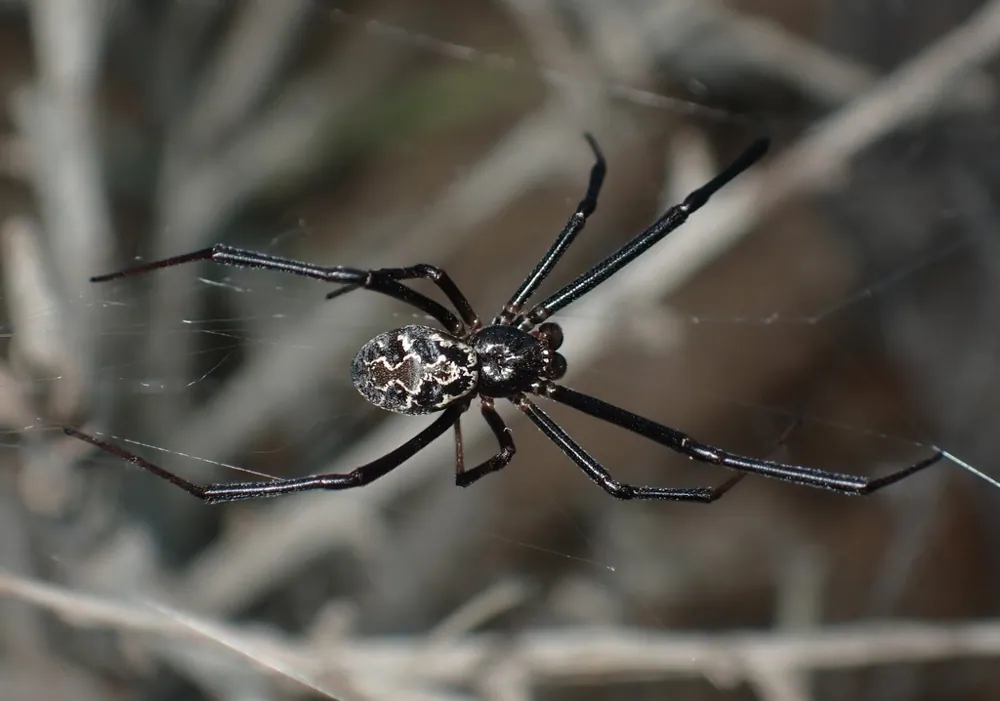
 Engeri y'okukitegeera
- Females are very dark brown. Pregnant females are light brown with a pale golden hue.1
- Males are brown with a patterned abdomen in various shades of brown, and may have grey-white spots and stripes on the abdomen.1
- Females measure 9 to 19 mm long. Males measure 3 to 7 mm long.1
- The web has a funnel of tightly woven silk near the top of the bush, often decorated with debris such as bits of plant, sand, rocks and snail shells.1
Amaanyi g'obusagwa
Obusagwa buyita mu mannyo gaakyo amawanvu (fangs) oba mu mannyo amalala nga kiruma.
Obusagwa bwakyo bukola ki?
Its venom is the widow type and can cause latrodectism, which is the illness caused by bites from widow spiders. It has been reported that its venom is about as potent as that of Latrodectus tredecimguttatus.1
Kirina akabi kenkana wa eri abantu?
Akabi eri abantu: Kya bulumiKisobola okuluma ddala, naye kumpi tekiba kya kabi kinene.Kikola ki nga kitidde?
During the day it hides from sight under the densely silk-lined nest area of its web, and it is mainly active at night.1
 Bwe kiruma
- Naaza ekifo ekirumiddwa era okiteekeko ayisi olw'obulumi. Funa obuyambi bw'abasawo singa obulumi bungi, busaasaana oba omuntu awulira bubi.
Bulijjo sooka kuba ennamba y'ebigwa bitalaze (112, 000, 911). Buno bulagirizi bwa bujjanjabi obusooka obwa bulijjo, si kuwabula kwa musawo. Obujjanjabi obusooka obw'omusingi
 Weekuume
- Tokwatako, tokwata wadde okusoomooza ensolo ey'omu nsiko, ne bw'eba ntono, era ne bw'eba erabika nga yeebase oba nga efudde.
- Gireke n'ebbanga. Bw'osisinkana emu, beera mukkakkamu, dda emabega mpola era gireke egende mu kkubo lyayo.
- Bw'emu ekuluma: beera mukkakkamu, totambula, kuba ennamba y'ebigwa bitalaze (112, 000, 911) oba tuuka mu ddwaliro mangu. Jjukira bwe yali efaanana, ekifaananyi kiyamba.
Tekikunoonya. Kikozesa obusagwa bwakyo okukwata emmere oba okwekuuma, era kyandisinze kwekweka. Ebirala ku kwekuuma
Wa mu nsi?
Kinene kyenkana wa?
Kiwanvu kyenkana wa?
 kimpi okusinga akagalo ko akatono
Negev widow kinene kyenkana wa bw'ogeraageranya ne GGWE?
Kubala bwokka mu browser yo. Tewali kitterekebwa wadde okusindikibwa wonna.
Kidduka kyenkana wa?


Ebituufu
After mating, the male may escape being eaten by living in the nest with the female for a time, but in other cases the female eats him.1
Its web has separate areas for nesting and for catching prey, and it also helps keep the spider cool by providing shade in summer.1
Its webs often include a funnel of silk decorated with debris, which may help hide the spider from predators such as birds flying overhead.1
The web's silk carries pheromones that help males find female nests.1
Its colour darkens after each moult, so the spider becomes darker as it grows older.1
Ebituufu we biva
- Latrodectus revivensis (Wikipedia (CC BY-SA 4.0))
- Latrodectus revivensis (iNaturalist): amannya n'ensengeka y'ebika.
- Venom Wiki: omutendera gw'akabi, obunene obwa bulijjo n'okuteebereza kw'embiro bibyaffe. Laba engeri gye tubibalamu: Engeri gye tupimamu akabi.
Buli kituufu ku lupapula luno kirina ennamba eraga we kyava. Bwe tuba tukoze ensobi, tusonyiwe, tuli bayagazi ba nsolo, so si magazini ya ssaayansi. Tubuulire ku [email protected] tujja kugitereeza.
 Enjaba erumwa enjala! Venom Wiki pulojekiti ya muntu omu: ya bwereere, tewali birango era tewali bikulondoola. Akasiimo akatono kayamba okugikuuma ku yintaneti.Liisa enjaba
 Mediterranean black widow
 Diving bell spider
 European yellow sac spider
 Daddy long-legs spider
 Giant huntsman spider
 Hobo spider
 Deathstalker
 Indian cobra
 Indian saw-scaled viper
 King cobra
 Puff adder
 Essalambwa lya Russell