
 Afirika
 Asiya
Asiya Bulaaya
 Amerika ey'Obukiikaddyo
 Awusitureeliya ne Oseyaniya
 Antakitika
 Oseyani ya Pasifiki
 Oseyani ya Atlantiki
 Oseyani y'e Buyindi
 Oseyani ya Arakitiki
 Ennyanja ya Mediterenia
 Ennyanja Emmyufu
 Ennyanja ya Karibiyani
 Ennyanja ya Korali
 Ennyanja ya China ey'Obukiikaddyo
 Ennyanja ya Bufilipino
 Ennyanja ya Andaman
 Ennyanja ey'Obukiikakkono (North Sea)
 Ennyanja ya Timor ne Arafura
 Ekikono kya Bengal
 Ekikono kya Kalifoniya
Oak processionary
 Ebyoya ebibojja
The oak processionary is a moth whose caterpillars feed on oak leaves and can strip trees bare. The caterpillars travel in long, nose-to-tail lines, which is how they got their name. Their fine, hair-like bristles can irritate skin and breathing, so they matter a lot to people.1

 Engeri y'okukitegeera
- Adult moths have a wingspan of 25 to 35 mm and are tan, brown and white, which makes them hard to see against oak bark.1
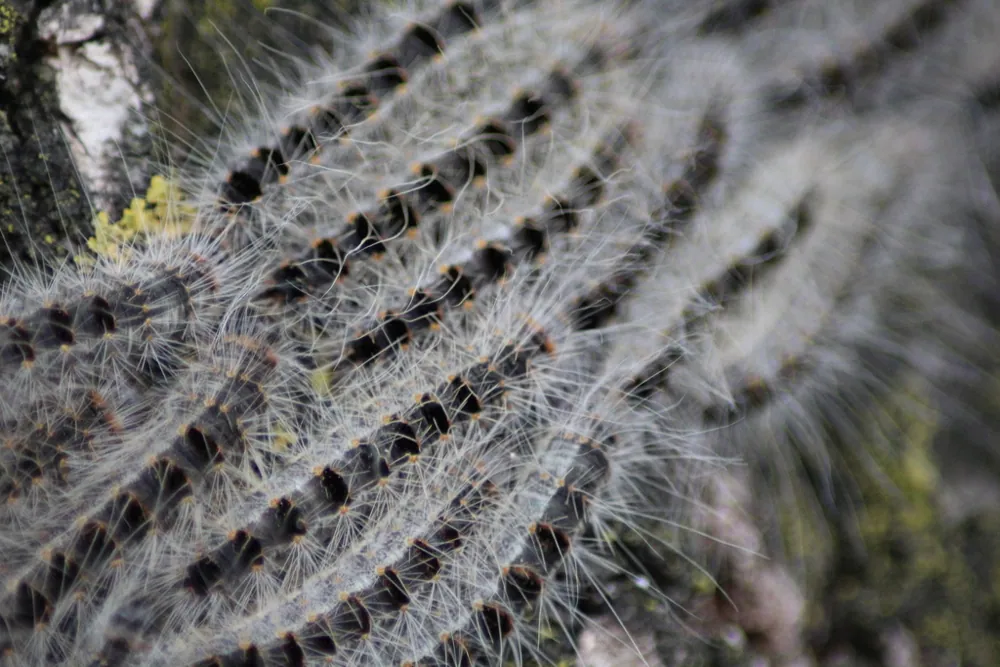
- Caterpillars have very long, white hairs that contrast with shorter hairs.1
- Caterpillars march in lines, often arrow-shaped, with a leader and rows of several caterpillars side by side.1
- Nests are white and silk-like when new, and become discoloured and hard to see over time.1
- Nests can be round, teardrop-shaped, bag-like or blanket-like, and can be found at any height on an oak tree.1
Kitera okutabulwa ne: Caterpillars of several other species may be mistaken for the oak processionary. Unlike other caterpillars, the oak processionary does not live on fences or walls, so it is mostly found in oak trees or on the ground beneath them in late spring and early summer.1
Amaanyi g'obusagwa
Obwoya obutono oba obusongovu bukutukira mu lususu ne bubojja.
Obusagwa bwakyo bukola ki?
The caterpillars' back bristles contain a urticating toxin called thaumetopoein, a protein that irritates the skin. Contact can cause a papular rash and itching, and the hairs can also cause eye inflammation (conjunctivitis). If the hairs are breathed in, they can cause sore throat (pharyngitis), breathing problems, asthma, or in rare cases anaphylaxis, a severe allergic reaction.1
Kirina akabi kenkana wa eri abantu?
Akabi eri abantu: Kya bulumiKisobola okuluma ddala, naye kumpi tekiba kya kabi kinene.The moths are an increasing nuisance to people as their range grows, and the hairs can cause a skin condition called epidemic caterpillar dermatitis. The hairs break off easily, float in the air, and can stay harmful for several seasons. Mowing a lawn can bring people into contact with them.1
 Amawulire amalungi: abasawo balina eddagala (antivenom) oba obujjanjabi ku kino.1
Kikola ki nga kitidde?
The caterpillars defend themselves with thousands of pointed, easily broken bristles on their backs that float in the air and irritate the skin.1
 Bw'okwata ku byoya byakyo
- The skin irritation and itching can be largely relieved by cetirizine-based antihistamine tablets. Anyone with breathing problems or a severe reaction needs urgent medical help.1
- Ku byoya by'ebisaanyi ebibojja: bijjeeko ne tteepu ekwata, oluvannyuma naaza olususu. Tokolokota.
- Ku kulumwa: naaza era nyogoza. Funa obuyambi bw'abasawo singa omuntu awulira bubi oba omusaayi gumuvaamu mangu.
Bulijjo sooka kuba ennamba y'ebigwa bitalaze (112, 000, 911). Buno bulagirizi bwa bujjanjabi obusooka obwa bulijjo, si kuwabula kwa musawo. Obujjanjabi obusooka obw'omusingi
 Weekuume
- Tokwatako, tokwata wadde okusoomooza ensolo ey'omu nsiko, ne bw'eba ntono, era ne bw'eba erabika nga yeebase oba nga efudde.
- Gireke n'ebbanga. Bw'osisinkana emu, beera mukkakkamu, dda emabega mpola era gireke egende mu kkubo lyayo.
- Bw'okwata ku byoya byayo: beera mukkakkamu, totambula, kuba ennamba y'ebigwa bitalaze (112, 000, 911) oba tuuka mu ddwaliro mangu. Jjukira bwe yali efaanana, ekifaananyi kiyamba.
Tekikunoonya. Kikozesa obusagwa bwakyo okukwata emmere oba okwekuuma, era kyandisinze kwekweka. Ebirala ku kwekuuma
Wa mu nsi?
Kinene kyenkana wa?
Kiwanvu kyenkana wa?
 kiwanvu nga pepa kiripu
 kirwawo okusinga ekkovu ly'omu nnimiro
Oak processionary kinene kyenkana wa bw'ogeraageranya ne GGWE?
Kubala bwokka mu browser yo. Tewali kitterekebwa wadde okusindikibwa wonna.
Kidduka kyenkana wa?

Ebituufu
Older caterpillars can have up to 63,000 pointed defensive bristles on their backs.1
In 2007, soldiers were deployed to burn infestations in the Belgian province of Limburg.1
The UK government spent £37 million trying to control the caterpillars, which had spread to all 33 London boroughs by 2019.1
In the Netherlands, great tits have been observed eating the young caterpillars before their hairs develop in April.1
In 2023, an outbreak in Ireland was successfully eradicated.1
Ku bakugu mu busagwa
- Erinnya erya ssaayansi
- Thaumetopoea processionea
- Ekibinja
- Ebisaanyi n'ebiwuka
- Amaka
- Notodontidae2
- Ensengeka
- Lepidoptera
- Ssemazinga
- Bulaaya
- Abaana abawere
- Eggs hatch into caterpillars that build communal silk nests in oak trees, and the caterpillars later pupate into adult moths in these nests.1
- Akabi eri abantu
- 2 / 5: Kya bulumi3
Ebituufu we biva
- Oak processionary (Wikipedia (CC BY-SA 4.0))
- Thaumetopoea processionea (iNaturalist): amannya n'ensengeka y'ebika.
- Venom Wiki: omutendera gw'akabi, obunene obwa bulijjo n'okuteebereza kw'embiro bibyaffe. Laba engeri gye tubibalamu: Engeri gye tupimamu akabi.
Buli kituufu ku lupapula luno kirina ennamba eraga we kyava. Bwe tuba tukoze ensobi, tusonyiwe, tuli bayagazi ba nsolo, so si magazini ya ssaayansi. Tubuulire ku [email protected] tujja kugitereeza.
 Enjaba erumwa enjala! Venom Wiki pulojekiti ya muntu omu: ya bwereere, tewali birango era tewali bikulondoola. Akasiimo akatono kayamba okugikuuma ku yintaneti.Liisa enjaba
Ebirala okuva mu kibinja kye kimu: Ebisaanyi n'ebiwuka
 Pine processionaryEbisaanyi n'ebiwukaKiruma bwokkaTokwatako
 Common bombardier beetleEbisaanyi n'ebiwukaTekirina kabi
 Brown-tail mothEbisaanyi n'ebiwukaKiruma bwokkaTokwatako
 Masked hunterEbisaanyi n'ebiwukaKiruma bwokka
 Pine-tree lappetEbisaanyi n'ebiwukaKiruma bwokkaTokwatako
 Common backswimmerEbisaanyi n'ebiwukaTekirina kabi
Era kibeera mu: Bulaaya
 Common European adderVipers n'essalambwaKyetaaga omusawo
 Spanish flyEnsolo endala ez'obutwaKyetaaga omusawoTokwatako
 Common waspEnjuki, ennumba n'ennumba enneneKiruma bwokka
 European hornetEnjuki, ennumba n'ennumba enneneKiruma bwokka
 Fire salamanderEbikere eby'obutwa, ebikere ebinene (toads) ne newtsKiruma bwokkaTokwatako
 Western honey beeEnjuki, ennumba n'ennumba enneneKiruma bwokka