
 Afirika
 Asiya
Asiya Bulaaya
 Amerika ey'Obukiikaddyo
 Awusitureeliya ne Oseyaniya
 Antakitika
 Oseyani ya Pasifiki
 Oseyani ya Atlantiki
 Oseyani y'e Buyindi
 Oseyani ya Arakitiki
 Ennyanja ya Mediterenia
 Ennyanja Emmyufu
 Ennyanja ya Karibiyani
 Ennyanja ya Korali
 Ennyanja ya China ey'Obukiikaddyo
 Ennyanja ya Bufilipino
 Ennyanja ya Andaman
 Ennyanja ey'Obukiikakkono (North Sea)
 Ennyanja ya Timor ne Arafura
 Ekikono kya Bengal
 Ekikono kya Kalifoniya
Rhodnius kissing bug
 Kiruma
The Rhodnius kissing bug is a blood-feeding insect that feeds on the skin around people's mouths while they sleep. It lives in northern South America and Central America, and it matters because it spreads the parasite that causes Chagas disease.1



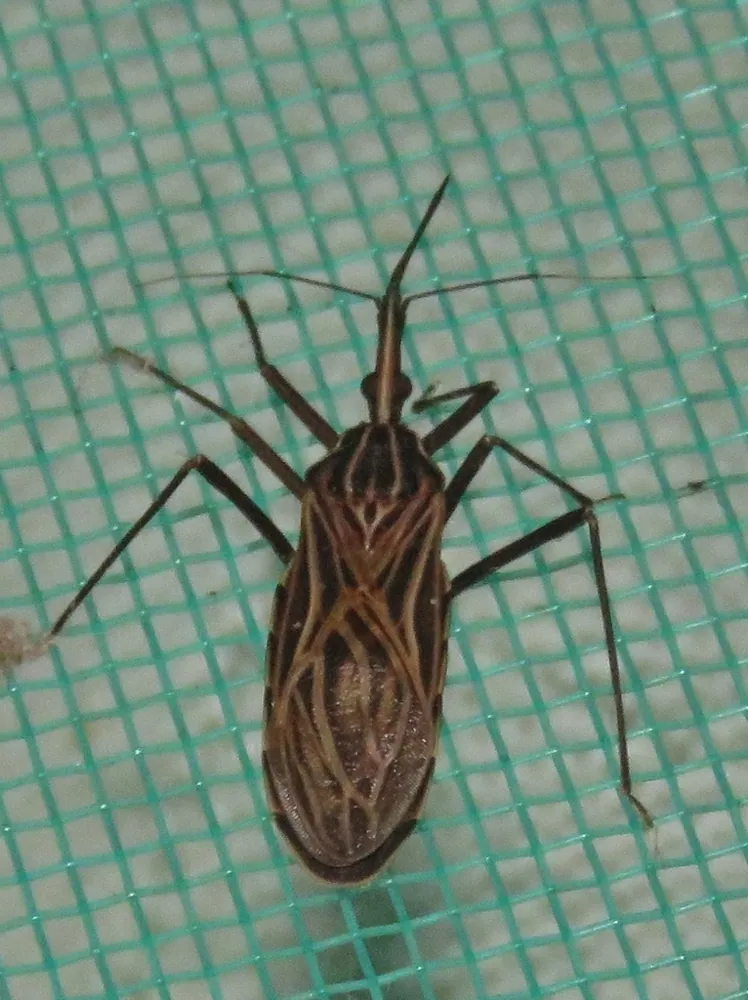
 Engeri y'okukitegeera
Amaanyi g'obusagwa
Obusagwa buyita mu mannyo gaakyo amawanvu (fangs) oba mu mannyo amalala nga kiruma.
Kirina akabi kenkana wa eri abantu?
Akabi eri abantu: Kya maanyiOkulumwa kwetaaga omusawo. Okufa kubaawo kitono nnyo.It is the main carrier of the parasite that causes Chagas disease in northern South America, and the only carrier in Central America. The parasite is passed in the bug's faeces straight after a blood meal. People can become infected when they scratch the bite and rub the faeces into it, through a blood transfusion, or by eating food contaminated with the bug's faeces.1
 Bwe kiruma
- Ku byoya by'ebisaanyi ebibojja: bijjeeko ne tteepu ekwata, oluvannyuma naaza olususu. Tokolokota.
- Ku kulumwa: naaza era nyogoza. Funa obuyambi bw'abasawo singa omuntu awulira bubi oba omusaayi gumuvaamu mangu.
Bulijjo sooka kuba ennamba y'ebigwa bitalaze (112, 000, 911). Buno bulagirizi bwa bujjanjabi obusooka obwa bulijjo, si kuwabula kwa musawo. Obujjanjabi obusooka obw'omusingi
 Weekuume
- Tokwatako, tokwata wadde okusoomooza ensolo ey'omu nsiko, ne bw'eba ntono, era ne bw'eba erabika nga yeebase oba nga efudde.
- Gireke n'ebbanga. Bw'osisinkana emu, beera mukkakkamu, dda emabega mpola era gireke egende mu kkubo lyayo.
- Bw'emu ekuluma: beera mukkakkamu, totambula, kuba ennamba y'ebigwa bitalaze (112, 000, 911) oba tuuka mu ddwaliro mangu. Jjukira bwe yali efaanana, ekifaananyi kiyamba.
Tekikunoonya. Kikozesa obusagwa bwakyo okukwata emmere oba okwekuuma, era kyandisinze kwekweka. Ebirala ku kwekuuma
Wa mu nsi?
Kinene kyenkana wa?
Kiwanvu kyenkana wa?
 kiwanvu nga pepa kiripu
Rhodnius kissing bug kinene kyenkana wa bw'ogeraageranya ne GGWE?
Kubala bwokka mu browser yo. Tewali kitterekebwa wadde okusindikibwa wonna.
Kidduka kyenkana wa?


Ebituufu
Its saliva contains lipocalins, which bind the chemical serotonin. This helps stop the host's blood vessels from narrowing while the bug feeds.1
Sir Vincent Wigglesworth used this bug to study insect hormones. He showed that removing the head during a larval stage makes the insect develop into an adult early.1
Specimens from Venezuela escaped from a research laboratory in San Salvador in 1915 and then spread through Central America, probably helped by travellers carrying them.1
Its wild populations have been linked to the transfer of transposons, which are pieces of DNA that move around, between the bug and some of its hosts, such as squirrel monkeys and opossums.1
The insect goes through five larval stages, and each one ends in a moult about 12 to 15 days after a large blood meal.1
Ebituufu we biva
- Rhodnius prolixus (Wikipedia (CC BY-SA 4.0))
- Rhodnius prolixus (iNaturalist): amannya n'ensengeka y'ebika.
- Venom Wiki: omutendera gw'akabi, obunene obwa bulijjo n'okuteebereza kw'embiro bibyaffe. Laba engeri gye tubibalamu: Engeri gye tupimamu akabi.
Buli kituufu ku lupapula luno kirina ennamba eraga we kyava. Bwe tuba tukoze ensobi, tusonyiwe, tuli bayagazi ba nsolo, so si magazini ya ssaayansi. Tubuulire ku [email protected] tujja kugitereeza.
 Enjaba erumwa enjala! Venom Wiki pulojekiti ya muntu omu: ya bwereere, tewali birango era tewali bikulondoola. Akasiimo akatono kayamba okugikuuma ku yintaneti.Liisa enjaba
Ebirala okuva mu kibinja kye kimu: Ebisaanyi n'ebiwuka
 Giant silkworm moth caterpillarEbisaanyi n'ebiwukaKisobola okuttaTokwatako
 Vinchuca kissing bugEbisaanyi n'ebiwukaKyetaaga omusawo
 Giant water bugEbisaanyi n'ebiwukaKiruma bwokka
 Puss caterpillarEbisaanyi n'ebiwukaKiruma bwokkaTokwatako
 Saddleback caterpillarEbisaanyi n'ebiwukaKiruma bwokkaTokwatako
 Wheel bugEbisaanyi n'ebiwukaKiruma bwokka
Era kibeera mu: Amerika ey'Obukiikakkono
 TerciopeloPit vipers (emisota egiwulira ebbugumu)Kitta
 Eastern coral snakeEmisota gya korali (coral snakes)Kisobola okutta
 Eastern diamondback rattlesnakeRattlesnakeKisobola okutta
 Eyelash viperPit vipers (emisota egiwulira ebbugumu)Kisobola okutta
 Timber rattlesnakeRattlesnakeKisobola okutta
 Western diamondback rattlesnakeRattlesnakeKisobola okutta