
 Afirika
 Asiya
Asiya Bulaaya
 Amerika ey'Obukiikaddyo
 Awusitureeliya ne Oseyaniya
 Antakitika
 Oseyani ya Pasifiki
 Oseyani ya Atlantiki
 Oseyani y'e Buyindi
 Oseyani ya Arakitiki
 Ennyanja ya Mediterenia
 Ennyanja Emmyufu
 Ennyanja ya Karibiyani
 Ennyanja ya Korali
 Ennyanja ya China ey'Obukiikaddyo
 Ennyanja ya Bufilipino
 Ennyanja ya Andaman
 Ennyanja ey'Obukiikakkono (North Sea)
 Ennyanja ya Timor ne Arafura
 Ekikono kya Bengal
 Ekikono kya Kalifoniya
Violet carpenter bee
 Kibojja
The violet carpenter bee is one of the largest bees in Europe. It is also found across parts of Asia. It nests in dead wood, which is where the name 'carpenter bee' comes from.1
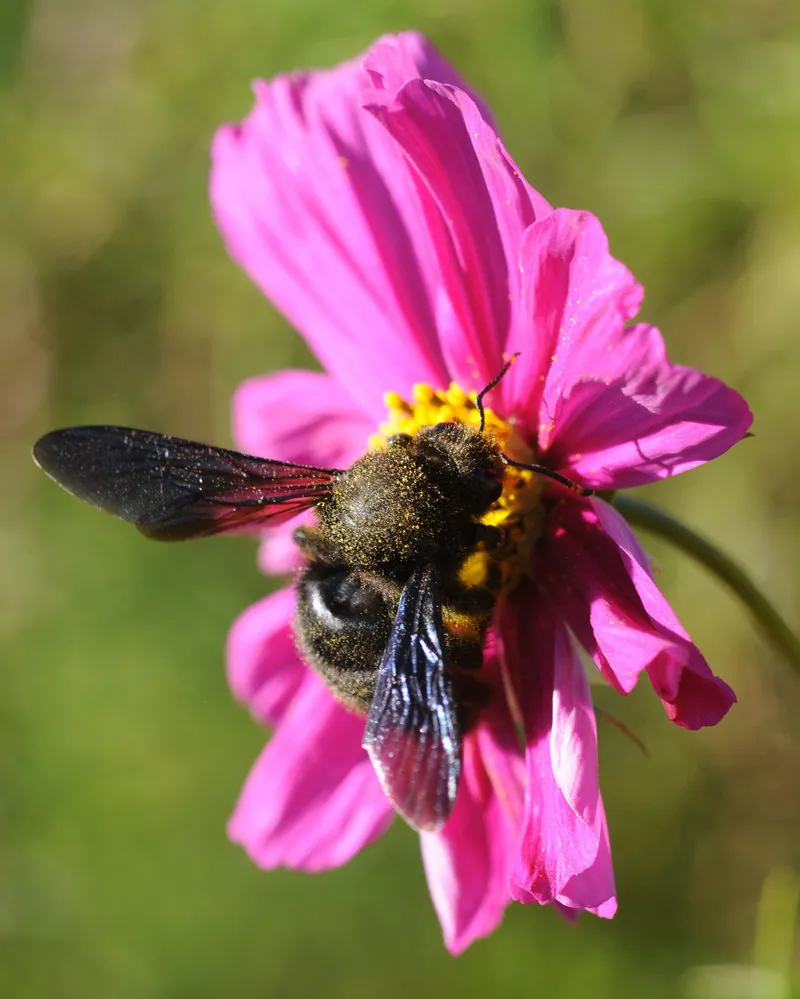
 Engeri y'okukitegeera
- One of the largest bees in Europe1
- Makes its nest in dead wood1
- Adults emerge from hibernation in spring, usually around April or May1
- In late spring or early summer, adults are seen searching for mates and nesting sites1
Kitera okutabulwa ne: In India, several all-black Xylocopa species are called 'bhanvra' (or 'bhomora' in Assamese). Sightings of these are often wrongly blamed on this species. This species is found only in the northern regions of Jammu and Kashmir and Punjab. Most sightings refer to other black carpenter bees, such as X. nasalis, X. tenuiscapa or X. tranquebarorum.1
Amaanyi g'obusagwa
Obusagwa buyita mu ggwa lyakyo eribojja.
Kirina akabi kenkana wa eri abantu?
Akabi eri abantu: KitonoNga okubojja kw'enjuki oba okutono okusingawo. Kumpi tekirina kabi eri abantu.It is not particularly aggressive and will attack only if forced to.1
Kikola ki nga kitidde?
It will sting only if forced to.1
 Bwe kibojja
- Kalakata oggyemu eriggwa ly'enjuki era onyogoze ekifo.
- Omuntu bw'aba nga tassa bulungi, ng'azimbye mu maaso oba mu mumiro, oba ng'awulira ng'agenda kuzirika, buno bubenje bwa alergy obw'amangu: kuba ennamba y'ebigwa bitalaze era kozesa empiso ye eya adrenaline (adrenaline pen) bw'aba nga agirina.
Bulijjo sooka kuba ennamba y'ebigwa bitalaze (112, 000, 911). Buno bulagirizi bwa bujjanjabi obusooka obwa bulijjo, si kuwabula kwa musawo. Obujjanjabi obusooka obw'omusingi
 Weekuume
- Tokwatako, tokwata wadde okusoomooza ensolo ey'omu nsiko, ne bw'eba ntono, era ne bw'eba erabika nga yeebase oba nga efudde.
- Gireke n'ebbanga. Bw'osisinkana emu, beera mukkakkamu, dda emabega mpola era gireke egende mu kkubo lyayo.
- Bw'emu ekubojja: beera mukkakkamu, totambula, kuba ennamba y'ebigwa bitalaze (112, 000, 911) oba tuuka mu ddwaliro mangu. Jjukira bwe yali efaanana, ekifaananyi kiyamba.
Tekikunoonya. Kikozesa obusagwa bwakyo okukwata emmere oba okwekuuma, era kyandisinze kwekweka. Ebirala ku kwekuuma
Wa mu nsi?
Kinene kyenkana wa?
Kiwanvu kyenkana wa?
 kiwanvu nga pepa kiripu
 kyandisobodde okubuuka okusala ekisaawe ky'omupiira kyonna mu sikonda 13
Violet carpenter bee kinene kyenkana wa bw'ogeraageranya ne GGWE?
Kubala bwokka mu browser yo. Tewali kitterekebwa wadde okusindikibwa wonna.
Kidduka kyenkana wa?


Ebituufu
It was found breeding in England for the first time in 2007, in Leicestershire.1
Its range has expanded north in France, Germany and the Channel Islands.1
Adults hibernate over winter in old nest tunnels.1
Like most carpenter bees, it nests in dead wood rather than in hives.1
The female creates her nest alone, as other solitary bees do.1
Omumenyi w'enfumo
Enfumo: Every all-black carpenter bee in India is a violet carpenter bee, called 'bhanvra'.
Amazima: This species is found only in the northern regions of Jammu and Kashmir and Punjab. Most black carpenter bees called bhanvra belong to other Xylocopa species.1
Ku bakugu mu busagwa
- Erinnya erya ssaayansi
- Xylocopa violacea
- Ekibinja
- Enjuki, ennumba n'ennumba ennene
- Amaka
- Apidae2
- Ensengeka
- Hymenoptera
- Ssemazinga
- Bulaaya, Asiya
- Abaana abawere
- The female builds the nest alone. She lays eggs in a series of small cells, each supplied with a pollen ball for the larva to feed on. Adults emerge in late summer and then hibernate until the following year.1
- Akabi eri abantu
- 1 / 5: Kitono3
Ebituufu we biva
- Xylocopa violacea (Wikipedia (CC BY-SA 4.0))
- Xylocopa violacea (iNaturalist): amannya n'ensengeka y'ebika.
- Venom Wiki: omutendera gw'akabi, obunene obwa bulijjo n'okuteebereza kw'embiro bibyaffe. Laba engeri gye tubibalamu: Engeri gye tupimamu akabi.
Buli kituufu ku lupapula luno kirina ennamba eraga we kyava. Bwe tuba tukoze ensobi, tusonyiwe, tuli bayagazi ba nsolo, so si magazini ya ssaayansi. Tubuulire ku [email protected] tujja kugitereeza.
 Enjaba erumwa enjala! Venom Wiki pulojekiti ya muntu omu: ya bwereere, tewali birango era tewali bikulondoola. Akasiimo akatono kayamba okugikuuma ku yintaneti.Liisa enjaba
Ebirala okuva mu kibinja kye kimu: Enjuki, ennumba n'ennumba ennene
 Asian giant hornetEnjuki, ennumba n'ennumba enneneKisobola okutta
 Common waspEnjuki, ennumba n'ennumba enneneKiruma bwokka
 European hornetEnjuki, ennumba n'ennumba enneneKiruma bwokka
 Western honey beeEnjuki, ennumba n'ennumba enneneKiruma bwokka
 Giant honey beeEnjuki, ennumba n'ennumba enneneKyetaaga omusawo
 Asian hornetEnjuki, ennumba n'ennumba enneneKiruma bwokka
Era kibeera mu: Bulaaya
 Common European adderVipers n'essalambwaKyetaaga omusawo
 Spanish flyEnsolo endala ez'obutwaKyetaaga omusawoTokwatako
 Fire salamanderEbikere eby'obutwa, ebikere ebinene (toads) ne newtsKiruma bwokkaTokwatako
 Blunt-nosed viperVipers n'essalambwaKisobola okutta
 Nose-horned viperVipers n'essalambwaKisobola okutta
 Ottoman viperVipers n'essalambwaKisobola okutta