
 Afirika
 Asiya
Asiya Bulaaya
 Amerika ey'Obukiikaddyo
 Awusitureeliya ne Oseyaniya
 Antakitika
 Oseyani ya Pasifiki
 Oseyani ya Atlantiki
 Oseyani y'e Buyindi
 Oseyani ya Arakitiki
 Ennyanja ya Mediterenia
 Ennyanja Emmyufu
 Ennyanja ya Karibiyani
 Ennyanja ya Korali
 Ennyanja ya China ey'Obukiikaddyo
 Ennyanja ya Bufilipino
 Ennyanja ya Andaman
 Ennyanja ey'Obukiikakkono (North Sea)
 Ennyanja ya Timor ne Arafura
 Ekikono kya Bengal
 Ekikono kya Kalifoniya
White-marked tussock moth
 Ebyoya ebibojja
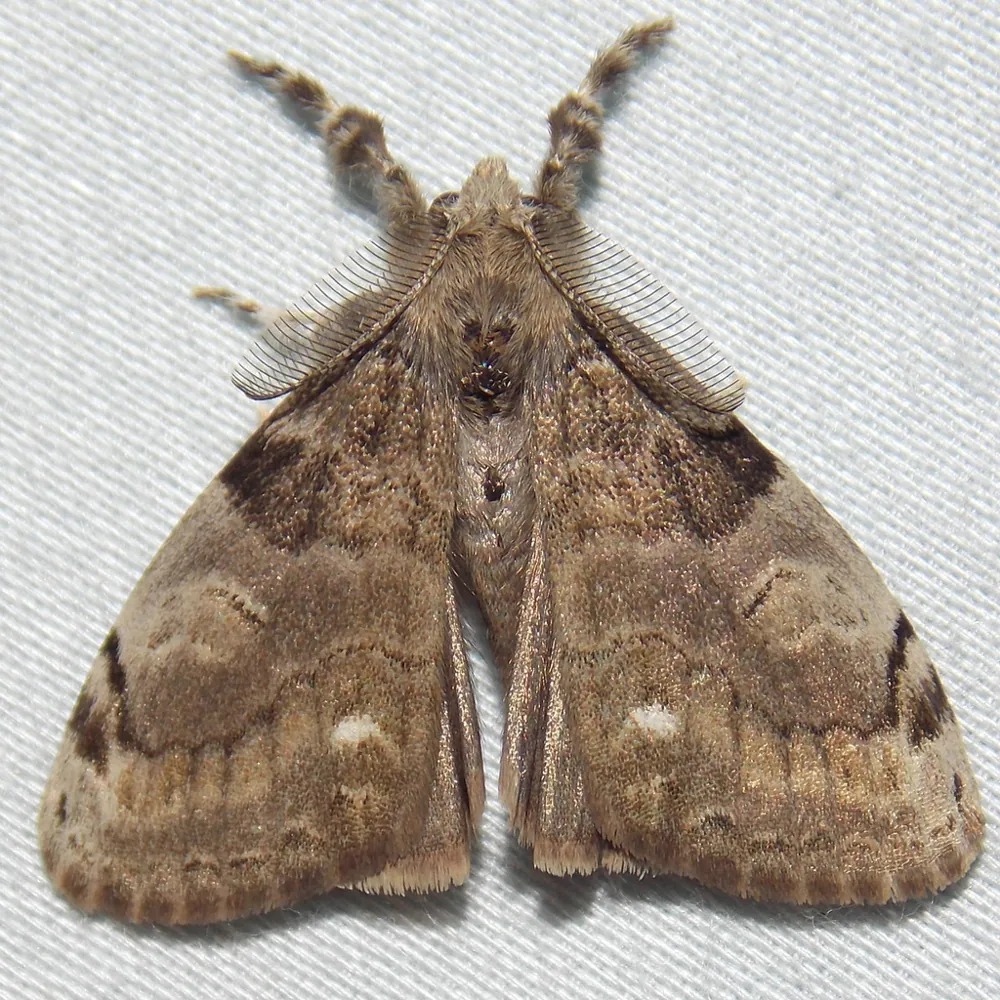
The white-marked tussock moth is a moth whose caterpillar is brightly coloured and covered in hairs. It is very common in late summer in eastern North America, and its hairs can cause an allergic reaction in many people who touch them.1

 Engeri y'okukitegeera
- Caterpillar has a bright red head and yellow or white stripes on the body, with a black stripe along the middle of the back1
- Caterpillar has bright red glands at the hind end of the back and four white, toothbrush-like tufts standing out from the back1
- Caterpillar has a grey-brown hair pencil at its hind end1
- Adult males are grey with wavy black lines and a white spot on the forewings1
- Adult males have very feathery antennae; females have reduced wings and stay near their cocoon1
Kitera okutabulwa ne: The vapourer (Orgyia antiqua) is similar to the adult male but is a rusty colour rather than grey.1
Amaanyi g'obusagwa
Obwoya obutono oba obusongovu bukutukira mu lususu ne bubojja.
Kirina akabi kenkana wa eri abantu?
Akabi eri abantu: KitonoNga okubojja kw'enjuki oba okutono okusingawo. Kumpi tekirina kabi eri abantu.Touching the hairs of the caterpillar sets off an allergic reaction in many humans.1
Kikola ki nga kitidde?
The caterpillar has bright red defensive glands on the hind end of its back, and its hairs can cause an allergic reaction if touched.1
 Bw'okwata ku byoya byakyo
- Ku byoya by'ebisaanyi ebibojja: bijjeeko ne tteepu ekwata, oluvannyuma naaza olususu. Tokolokota.
- Ku kulumwa: naaza era nyogoza. Funa obuyambi bw'abasawo singa omuntu awulira bubi oba omusaayi gumuvaamu mangu.
Bulijjo sooka kuba ennamba y'ebigwa bitalaze (112, 000, 911). Buno bulagirizi bwa bujjanjabi obusooka obwa bulijjo, si kuwabula kwa musawo. Obujjanjabi obusooka obw'omusingi
 Weekuume
- Tokwatako, tokwata wadde okusoomooza ensolo ey'omu nsiko, ne bw'eba ntono, era ne bw'eba erabika nga yeebase oba nga efudde.
- Gireke n'ebbanga. Bw'osisinkana emu, beera mukkakkamu, dda emabega mpola era gireke egende mu kkubo lyayo.
- Bw'okwata ku byoya byayo: beera mukkakkamu, totambula, kuba ennamba y'ebigwa bitalaze (112, 000, 911) oba tuuka mu ddwaliro mangu. Jjukira bwe yali efaanana, ekifaananyi kiyamba.
Tekikunoonya. Kikozesa obusagwa bwakyo okukwata emmere oba okwekuuma, era kyandisinze kwekweka. Ebirala ku kwekuuma
Wa mu nsi?
Kinene kyenkana wa?
Kiwanvu kyenkana wa?
 kiwanvu nga pepa kiripu
 kirwawo okusinga ekkovu ly'omu nnimiro
White-marked tussock moth kinene kyenkana wa bw'ogeraageranya ne GGWE?
Kubala bwokka mu browser yo. Tewali kitterekebwa wadde okusindikibwa wonna.
Kidduka kyenkana wa?

Ebituufu
The four white tufts on the caterpillar's back may mimic the cocoons of parasitic wasps.1
Large caterpillars are mostly eaten by birds, while small caterpillars mostly disappear while dispersing.1
The fungus Entomophaga maimaiga was introduced to North America to control the spongy moth, and it also infects this species.1
There are two or more generations each year in eastern North America, and the eggs overwinter.1
Ku bakugu mu busagwa
Ebituufu we biva
- Orgyia leucostigma (Wikipedia (CC BY-SA 4.0))
- Orgyia leucostigma (iNaturalist): amannya n'ensengeka y'ebika.
- Venom Wiki: omutendera gw'akabi, obunene obwa bulijjo n'okuteebereza kw'embiro bibyaffe. Laba engeri gye tubibalamu: Engeri gye tupimamu akabi.
Buli kituufu ku lupapula luno kirina ennamba eraga we kyava. Bwe tuba tukoze ensobi, tusonyiwe, tuli bayagazi ba nsolo, so si magazini ya ssaayansi. Tubuulire ku [email protected] tujja kugitereeza.
 Enjaba erumwa enjala! Venom Wiki pulojekiti ya muntu omu: ya bwereere, tewali birango era tewali bikulondoola. Akasiimo akatono kayamba okugikuuma ku yintaneti.Liisa enjaba
Ebirala okuva mu kibinja kye kimu: Ebisaanyi n'ebiwuka
 Giant water bugEbisaanyi n'ebiwukaKiruma bwokka
 Puss caterpillarEbisaanyi n'ebiwukaKiruma bwokkaTokwatako
 Saddleback caterpillarEbisaanyi n'ebiwukaKiruma bwokkaTokwatako
 Wheel bugEbisaanyi n'ebiwukaKiruma bwokka
 Giant vinegaroonEbisaanyi n'ebiwukaTekirina kabi
 Rhodnius kissing bugEbisaanyi n'ebiwukaKyetaaga omusawo
Era kibeera mu: Amerika ey'Obukiikakkono
 TerciopeloPit vipers (emisota egiwulira ebbugumu)Kitta
 Eastern coral snakeEmisota gya korali (coral snakes)Kisobola okutta
 Eastern diamondback rattlesnakeRattlesnakeKisobola okutta
 Eyelash viperPit vipers (emisota egiwulira ebbugumu)Kisobola okutta
 Timber rattlesnakeRattlesnakeKisobola okutta
 Western diamondback rattlesnakeRattlesnakeKisobola okutta