
 Afrika
 Azia
Azia Erópa
Erópa Amerika ya Sude
 Australia & Océanie
 Antarctique
 Océan Pacifique
 Océan Atlantique
 Océan Indien
 Océan Arctique
 Mer Méditerranée
 Mer Rouge
 Mer des Caraïbes
 Mer de Corail
 Mer de Chine méridionale
 Mer des Philippines
 Mer d'Andaman
 Mer du Nord
 Mer de Timor & Mer d'Arafura
 Golfe du Bengale
 Golfe de Californie
Black-legged poison frog
 Poison na loposo na yangoElyaka: MosuniYa poison (na kosimba to kolia), ya venin te
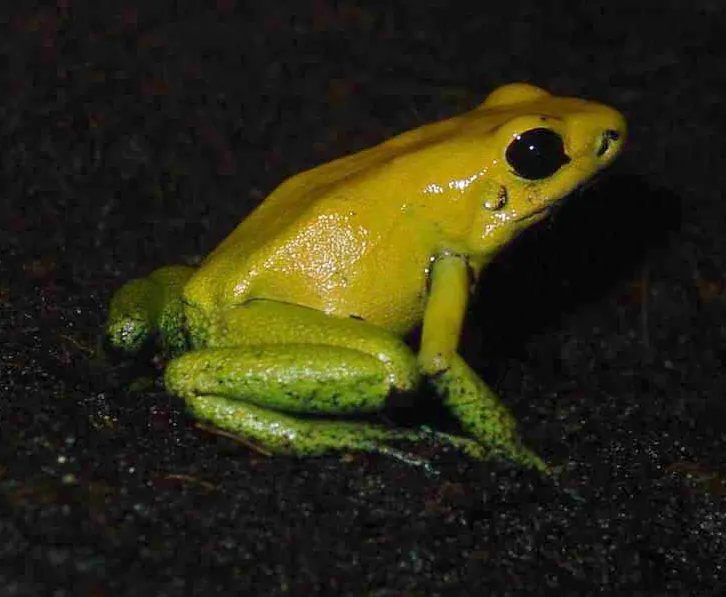
The black-legged poison frog is a small, brightly coloured frog from the rainforests of Colombia. It is one of the most toxic dart frogs in the world, and its skin can kill a person. It is also an endangered species, so it matters for conservation.1


 Ndenge ya koyeba yango
- The body is earthy orange to pure yellow.1
- The forelimbs and hindlegs are black or dark blue.1
- It is one of the largest poison dart frogs, but it is smaller and more slender than the golden poison frog.1
- Juveniles are brown or black and become more vibrant as they mature.1
- It is active in the daytime and moves across the forest floor in quick hops.1
Bakosanaka yango mbala mingi na: It is often mistaken for the golden poison frog (Phyllobates terribilis), which looks similar. The black-legged poison frog is smaller, more slender and less poisonous. Juvenile golden poison frogs can also look like it. It also resembles the 'netted' colour form of D. leucomelas.1
Makasi ya poison
Loposo na yango ezali na poison. Ezali likama kosimba yango, kolamba yango to kolia yango.
Poison na yango esalaka nini?
This frog is poisonous rather than venomous, because its toxin comes out through its skin. The toxin is batrachotoxin, a neurotoxin that attacks the nerves. It stops nerve signals from getting through, which causes paralysis, heart failure and breathing failure. There are no known treatments or antidotes for it.1
Likama na yango mpo na bato ezali boni?
Likama mpo na bato: Likama mingiEkoki koboma moto oyo azwi bosalisi te.It is one of the few frogs confirmed to have killed humans. Between 2 and 200 micrograms of its toxin is enough to kill a person. Its toxin is weaker than that of the golden poison frog.1
Esalaka nini ntango ebangi?
Its bright colours warn predators that it is poisonous, and its skin releases toxins through pores.1
 Soki moto asimbi to alei yango
- Soki moto asimbi moko: sukola maboko malamu mpe simba miso to monoko te. Soki mwana to nyama ya ndako alambi to alei moko: benga centre anti-poison to nimero ya urgence na yo.
Benga ntango nyonso nimero ya urgence liboso (112, 000, 911). Oyo ezali toli ya lisalisi ya liboso, ezali toli ya monganga te. Makambo ya moboko ya lisalisi ya liboso
 Zala na libateli
- Ata mokolo moko te, simba, kanga to silikisa nyama ya zamba te, ata ya moke, mpe ata soki emonani lokola elali to ekufi.
- Tika yango esika. Soki okutani na moko, zala kimia, zonga sima malembe mpe tika ekende nzela na yango.
- Soki osimbi yango to olie yango: kofrotter miso to monoko na yo te, sukola maboko na yo mpe luka lisalisi ya monganga.
Ezali koluka yo te. Poison na yango ezali kaka mpo ete eloko moko te elia yango. Makambo mosusu mpo na komibatela
Monene na yango boni?
Molai na yango boni?
 mokuse koleka mosapi na yo ya moke
 ekoki kopota metre 100 na sekonde 95 (moto ya mbangu koleka asengaka 9,6)
Black-legged poison frog azali monene boni soki tokokanisi na YO?
Kaka ba calcul na navigateur na yo. Eloko moko te ebombamaka to etindamaka esika moko.
Mbangu na yango boni?


Makambo ya solo
Some Chocó people in Colombia use the poison from these frogs to tip hunting darts for blowguns.1
The male carries the tadpoles on his back. Some of the toxin rubs off onto them, so a predator that eats one would be poisoned.1
The frog cannot make its own toxin. It gets the chemicals it needs from its diet and its surroundings.1
Unlike most frogs, which are active at night, this frog is active during the daytime. Its bright colours are easier to see then, which helps warn predators.1
The male's high-pitched trill attracts females. Brighter males are more attractive, and their colour can help them win mates.1
Solo to lokuta?
Lokuta: That it is the most toxic dart frog in the world.
Solo: It is the second most toxic dart frog. The golden poison frog is more toxic.1
Mpo na ba expert ya venin
- Kombo ya siansi
- Phyllobates bicolor
- Ebota
- Ba grenouille ya poison, ba crapaud & ba triton
- Libota
- Dendrobatidae2
- Molongo
- Anura
- Bakontina
- Amerika ya Sude
- Bana
- The eggs are fertilised outside the body, and a parent protects them until they hatch. The male then carries the tadpoles on his back to water.1
- Ndenge ezali kobika na zamba
- Endangered1
- Likama mpo na bato
- 4 / 5: Likama mingi3
Esika makambo euti
- Phyllobates bicolor (Wikipedia (CC BY-SA 4.0))
- Phyllobates bicolor (iNaturalist): bankombo mpe classification.
- Venom Wiki: niveau ya likama, monene ya momesano mpe kokanisa ya mbangu ezali ya biso moko. Tala ndenge tolukaka yango: Ndenge tomekaka likama.
Likambo nyonso na lokasa oyo ezali na nimero oyo elakisi source na yango. Soki tosali libunga, limbisa biso, tozali bato oyo balingaka banyama, zulunale ya siansi te. Yebisa biso na [email protected] mpe tokobongisa yango.
 Scorpion azali na nzala! Venom Wiki ezali mosala ya moto moko: ya ofele, pibilisite te mpe trackers te. Mwa mbongo moke ya kosalisa esalisaka mpo ete etikala na internet.Pesa scorpion bilei
Mosusu ya ebota moko: Ba grenouille ya poison, ba crapaud & ba triton
 Golden poison frogBa grenouille ya poison, ba crapaud & ba tritonEkoki kobomaKosimba te
 Cane toadBa grenouille ya poison, ba crapaud & ba tritonEsengeli mongangaKosimba te
 Dyeing poison dart frogBa grenouille ya poison, ba crapaud & ba tritonEpesaka kaka pasiKosimba te
 Bruno's casque-headed frogBa grenouille ya poison, ba crapaud & ba tritonEsengeli mongangaKosimba te
 Harlequin poison frogBa grenouille ya poison, ba crapaud & ba tritonEsengeli mongangaKosimba te
 Giant leaf frogBa grenouille ya poison, ba crapaud & ba tritonEpesaka kaka pasiKosimba te
Ezalaka mpe na: Amerika ya Sude
 TerciopeloBa vipère à fossettesEkoki koboma
 Brazilian wandering spiderBa tandambulaEkoki koboma
 Eyelash viperBa vipère à fossettesEkoki koboma
 Golden lanceheadBa vipère à fossettesEkoki koboma
 South American bushmasterBa vipère à fossettesEkoki koboma
 Peruvian giant centipedeBa scolopendre (mille-pattes)Esengeli monganga