
 Africa
 Asia
Asia Ulaya
Ulaya Amereka ya Kumwera
 Australia ndi Oceania
 Antarctica
 Nyanja ya Pacific
 Nyanja ya Atlantic
 Nyanja ya Indian
 Nyanja ya Arctic
 Nyanja ya Mediterranean
 Nyanja Yofiira
 Nyanja ya Caribbean
 Nyanja ya Coral
 Nyanja ya South China
 Nyanja ya Philippine
 Nyanja ya Andaman
 Nyanja ya Kumpoto (North Sea)
 Nyanja ya Timor ndi Arafura
 Nyanja ya Bengal
 Gulf ya California
Giant desert hairy scorpion
 Imalasa
The giant desert hairy scorpion is the largest scorpion in North America. It lives in the hot deserts of the southwest United States and northwest Mexico. Its sting is painful, but its venom is not strong enough to be fatal.1


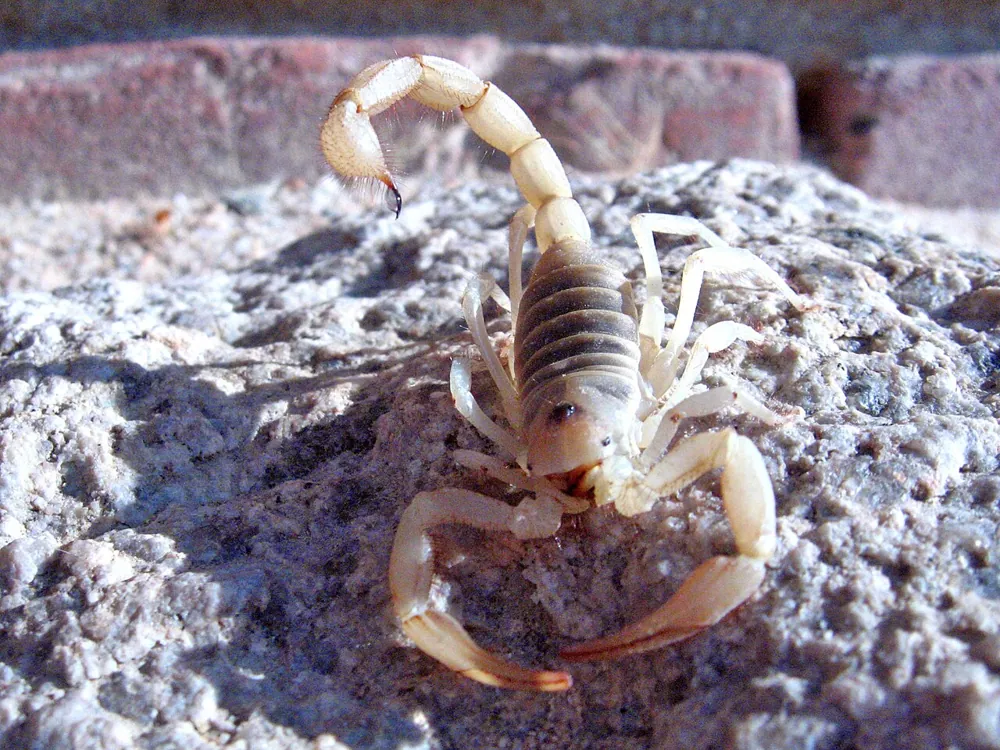
 Mmene ungaizindikirire
- Usually tan to olive-green, with a darker back and yellow pedipalps, legs and tail1
- Body covered in brown hairs, which give it its common name1
- Crab-like pincers1
- Length of 10 to 18 cm, with an average of 15 cm1
- Females have wider, stockier bodies; males have larger pincers1
Nthawi zambiri imasokonezedwa ndi: A similar species is Hadrurus spadix. Hadrurus is a genus of large hairy scorpions found in the United States.1
Mphamvu ya ululu
Ululu umatuluka kudzera mu mbola.
Ululu wake umachita chiyani?
Its venom is not very potent, but the sting is commonly compared in pain to a honeybee sting. The venom is used to immobilise prey. Allergic reactions are uncommon, but they can cause difficulty breathing, excessive swelling and prolonged pain.1
Ndi yoopsa bwanji kwa anthu?
Ngozi kwa anthu: YofatsaNgati kulasidwa ndi njuchi kapena pang'ono kuposa pamenepo. Pafupifupi yosavulaza anthu.Its venom is not potent enough to be fatal. Most stings are compared to a honeybee sting in pain. Serious allergic reactions are uncommon but possible.1
Imachita chiyani ikachita mantha?
When provoked, it is active and aggressive, and it stings more often when it senses a predator such as a Norway rat by smell.1
 Ikalasa
- Ziziritsa pamene walasidwa ndi paketi ya ayezi ndipo munthuyo akhale chete osasuntha. Peza thandizo la dokotala mwachangu, makamaka kwa ana: zinkhanira zina zimapha ana.
Nthawi zonse yamba wayimbira nambala yadzidzidzi (112, 000, 911). Awa ndi malangizo wamba a chithandizo choyamba, osati malangizo a dokotala. Zoyambira za chithandizo choyamba
 Khala wotetezeka
- Usakhudze, kugwira kapena kuseweretsa nyama yakuthengo, ngakhale yaing'ono, ndipo ngakhale ikuoneka ngati yagona kapena yafa.
- Ipatse malo. Ukakumana nayo, khala chete, bwerera m'mbuyo pang'onopang'ono ndipo uilole ipite njira yake.
- Ikakulasa: khala chete, usasunthe, imbira nambala yadzidzidzi (112, 000, 911) kapena pita kuchipatala mwachangu. Kumbukira m'mene inkaonekera, chithunzi chimathandiza.
Sikufuna kukuvulaza. Imagwiritsa ntchito ululu wake kugwira chakudya kapena kudziteteza, ndipo imakonda kwambiri kubisala. Zambiri za kukhala wotetezeka
Kuti padziko lapansi?
Ndi yaikulu bwanji?
Ndi yaitali bwanji?
Ndi yolemera bwanji?

 yaitali ngati zidutswa zomangira zoseweretsa 6 pamzere
 yopepuka moti sungaimve m'dzanja lako
 ingathamange mamita 100 m'masekondi 140 (munthu wothamanga kwambiri amafunika 9.6)
Giant desert hairy scorpion ndi yaikulu bwanji poyerekeza ndi IWE?
Ndi masamu chabe mu msakatuli wako. Palibe chomwe chimasungidwa kapena kutumizidwa kwina.
Imathamanga bwanji?


Mfundo
Small snakes may make up to 10% of its diet, according to field observations.1
Its blood-like fluid, called hemolymph, can kill some bacteria within 1 to 2 minutes in favourable conditions, according to a 2021 study.1
It is the largest scorpion in North America.1
It digs deep burrows, up to 2.5 m long, and comes out at night to hunt and find mates.1
It can sense vibrations in the soil through its brown hairs.1
Kuthetsa nthano zabodza
Nthano yabodza: Big scorpions have dangerous venom.
Zoona: Although this scorpion is big, its venom is not very potent and is not fatal.1
Kumene mfundo zimachokera
- Hadrurus arizonensis (Wikipedia (CC BY-SA 4.0))
- Hadrurus arizonensis (iNaturalist): mayina ndi magulu a sayansi.
- Venom Wiki: mlingo wa ngozi, kukula wamba ndi kuyerekeza kwa liwiro ndi zathu. Ona mmene timazipezera: Mmene timayezera ngozi.
Mfundo iliyonse patsamba lino ili ndi nambala yosonyeza kochokera. Ngati talakwitsa, pepani, ndife okonda nyama, osati magazini a sayansi. Tiuze pa [email protected] ndipo tikonza.
 Chinkhanira chili ndi njala! Venom Wiki ndi ntchito ya munthu mmodzi: yaulere, yopanda zotsatsa ndi zokutsatira. Mphatso yaing'ono imathandiza kuti ikhalebe pa intaneti.Dyetsa chinkhanira
Zina za gulu lomwelo: Zinkhanira
 Arizona bark scorpion
 Cuban blue scorpion
 Striped bark scorpion
 Colima scorpion
 Durango scorpion
 Mexican bark scorpion
Imakhalanso ku: Amereka ya Kumpoto
 TerciopeloNjoka za pit viperYakupha
 Eastern coral snakeNjoka za coralIngathe kupha
 Eastern diamondback rattlesnakeNjoka za rattlesnakeIngathe kupha
 Eyelash viperNjoka za pit viperIngathe kupha
 Timber rattlesnakeNjoka za rattlesnakeIngathe kupha
 Western diamondback rattlesnakeNjoka za rattlesnakeIngathe kupha