
 Africa
 Asia
Asia Ulaya
Ulaya Amereka ya Kumwera
 Australia ndi Oceania
 Antarctica
 Nyanja ya Pacific
 Nyanja ya Atlantic
 Nyanja ya Indian
 Nyanja ya Arctic
 Nyanja ya Mediterranean
 Nyanja Yofiira
 Nyanja ya Caribbean
 Nyanja ya Coral
 Nyanja ya South China
 Nyanja ya Philippine
 Nyanja ya Andaman
 Nyanja ya Kumpoto (North Sea)
 Nyanja ya Timor ndi Arafura
 Nyanja ya Bengal
 Gulf ya California
Timber rattlesnake
 Imaluma
The timber rattlesnake is a venomous pit viper that lives in forests and rocky land in the eastern United States. It is the only rattlesnake in most of the crowded northeastern states, and it is one of the most northerly venomous snakes in North America.1



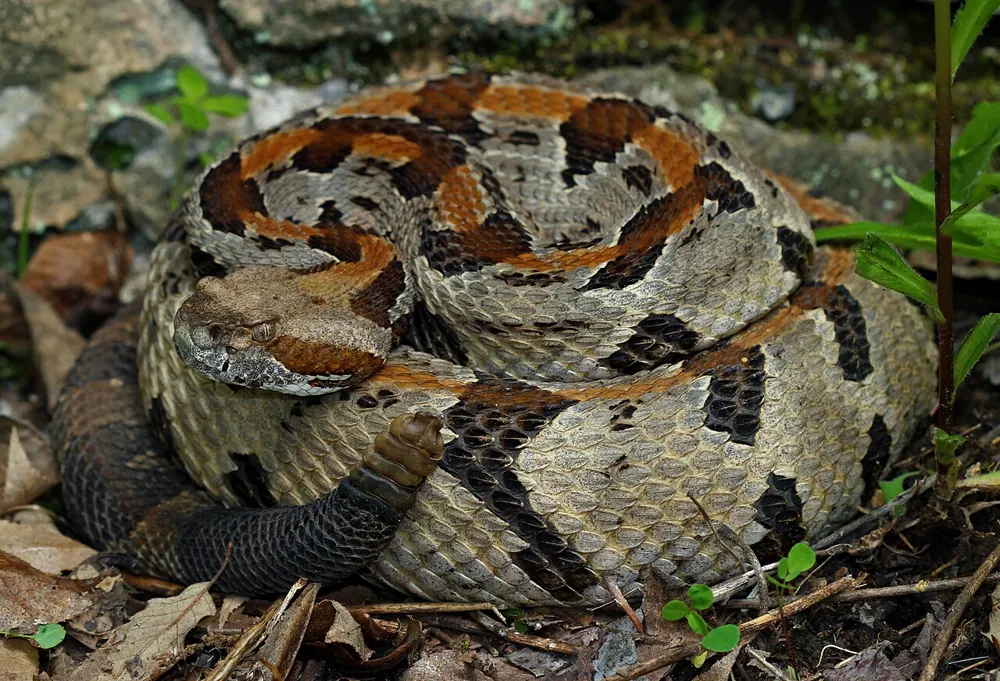
 Mmene ungaizindikirire
- Dark brown or black crossbands on a yellowish-brown or greyish background1
- The crossbands have irregular zig-zag edges and may be V- or M-shaped1
- A rust-coloured stripe often runs down the middle of the back1
- The tail is black and looks 'velvety'1
- Melanism (very dark colouring) is common, and some individuals are almost solid black1
Mphamvu ya ululu
Ululu umatuluka kudzera m'mano ake ikaluma.
Ululu wake umachita chiyani?
Its venom is extremely potent and can be haemorrhagic (damaging blood vessels and causing bleeding) or neurotoxic (attacking the nerves), depending on the population and location. Its long fangs, large size and high venom yield make it potentially one of North America's most dangerous snakes. Venom-induced incapacitation can progress rapidly.1
Ndi yoopsa bwanji kwa anthu?
Ngozi kwa anthu: Yoopsa kwambiriIngathe kupha munthu amene sanalandire chithandizo.It is potentially one of North America's most dangerous snakes, but it is usually shy and calm. It will retreat if it can and attacks mainly when cornered. Over many years in western Pennsylvania, one naturalist heard of only one death from its bite. Bites are widespread in some areas of Iowa's forests. Its remote, wooded habitat can make emergency medical care difficult or even impossible.1
Imachita chiyani ikachita mantha?
It rattles and feints a good deal before striking, and it will try to retreat first if it feels threatened.1
 Ikaluma
- Munthuyo akhale chete ndi wodekha, chiwalo cholumidwacho chikhale pamlingo wa mtima, chotsa mphete ndi zinthu zothina, ndipo mufikitse kuchipatala mwachangu.
Nthawi zonse yamba wayimbira nambala yadzidzidzi (112, 000, 911). Awa ndi malangizo wamba a chithandizo choyamba, osati malangizo a dokotala. Zoyambira za chithandizo choyamba
 Khala wotetezeka
- Usakhudze, kugwira kapena kuseweretsa nyama yakuthengo, ngakhale yaing'ono, ndipo ngakhale ikuoneka ngati yagona kapena yafa.
- Ipatse malo. Ukakumana nayo, khala chete, bwerera m'mbuyo pang'onopang'ono ndipo uilole ipite njira yake.
- Ikakuluma: khala chete, usasunthe, imbira nambala yadzidzidzi (112, 000, 911) kapena pita kuchipatala mwachangu. Kumbukira m'mene inkaonekera, chithunzi chimathandiza.
Sikufuna kukuvulaza. Imagwiritsa ntchito ululu wake kugwira chakudya kapena kudziteteza, ndipo imakonda kwambiri kubisala. Zambiri za kukhala wotetezeka
Kuti padziko lapansi?
Ndi yaikulu bwanji?
Ndi yaitali bwanji?
Ndi yolemera bwanji?
 yaitali ngati amphaka apakhomo 4 mphuno ndi mchira motsatizana
 yaitali ngati nthochi 11 zoyalidwa motsatizanayolemera pafupifupi ngati mphaka wapakhomo
 ingathamange mamita 100 m'masekondi 95 (munthu wothamanga kwambiri amafunika 9.6)
Timber rattlesnake ndi yaikulu bwanji poyerekeza ndi IWE?
Ndi masamu chabe mu msakatuli wako. Palibe chomwe chimasungidwa kapena kutumizidwa kwina.
Imathamanga bwanji?


Mfundo
Timber rattlesnakes return to the same winter den each year, and juveniles can track chemical cues to find relatives in it.1
Female timber rattlesnakes bask in the sun on open rocky areas called basking knolls before they give birth.1
They share winter dens with copperheads and rat snakes.1
It is the only rattlesnake in most of the populous Northeastern United States, and one of the most northerly venomous snakes in North America.1
Males often mate farther from the winter dens than females do.1
Kuthetsa nthano zabodza
Nthano yabodza: Rattlesnakes attack people as soon as they see them.
Zoona: Timber rattlesnakes are shy and will try to retreat from danger first. They attack mainly when they are cornered, so leaving them alone keeps people safe.1
Za akatswiri a ululu
- Dzina la sayansi
- Crotalus horridus
- Gulu
- Njoka za rattlesnake
- Banja
- Viperidae2
- Dongosolo
- Squamata
- Makontinenti
- Amereka ya Kumpoto
- Ana akhanda
- Females first reproduce at a mean age of 9.6 years and average 7.7 offspring per litter. Most females reproduce only once in their lifetime.1
- Mmene ilili kuthengo
- Extirpated in Canada, as listed under the Canadian Species at Risk Act in May 2001.1
- Ngozi kwa anthu
- 4 / 5: Yoopsa kwambiri3
Kumene mfundo zimachokera
- Timber rattlesnake (Wikipedia (CC BY-SA 4.0))
- Crotalus horridus (iNaturalist): mayina ndi magulu a sayansi.
- Venom Wiki: mlingo wa ngozi, kukula wamba ndi kuyerekeza kwa liwiro ndi zathu. Ona mmene timazipezera: Mmene timayezera ngozi.
Mfundo iliyonse patsamba lino ili ndi nambala yosonyeza kochokera. Ngati talakwitsa, pepani, ndife okonda nyama, osati magazini a sayansi. Tiuze pa [email protected] ndipo tikonza.
 Chinkhanira chili ndi njala! Venom Wiki ndi ntchito ya munthu mmodzi: yaulere, yopanda zotsatsa ndi zokutsatira. Mphatso yaing'ono imathandiza kuti ikhalebe pa intaneti.Dyetsa chinkhanira
Zina za gulu lomwelo: Njoka za rattlesnake
 Eastern diamondback rattlesnakeNjoka za rattlesnakeIngathe kupha
 Western diamondback rattlesnakeNjoka za rattlesnakeIngathe kupha
 SidewinderNjoka za rattlesnakeIkufuna dokotala
 Mojave rattlesnakeNjoka za rattlesnakeIngathe kupha
 Aruba rattlesnakeNjoka za rattlesnakeIkufuna dokotala
 Black-tailed rattlesnakeNjoka za rattlesnakeIkufuna dokotala
 Terciopelo
 Eastern coral snake
 Eyelash viper
 Arizona bark scorpion
 Brown recluse
 Cane toad
_-_Flickr_-_2ndPeter.jpg)