
 Africa
 Asia
Asia Ulaya
Ulaya Amereka ya Kumwera
 Australia ndi Oceania
 Antarctica
 Nyanja ya Pacific
 Nyanja ya Atlantic
 Nyanja ya Indian
 Nyanja ya Arctic
 Nyanja ya Mediterranean
 Nyanja Yofiira
 Nyanja ya Caribbean
 Nyanja ya Coral
 Nyanja ya South China
 Nyanja ya Philippine
 Nyanja ya Andaman
 Nyanja ya Kumpoto (North Sea)
 Nyanja ya Timor ndi Arafura
 Nyanja ya Bengal
 Gulf ya California
Indian ornamental tarantula
 Imaluma
The Indian ornamental tarantula is a large spider that lives high in trees in southeastern India. It is known for its striking patterned body and is a popular spider among tarantula keepers. It has a medically significant bite, though no death from any tarantula bite has ever been recorded.1

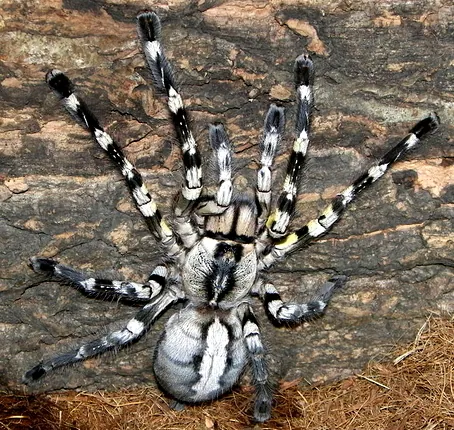
 Mmene ungaizindikirire
Mphamvu ya ululu
Ululu umatuluka kudzera m'mano ake ikaluma.
Ululu wake umachita chiyani?
The venom may cause intense pain. This is judged from the experience of keepers bitten by other spiders in the same genus, so the exact effects are not fully known for this species. The large fangs also make puncture wounds that can become infected.1
Ndi yoopsa bwanji kwa anthu?
Ngozi kwa anthu: YoopsaKulumidwa kumafuna dokotala. Imfa ndi zosowa kwambiri.No death has ever been recorded from any tarantula bite. The species is still considered to have a medically significant bite. It generally prefers flight to fight but may attack when cornered.1
Imachita chiyani ikachita mantha?
It tends to be quite defensive, and may attack when cornered, though it generally prefers to escape.1
 Ikaluma
- Bites need proper treatment, because the fang punctures can lead to a secondary bacterial infection if they are not treated properly.1
- Sambitsa polumidwapo ndi kuziziritsa. Peza thandizo la dokotala ngati kupweteka kuli kwakukulu kapena munthuyo sakumva bwino.
Nthawi zonse yamba wayimbira nambala yadzidzidzi (112, 000, 911). Awa ndi malangizo wamba a chithandizo choyamba, osati malangizo a dokotala. Zoyambira za chithandizo choyamba
 Khala wotetezeka
- Usakhudze, kugwira kapena kuseweretsa nyama yakuthengo, ngakhale yaing'ono, ndipo ngakhale ikuoneka ngati yagona kapena yafa.
- Ipatse malo. Ukakumana nayo, khala chete, bwerera m'mbuyo pang'onopang'ono ndipo uilole ipite njira yake.
- Ikakuluma: khala chete, usasunthe, imbira nambala yadzidzidzi (112, 000, 911) kapena pita kuchipatala mwachangu. Kumbukira m'mene inkaonekera, chithunzi chimathandiza.
Sikufuna kukuvulaza. Imagwiritsa ntchito ululu wake kugwira chakudya kapena kudziteteza, ndipo imakonda kwambiri kubisala. Zambiri za kukhala wotetezeka
Kuti padziko lapansi?
Ndi yaikulu bwanji?
Ndi yaitali bwanji?
 yaitali ngati zidutswa zomangira zoseweretsa 6 pamzere
 ingathamange mamita 100 m'masekondi 190 (munthu wothamanga kwambiri amafunika 9.6)
Indian ornamental tarantula ndi yaikulu bwanji poyerekeza ndi IWE?
Ndi masamu chabe mu msakatuli wako. Palibe chomwe chimasungidwa kapena kutumizidwa kwina.
Imathamanga bwanji?


Mfundo
No case of anaphylactic shock, a severe allergic reaction, has ever been reported from tarantula venom.1
Some individuals of this genus live communally when territory is limited, sharing a tree with several holes.1
Females can live upwards of 12 years, while males usually live only 3 to 5 years.1
In captivity, it is usually fed crickets and grasshoppers, and adults can occasionally be fed small rodents.1
It is one of the most popular arboreal tarantulas among amateur collectors.1
Kuthetsa nthano zabodza
Nthano yabodza: Tarantula bites are always deadly.
Zoona: No death has ever been recorded from any tarantula bite, although the bite of this species can still be medically significant and cause intense pain.1
Kumene mfundo zimachokera
- Poecilotheria regalis (Wikipedia (CC BY-SA 4.0))
- Poecilotheria regalis (iNaturalist): mayina ndi magulu a sayansi.
- Venom Wiki: mlingo wa ngozi, kukula wamba ndi kuyerekeza kwa liwiro ndi zathu. Ona mmene timazipezera: Mmene timayezera ngozi.
Mfundo iliyonse patsamba lino ili ndi nambala yosonyeza kochokera. Ngati talakwitsa, pepani, ndife okonda nyama, osati magazini a sayansi. Tiuze pa [email protected] ndipo tikonza.
 Chinkhanira chili ndi njala! Venom Wiki ndi ntchito ya munthu mmodzi: yaulere, yopanda zotsatsa ndi zokutsatira. Mphatso yaing'ono imathandiza kuti ikhalebe pa intaneti.Dyetsa chinkhanira
Zina za gulu lomwelo: Ma tarantula ndi funnel-web
 Gooty sapphire tarantulaMa tarantula ndi funnel-webIkufuna dokotala
 Cobalt blue tarantulaMa tarantula ndi funnel-webImangopweteka
 Chinese bird spiderMa tarantula ndi funnel-webIkufuna dokotala
 Chinese black earth tiger tarantulaMa tarantula ndi funnel-webIkufuna dokotala
 Fringed ornamental tarantulaMa tarantula ndi funnel-webIkufuna dokotala
 Japanese funnel-web spiderMa tarantula ndi funnel-webIkufuna dokotala
 Deathstalker
 Indian cobra
 Indian saw-scaled viper
 King cobra
 Puff adder
 Njoka ya Russell (Russell's viper)