
 Africa
 Asia
Asia Ulaya
Ulaya Amereka ya Kumwera
 Australia ndi Oceania
 Antarctica
 Nyanja ya Pacific
 Nyanja ya Atlantic
 Nyanja ya Indian
 Nyanja ya Arctic
 Nyanja ya Mediterranean
 Nyanja Yofiira
 Nyanja ya Caribbean
 Nyanja ya Coral
 Nyanja ya South China
 Nyanja ya Philippine
 Nyanja ya Andaman
 Nyanja ya Kumpoto (North Sea)
 Nyanja ya Timor ndi Arafura
 Nyanja ya Bengal
 Gulf ya California
Thimble jellyfish
 Minyewa yolasa (tentacles)
The thimble jellyfish is a tiny jellyfish with a flat top and straight sides, shaped a bit like a thimble. It lives in warm waters of the western Atlantic Ocean, including the Caribbean. It matters because it is the most common cause of seabather's eruption, an itchy skin rash that swimmers can get from its larvae.1

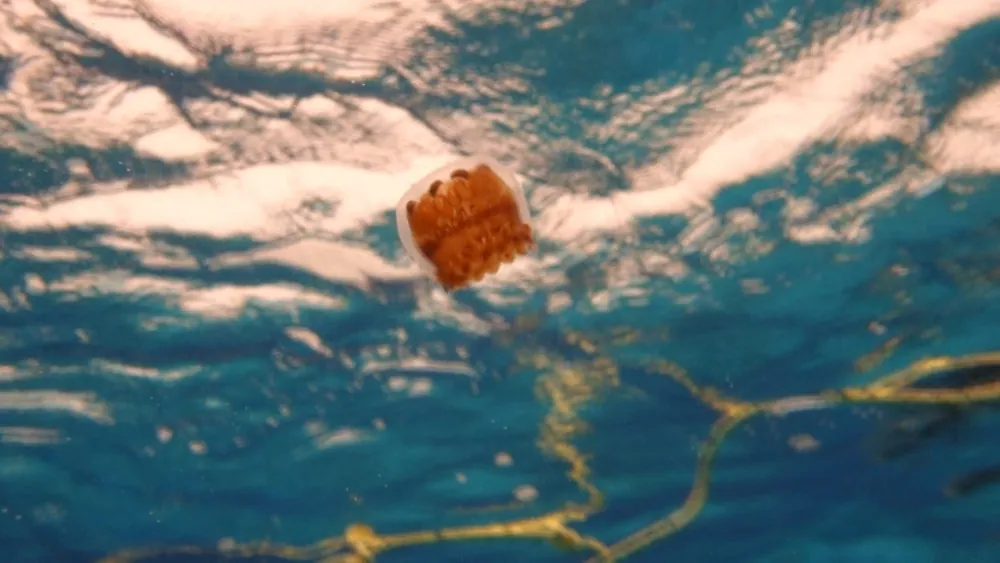
 Mmene ungaizindikirire
Mphamvu ya ululu
Maselo ang'onoang'ono olasa masauzande amawombera chinachake chikawakhudza.
Ululu wake umachita chiyani?
Its stinging cells, called nematocysts, can cause a skin reaction in people. The stings are not painful, but they can form an itchy rash.1
Ndi yoopsa bwanji kwa anthu?
Ngozi kwa anthu: YopwetekaIngathe kupweteka kwambiri, koma pafupifupi nthawi zonse si vuto lalikulu.It is the most common cause of seabather's eruption in the Caribbean and the Gulf of Mexico. The condition happens when a swimmer touches a cloud of larvae, which stick to clothing and hair. In Florida, most cases occur between March and August.1
 Ikalasa
- Tuluka m'madzi ndipo chotsa minyewa yolasa (tentacles) iliyonse (ndi magolovesi kapena nsalu).
- Pa jellyfish ya bokosi (box jellyfish) ya kumadera otentha: thira viniga pamene walasidwa kwa masekondi 30 osachepera, itana thandizo ndipo ukhale wokonzeka kuchita CPR. Pa bluebottle ndi zina zambiri: tsuka ndi madzi a m'nyanja, kenako madzi otentha kuti uchepetse kupweteka.
Nthawi zonse yamba wayimbira nambala yadzidzidzi (112, 000, 911). Awa ndi malangizo wamba a chithandizo choyamba, osati malangizo a dokotala. Zoyambira za chithandizo choyamba
 Khala wotetezeka
- Usakhudze, kugwira kapena kuseweretsa nyama yakuthengo, ngakhale yaing'ono, ndipo ngakhale ikuoneka ngati yagona kapena yafa.
- Ipatse malo. Ukakumana nayo, khala chete, bwerera m'mbuyo pang'onopang'ono ndipo uilole ipite njira yake.
- Ikakulasa: khala chete, usasunthe, imbira nambala yadzidzidzi (112, 000, 911) kapena pita kuchipatala mwachangu. Kumbukira m'mene inkaonekera, chithunzi chimathandiza.
Sikufuna kukuvulaza. Imagwiritsa ntchito ululu wake kugwira chakudya kapena kudziteteza, ndipo imakonda kwambiri kubisala. Zambiri za kukhala wotetezeka
Kuti padziko lapansi?
Ndi yaikulu bwanji?
Ndi yaitali bwanji?
 yaifupi kuposa chala chako chaching'ono
Thimble jellyfish ndi yaikulu bwanji poyerekeza ndi IWE?
Ndi masamu chabe mu msakatuli wako. Palibe chomwe chimasungidwa kapena kutumizidwa kwina.
Imathamanga bwanji?


Mfundo
Its larvae cause most cases of seabather's eruption, a rash that can appear after a swim.1
The larvae are killed when a swimmer leaves the water and bathes or dries off. This releases their under-developed stinging cells onto the skin.1
Swarms can cover a million square metres of sea surface.1
Its orangish-brown colour comes from symbiotic zooxanthellae, tiny algae that live inside its bell.1
Spadefish, sunfish, green sea turtles and sea slugs eat it.1
It swims by pulsing its bell and rotating as it moves.1
Kumene mfundo zimachokera
- Thimble jellyfish (Wikipedia (CC BY-SA 4.0))
- Linuche unguiculata (iNaturalist): mayina ndi magulu a sayansi.
- Venom Wiki: mlingo wa ngozi, kukula wamba ndi kuyerekeza kwa liwiro ndi zathu. Ona mmene timazipezera: Mmene timayezera ngozi.
Mfundo iliyonse patsamba lino ili ndi nambala yosonyeza kochokera. Ngati talakwitsa, pepani, ndife okonda nyama, osati magazini a sayansi. Tiuze pa [email protected] ndipo tikonza.
 Chinkhanira chili ndi njala! Venom Wiki ndi ntchito ya munthu mmodzi: yaulere, yopanda zotsatsa ndi zokutsatira. Mphatso yaing'ono imathandiza kuti ikhalebe pa intaneti.Dyetsa chinkhanira
Zina za gulu lomwelo: Jellyfish ndi zolasa za m'nyanja
 Australian box jellyfishJellyfish ndi zolasa za m'nyanjaYakuphaUsakhudze
 Irukandji jellyfishJellyfish ndi zolasa za m'nyanjaIngathe kuphaUsakhudze
 Portuguese man o' warJellyfish ndi zolasa za m'nyanjaIkufuna dokotalaUsakhudze
 Lion's mane jellyfishJellyfish ndi zolasa za m'nyanjaImangopwetekaUsakhudze
 Moon jellyfishJellyfish ndi zolasa za m'nyanjaYosavulaza
 Common kingslayerJellyfish ndi zolasa za m'nyanjaIngathe kuphaUsakhudze
Imakhalanso ku: Nyanja ya Atlantic
 Hawksbill sea turtleNyama zina za poizoniIngathe kupha
 Blue sea dragonNkhono za cone ndi ma octopusImangopweteka
 Greenland sharkNyama zina za poizoniImangopweteka
 Common octopusNkhono za cone ndi ma octopusYosavulaza
 Common stingrayNsomba zaululuIkufuna dokotala
 Greater weeverNsomba zaululuIkufuna dokotalaUsakhudze