
 Afrikaa
 Eeshiyaa
 Awurooppaa
 Ameerikaa Kibbaa
 Awustiraaliyaa fi Oshiyaaniyaa
 Antaarkitikaa
 Garba Paasifikii
 Garba Atlaantikii
 Garba Hindii
 Garba Arkitikii
 Galaana Meditiraaniyaa
 Galaana Diimaa
 Galaana Kaariibiyaan
 Galaana Kooraal
 Galaana Chaayinaa Kibbaa
 Galaana Filippiinsii
 Galaana Andamaan
 Galaana Kaabaa
 Galaana Timoor fi Araafuuraa
 Galaana Bengaal
 Galaana Kaaliforniyaa
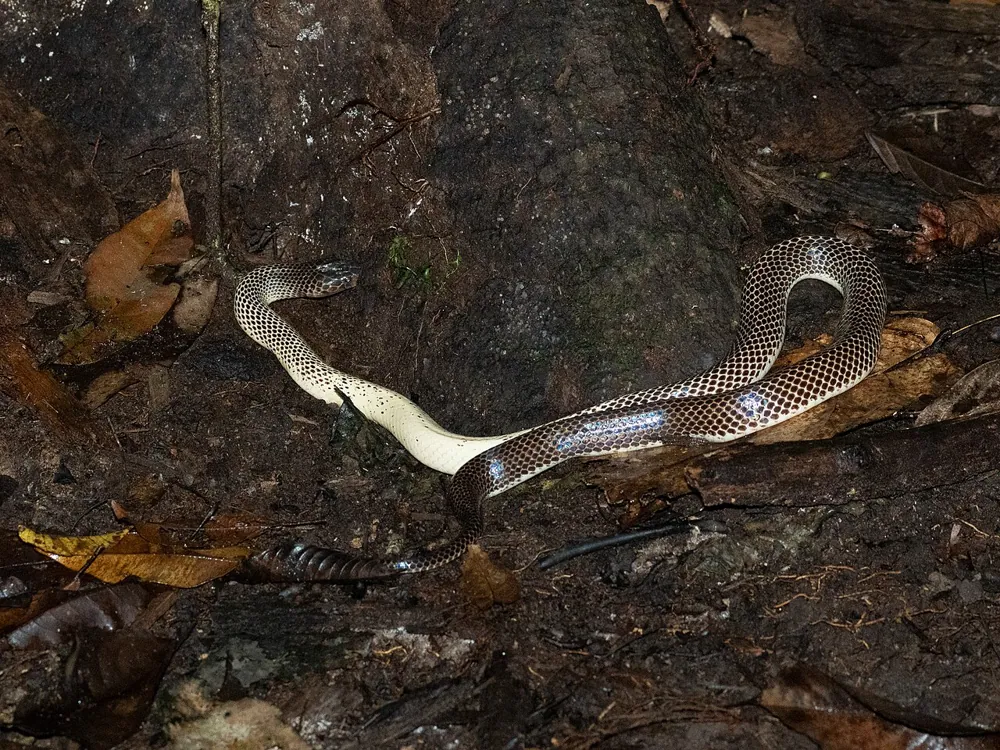
New Guinea small-eyed snake
 Ciniinnaa
The New Guinea small-eyed snake, Micropechis ikaheka, is a highly venomous snake that lives on New Guinea and nearby islands. It is the only species in its genus, and it is known for causing many deadly bites, especially on Karkar Island in Papua New Guinea. Its bites are a serious medical concern in the places where it lives.1



 Akkaataa itti beekamu
Humna summii
Summiin yeroo ciniinu ilkaan summii ykn ilkaan isaa keessaan ba'a.
Summiin isaa (ciniinnaa ykn iddiin) maal godha?
Its venom is strong enough that it is considered a dangerous snake. Common symptoms include local muscle pain and tenderness, fever, abdominal pain, vomiting, dizziness, headache, low blood pressure and spontaneous bleeding. In severe cases, the venom also affects the nerves and muscles, causing drooping eyelids, slurred speech and jaw locking, and death can result from respiratory paralysis (when the muscles used for breathing stop working).1
Namootaaf hammam balaa qaba?
Balaa namootaaf: Baay'ee balaa qabaNama yaalii hin arganne ajjeesuu danda'a.This snake has been linked to many fatal bites. The first proven human death occurred in 1958 in Wau, Papua New Guinea, where a young man died 36 hours after being bitten on the base of the thumb while handling the snake. It causes about 40% of snake envenomations on Karkar Island, but less than 10% on the mainland, where death adders cause most snakebites. Plantation workers are most at risk, especially when moving husk piles, cutting grass, walking on plantation tracks or harvesting cocoa beans.1
 Oduu gaarii: doktoroonni qoricha (qoricha farra summii, antivenom) ykn yaalii kanaaf qabu.1
Yeroo sodaatu maal godha?
Although it is normally shy, it becomes highly aggressive when disturbed, for example if it is handled or stepped on, and then it strikes quickly and readily. Its bite is tenacious and chewing, and it is not easily released.1
 Yoo ciniine
- Dhiibbaa fi sochii dhorkuu (pressure immobilisation): baandeejii lastikii jabaa bakka ciniiname irratti, sana booda harka ykn miila guutuu irra marsi, muka qajeelaa (splint) itti hidhi, hanga gargaarsi dhufutti namicha guutumaan guutuutti sochii malee tursiisi.
- Bakka ciniiname hin dhiqin: hospitaalli summii gogaa irratti hafe qoratee qoricha farra summii (antivenom) sirrii ta'e filachuu danda'a.
Yeroo hunda dursa lakkoofsa balaa tasaa kee bilbili (112, 000, 911). Kun qajeelfama gargaarsa jalqabaa waliigalaa ti, gorsa yaalaa miti. Bu'uura gargaarsa jalqabaa
 Nageenyaan turi
- Bineensa bosonaa gonkumaa hin tuqin, hin qabin, hin tuttuqin, xiqqaa ta'us, rafe ykn du'e fakkaatus.
- Iddoo itti kenni. Yoo tokko wajjin wal argite, tasgabbaa'i, suuta duubatti deebi'iitii karaa isaa akka deemu dhiisi.
- Yoo tokko si ciniine: tasgabbaa'i, sochii malee turi, lakkoofsa balaa tasaa kee (112, 000, 911) bilbili ykn dafii hospitaala ga'i. Maal akka fakkaatu yaadadhu, suuraan ni gargaara.
Si miidhuuf si hin barbaadu. Summii isaa nyaata qabachuuf ykn of eeguuf fayyadama, dhokachuu immoo baay'ee filata. Waa'ee nageenyaa dabalataan
Addunyaa keessaa eessatti?
Hammam guddaa dha?
Dheerinni isaa hammam?
 akka adurree manaa 4 funyaan hanga eegeetti dheerata
 akka muuzii 12 walitti aananii tarreeffamanii dheerata
 meetira 100 sekoondii 46 keessatti fiiguu danda'a (namni hundaa caalaa ariifatu 9,6 barbaada)
New Guinea small-eyed snake SI wajjin yoo wal bira qabamu hammam guddaa dha?
Herrega qofa barsiisaa kee keessatti. Homtuu hin olkaa'amu, eessayyuu hin ergamu.
Hammam ariifata?


Dhugaawwan
A bite from this snake was linked to a human death in 1958, when a young man died 36 hours after being bitten on the thumb while handling it.1
It is cannibalistic, and it also hunts rodents, lizards and other snakes.1
On Karkar Island, where it is common, it is called the "white snake" because of its pale colouring.1
Its name, ikaheca, means "land eel" in a local West Papuan language.1
Soba diigaa
Soba: A dead snake is harmless and cannot bite.
Dhugaa: A villager was bitten on the thumb by a snake he had reportedly killed, possibly because of a reflex action after death. Dead snakes can still bite, so they should be handled with care.1
Ogeeyyii summiitiif
Dhugaawwan eessaa dhufu
- Micropechis (Wikipedia (CC BY-SA 4.0))
- Micropechis ikaheka (iNaturalist): maqaa fi ramaddii.
- Venom Wiki: sadarkaan balaa, guddinni idilee fi tilmaamni ariitii kan keenya. Akkamitti akka hojjennu ilaali: Balaa akkamitti madaalla.
Dhugaan fuula kana irra jiru hundi lakkoofsa madda isaatti si qajeelchu qaba. Yoo waan tokko dogoggorre, dhiifama, nuti jaallattoota bineensotaa ti malee joornaalii saayinsii miti. [email protected] irratti nutti himi, ni sirreessina.
 Iskoorpiyooniin beela'eera! Venom Wiki pirojektii nama tokkoo ti: bilisa, beeksisa fi hordoftuu malee. Gumaachi xiqqaan interneetii irratti akka turu gargaara.Iskoorpiyoonii nyaachisi
Garee wal fakkaataa irraa dabalataan: Bofoota Awustiraaliyaa
 Coastal taipanBofoota AwustiraaliyaaNama ajjeesa
 Common death adderBofoota AwustiraaliyaaNama ajjeesa
 Eastern brown snakeBofoota AwustiraaliyaaNama ajjeesa
 Taayipaanii lafa keessaaBofoota AwustiraaliyaaNama ajjeesa
 Bofa QeerransaaBofoota AwustiraaliyaaNama ajjeesa
 Collett's snakeBofoota AwustiraaliyaaNi ajjeesuu danda'a
Akkasumas kan jiraatu: Awustiraaliyaa fi Oshiyaaniyaa
 Sydney funnel-web spiderTaraantulaa fi funnel-webNama ajjeesa
 Redback spiderSardiidotaDoktora barbaada
 Brown tree snakeBofoota ilkaan summii duubaan qabanNi dhukkubsa qofa
 Hooded pitohuiBineensota summaa'oo birooNi dhukkubsa qofaHin tuqin
 PlatypusHoosiftoota summii qabanNi dhukkubsa qofa
 Northern tree-dwelling funnel-web spiderTaraantulaa fi funnel-webNama ajjeesa