
 Afryka
 Azja
Azja Europa
 Ameryka Południowa
 Australia i Oceania
 Antarktyda
 Ocean Spokojny
 Ocean Atlantycki
 Ocean Indyjski
 Ocean Arktyczny
 Morze Śródziemne
 Morze Czerwone
 Morze Karaibskie
 Morze Koralowe
 Morze Południowochińskie
 Morze Filipińskie
 Morze Andamańskie
 Morze Północne
 Morze Timor i Morze Arafura
 Zatoka Bengalska
 Zatoka Kalifornijska
Broad-banded copperhead
 Ugryzienia
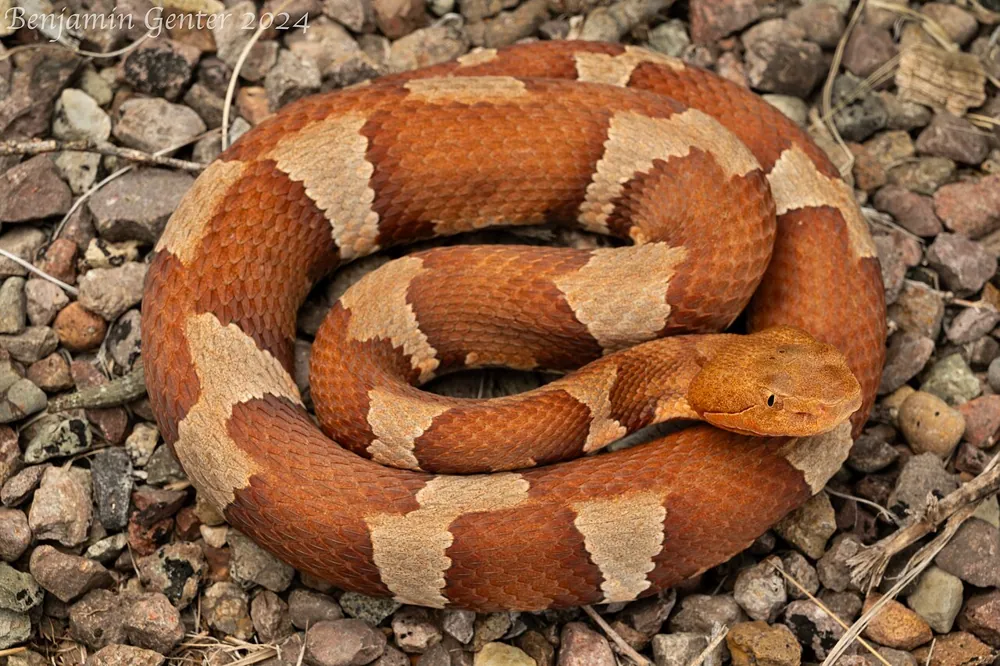
The broad-banded copperhead is a venomous pit viper, a type of snake that uses heat-sensing pits between its eyes and nostrils to find prey. It lives in the central United States, mainly Oklahoma and central Texas, and in parts of northern Mexico. For a long time it was thought to be a form of the eastern copperhead, but it is now treated as its own species.1


 Jak je rozpoznać
- Typically light tan with wide, darker brown crossbands, which give it its common name.1
- Colour varies by location, from red-brown to grey-brown.1
- The bands stay even in width. The eastern copperhead's bands narrow at the spine to form hourglass shapes.1
- Young snakes have a bright green-yellow tail tip that fades to grey or brown at about one year old.1
Często mylone z: The eastern copperhead overlaps with this species in the south of its range, and the two can be hard to tell apart there. Look at the bands: the broad-banded copperhead has even bands, while the eastern copperhead's bands narrow at the spine.1
Siła jadu
Jad wydostaje się przez kły lub zęby, gdy zwierzę gryzie.
Jak działa jego jad?
Its venom is hemotoxic, meaning it mainly damages blood and tissue. It is injected through hinged, hollow fangs in a single quick strike. The bite can cause localised swelling, necrosis (death of tissue at the bite site) and severe pain.1
Jak bardzo jest niebezpieczne dla ludzi?
Zagrożenie dla ludzi: GroźneUgryzienie wymaga lekarza. Zgony są bardzo rzadkie.Copperhead venom is not considered life-threatening to an otherwise healthy adult. Any bite from a venomous snake should still be treated as serious.1
 Dobra wiadomość: lekarze mają na to lek (surowicę przeciwjadową) albo leczenie.1
 Jeśli ugryzie
- Any bite from a venomous snake should be treated as serious, and medical treatment should be sought. Doctors may use CroFab in severe cases, which is made using cottonmouth venom because no antivenin is made specifically for copperheads.1
- Trzymaj poszkodowanego w bezruchu i spokoju, trzymaj ugryzioną kończynę na wysokości serca, zdejmij pierścionki i to, co ciasne, i jak najszybciej dotrzyj do szpitala.
Zawsze najpierw dzwoń na numer alarmowy (112, 000, 911). To ogólne wskazówki pierwszej pomocy, a nie porada medyczna. Podstawy pierwszej pomocy
 Uważaj na siebie
- Nigdy nie dotykaj, nie łap ani nie drażnij dzikiego zwierzęcia, nawet małego, i nawet jeśli wygląda, jakby spało albo było martwe.
- Zostaw mu miejsce. Jeśli je spotkasz, zachowaj spokój, powoli się wycofaj i pozwól mu odejść.
- Jeśli cię ugryzie: zachowaj spokój, nie ruszaj się, zadzwoń na numer alarmowy (112, 000, 911) albo jak najszybciej dotrzyj do szpitala. Zapamiętaj, jak wyglądało, zdjęcie pomaga.
Nie poluje na ciebie. Używa jadu, żeby złapać jedzenie albo się bronić, i dużo bardziej woli się schować. Więcej o bezpieczeństwie
Jakie jest duże?
Jakie jest długie?
 długie jak 4 bananów ułożonych jeden za drugim
 100 metrów w 110 s (najszybszy człowiek potrzebuje 9,6)
Broad-banded copperhead: jak duże jest w porównaniu z TOBĄ?
Zwykła matematyka w twojej przeglądarce. Nic nie jest zapisywane ani nigdzie wysyłane.
Jak szybkie jest?


Fakty
It can swim across large bodies of water and has been found swimming more than a quarter of a mile from shore in Lake Texoma, Texas.1
In one radio tracking study, a snake was found with a Texas horned lizard inside it. The snake later passed the tracking device without harm.1
Although it is not tree-dwelling, it can climb and has been seen coiled and resting in trees about 2 metres above the ground.1
Some copperheads in Kansas are hybrids of the eastern and broad-banded copperheads. Genetic studies in that state found no genetically pure broad-banded copperheads.1
It is known by colourful local names, including thunder snake, rattlesnake pilot and red eye.1
Pogromca mitów
Mit: Copperhead bites are harmless.
Prawda: A bite is not life-threatening to a healthy adult, but it can cause swelling, tissue death and severe pain. Any bite should be treated seriously and medical care sought.1
Dla znawców jadu
Skąd pochodzą fakty
- Agkistrodon laticinctus (Wikipedia (CC BY-SA 4.0))
- Agkistrodon laticinctus (iNaturalist): nazwy i klasyfikacja.
- Venom Wiki: poziom zagrożenia, typowy rozmiar i szacowana prędkość to nasze własne oceny. Zobacz, jak je ustalamy: Jak oceniamy zagrożenie.
Każdy fakt na tej stronie ma numer, który wskazuje jego źródło. Jeśli coś pomyliliśmy, przepraszamy, jesteśmy fanami zwierząt, a nie czasopismem naukowym. Napisz do nas na [email protected], a poprawimy to.
 Skorpion jest głodny! Venom Wiki to projekt jednej osoby: darmowy, bez reklam i bez śledzenia. Mały napiwek pomaga utrzymać go w sieci.Nakarm skorpiona
 Żararaka szorstka
 Eyelash viper
 Cottonmouth
 Eastern copperhead
 Cantil
 Central American bushmaster
 Eastern coral snake
 Eastern diamondback rattlesnake
 Timber rattlesnake
 Western diamondback rattlesnake
 Arizona bark scorpion
 Brown recluse
.jpg)