
 Afryka
 Azja
Azja Europa
 Ameryka Południowa
 Australia i Oceania
 Antarktyda
 Ocean Spokojny
 Ocean Atlantycki
 Ocean Indyjski
 Ocean Arktyczny
 Morze Śródziemne
 Morze Czerwone
 Morze Karaibskie
 Morze Koralowe
 Morze Południowochińskie
 Morze Filipińskie
 Morze Andamańskie
 Morze Północne
 Morze Timor i Morze Arafura
 Zatoka Bengalska
 Zatoka Kalifornijska
Yellow-bellied toad
 Trucizna w skórze
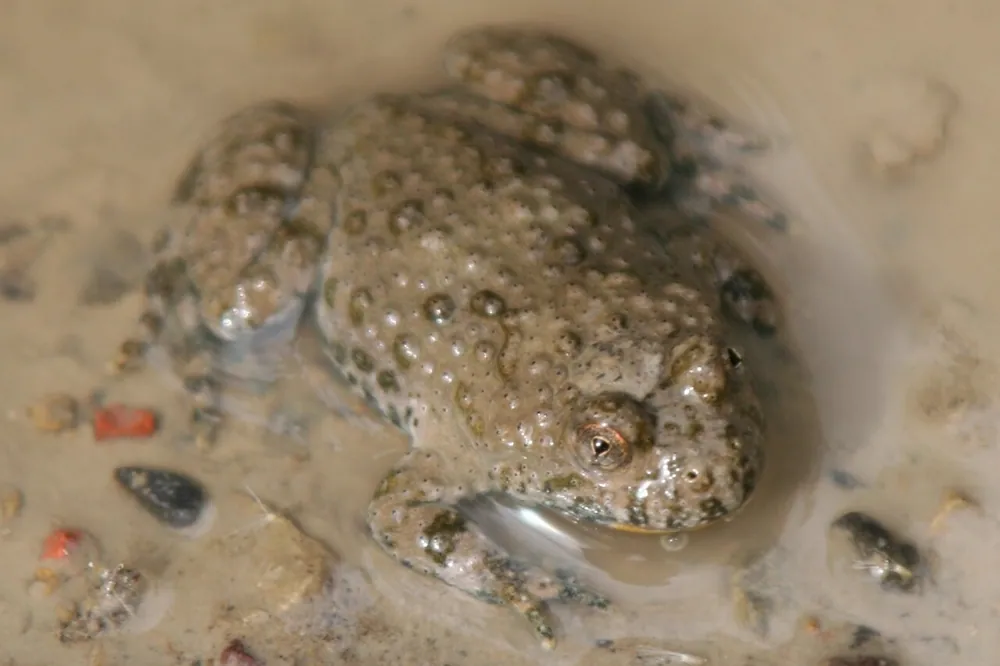
The yellow-bellied toad is a small toad with a bright yellow and black belly that it shows only when it feels threatened. It lives mainly in mountain areas of western Europe. Its skin toxins are not fatal to people, but they can harm smaller animals.1
 Jak je rozpoznać
- Grey-brown or dark brown and green upper body, often with faded, bright spots1
- Bright yellow to orange patches on the underside, usually covering more than half of the belly1
- Underside is grey-blue to black-blue between the yellow patches1
- Compact body and a rounded snout1
- Heart-shaped pupils, with the eardrums not visible1
- Warty skin with raised swirls on the back1
Często mylone z: The European fire-bellied toad (Bombina bombina) is a close relative and lives in the same region. The yellow-bellied toad has a more compact body that is not as flat.1
Siła trucizny
Jego skóra jest trująca. Niebezpiecznie jest jej dotykać, lizać ją albo ją jeść.
Jak działa jego trucizna?
The toad has toxins in its skin, released through the warts on its back when it is threatened. The toxin is not fatal to humans, but it can cause significant discomfort to most animals and is fatal to smaller ones.1
Jak bardzo jest niebezpieczne dla ludzi?
Zagrożenie dla ludzi: ŁagodneJak użądlenie pszczoły albo słabiej. W zasadzie nieszkodliwe dla ludzi.The toxin is not fatal to humans, although it can still cause discomfort to most animals.1
Co robi, gdy się boi?
It stays still and camouflaged most of the time, and when threatened it shows its yellow belly, puffs up its chest and releases toxins from its warts.1
 Jeśli ktoś je dotknął lub zjadł
- Jeśli ktoś go dotknął: dokładnie umyj ręce i nie dotykaj oczu ani ust. Jeśli dziecko lub zwierzę domowe je polizało albo zjadło: zadzwoń do ośrodka toksykologicznego albo na numer alarmowy.
Zawsze najpierw dzwoń na numer alarmowy (112, 000, 911). To ogólne wskazówki pierwszej pomocy, a nie porada medyczna. Podstawy pierwszej pomocy
 Uważaj na siebie
- Nigdy nie dotykaj, nie łap ani nie drażnij dzikiego zwierzęcia, nawet małego, i nawet jeśli wygląda, jakby spało albo było martwe.
- Zostaw mu miejsce. Jeśli je spotkasz, zachowaj spokój, powoli się wycofaj i pozwól mu odejść.
- Po dotknięciu lub zjedzeniu: nie trzyj oczu ani ust, umyj ręce i szukaj pomocy medycznej.
Nie poluje na ciebie. Jego trucizna jest tylko po to, żeby nikt go nie zjadł. Więcej o bezpieczeństwie
Jakie jest duże?
Jakie jest długie?
Ile waży?
 krótsze niż twój mały palec
 tak lekkie, że nie poczujesz go na dłoni
 100 metrów w 180 s (najszybszy człowiek potrzebuje 9,6)
Yellow-bellied toad: jak duże jest w porównaniu z TOBĄ?
Zwykła matematyka w twojej przeglądarce. Nic nie jest zapisywane ani nigdzie wysyłane.
Jak szybkie jest?


Fakty
When a male is threatened or wants to attract a female, he kicks his hind legs into a small pond to make a wave-like pattern. This marks his territory and only works in ponds of a certain depth.1
They can change the shade of their colour to suit lighter or darker surroundings by moving pigment within their cells.1
Yellow-bellied toads breed in unpredictable places, such as shallow pools that can disappear overnight. Within their family, they are the only species that chooses such sites.1
Their life span ranges from 5 to 23 years, and climate plays a large role in how long an individual lives.1
Males have longer forelimbs than females, which is thought to help them during mating and fights with other males.1
Dla znawców jadu
- Nazwa naukowa
- Bombina variegata
- Grupa
- Drzewołazy, ropuchy i traszki
- Rodzina
- Bombinatoridae2
- Kolejność
- Anura
- Kontynenty
- Europa
- Młode
- Females can lay over 200 eggs at one time, but typically lay about 40. Eggs are laid in ponds, and tadpoles develop rapidly.1
- Jak sobie radzi na wolności
- Endangered in Germany1
- Zagrożenie dla ludzi
- 1 / 5: Łagodne3
Skąd pochodzą fakty
- Yellow-bellied toad (Wikipedia (CC BY-SA 4.0))
- Bombina variegata (iNaturalist): nazwy i klasyfikacja.
- Venom Wiki: poziom zagrożenia, typowy rozmiar i szacowana prędkość to nasze własne oceny. Zobacz, jak je ustalamy: Jak oceniamy zagrożenie.
Każdy fakt na tej stronie ma numer, który wskazuje jego źródło. Jeśli coś pomyliliśmy, przepraszamy, jesteśmy fanami zwierząt, a nie czasopismem naukowym. Napisz do nas na [email protected], a poprawimy to.
 Skorpion jest głodny! Venom Wiki to projekt jednej osoby: darmowy, bez reklam i bez śledzenia. Mały napiwek pomaga utrzymać go w sieci.Nakarm skorpiona
Więcej z tej samej grupy: Drzewołazy, ropuchy i traszki
 Fire salamanderDrzewołazy, ropuchy i traszkiTylko boliNie dotykaj
 Common toadDrzewołazy, ropuchy i traszkiTylko boliNie dotykaj
 European fire-bellied toadDrzewołazy, ropuchy i traszkiNieszkodliwe
 Iberian ribbed newtDrzewołazy, ropuchy i traszkiNieszkodliwe
 Natterjack toadDrzewołazy, ropuchy i traszkiNieszkodliwe
 Alpine salamanderDrzewołazy, ropuchy i traszkiNieszkodliwe
 Common European adder
 Spanish fly
 Common wasp
 European hornet
 Western honey bee
 Blunt-nosed viper