
 Afurika
 Aziya
Aziya Uburayi
 Amerika y'Amajyepfo
 Ositaraliya na Oseyaniya
 Antaragitika
 Inyanja ya Pasifika
 Inyanja ya Atalantika
 Inyanja y'Abahinde
 Inyanja ya Arigitika
 Inyanja ya Mediterane
 Inyanja Itukura
 Inyanja ya Karayibe
 Inyanja ya Korali
 Inyanja y'Amajyepfo y'u Bushinwa
 Inyanja ya Filipine
 Inyanja ya Andamani
 Inyanja y'Amajyaruguru
 Inyanja ya Timor na Arafura
 Ikigobe cya Bengali
 Ikigobe cya Kaliforuniya
Fire urchin
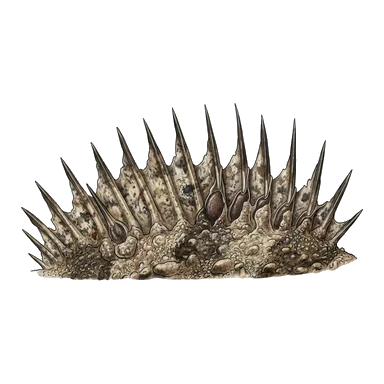 Amahwa afite ubumara
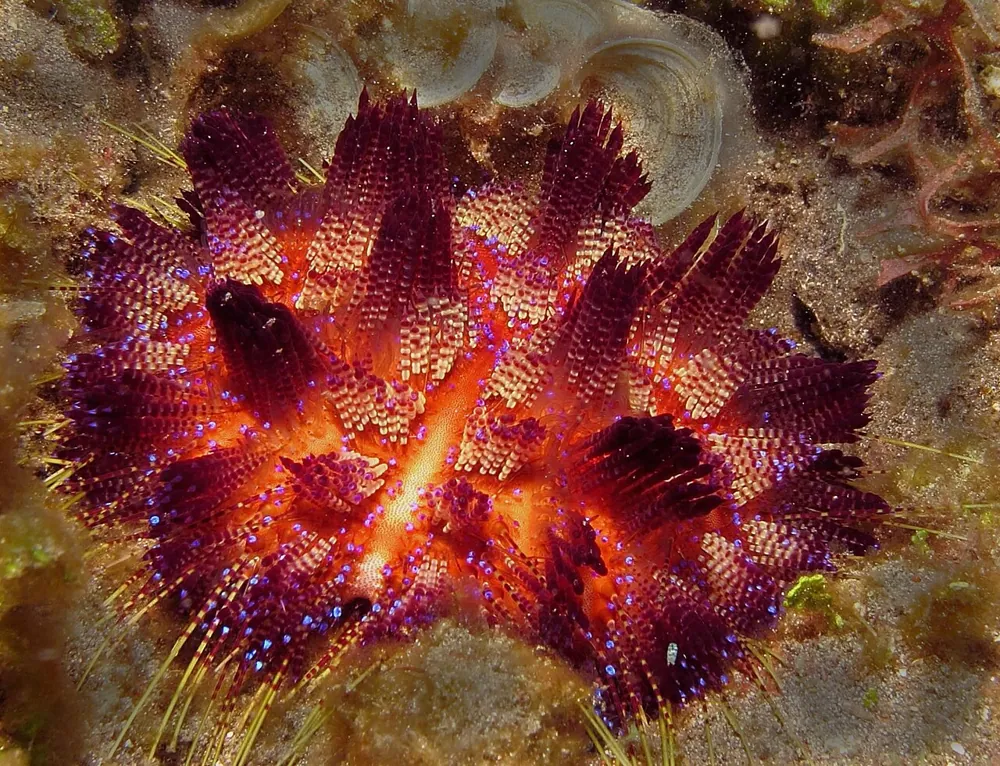
The fire urchin is a large sea urchin that grows up to 25 cm across. It lives on sand and rubble sea floors and in coral areas across the Indo-Pacific. Its venomous spines can give a painful sting, so it is best left alone.1
 Uko wayimenya
Imbaraga z'ubumara
Amahwa atyaye ni yo atwara ubumara. Kuyikandagira cyangwa kuyifata birababaza.
Ubumara bwayo bukora iki?
Each venomous spine has several hollow, spherical capsules filled with toxin, separated by constrictions. These work like hypodermic syringes, injecting the toxin when the spines pierce the skin. The sting is painful and the pain can last several hours.1
Iteje akaga kangana iki ku bantu?
Akaga ku bantu: IkomeyeNiba amahwa yayo akujombye, jya kwa muganga. Abapfa ni bake cyane.Handling the urchin can cause a painful sting. The pain can last several hours.1
Ikora iki iyo ifite ubwoba?
Its bright colouration warns other animals that its spines are venomous.1
 Niba amahwa yayo akujombye
- Shyira igikomere mu mazi ashyushye, ashyushye uko umuntu abyihanganira atiriwe ashya, kandi ushake ubufasha bwa muganga kugira ngo amahwa avanwemo. Ntukayacukure ubwawe.
Buri gihe banza uhamagare nimero y'ubutabazi (112, 000, 911). Izi ni inama rusange z'ubutabazi bw'ibanze, si inama za muganga. Ibanze by'ubutabazi bw'ibanze
 Irinde akaga
- Ntuzigere ukora, ufata cyangwa ushotora inyamaswa yo mu gasozi, nubwo yaba ntoya, kandi nubwo yasa n'isinziriye cyangwa yapfuye.
- Yihe umwanya. Niba uhuye n'imwe, tuza, usubire inyuma buhoro buhoro kandi uyireke yigendere.
- Niba amahwa yayo akujombye: tuza, ntunyeganyege, hamagara nimero y'ubutabazi (112, 000, 911) cyangwa ujye ku bitaro vuba. Ibuka uko yasaga, ifoto irafasha.
Ntigushakisha ngo ikugirire nabi. Ikoresha ubumara bwayo kugira ngo ifate ibyo kurya cyangwa yirinde, kandi ikunda cyane kwihisha. Ibindi ku kwirinda
Ni hehe ku isi?
Ingana gute?
Ireshya ite?
 ireshya n'ibice 8 by'ibikinisho byo kubaka biri ku murongo
 itinda kurusha ikinyamushongo cyo mu murima
Fire urchin ingana ite ugereranyije NAWE?
Ni imibare gusa ikorerwa muri mudasobwa yawe. Nta kintu kibikwa cyangwa cyoherezwa ahandi.
Yihuta gute?


Ibintu by'ukuri
Its venomous spines are hollow and filled with toxin, working like tiny syringes.1
Several small fish and some cephalopods shelter among its toxic spines for protection.1
Its body shell is flexible, because its plates overlap like roof tiles instead of being rigidly joined.1
Shrimps and a zebra crab live on or with the urchin, and the urchin is their host.1
Its secondary spines have sensory cells at the tip and help it move and right itself.1
Ku bahanga mu by'ubumara
- Izina rya siyansi
- Asthenosoma varium
- Itsinda
- Oursins, inyenyeri zo mu nyanja n'inyo
- Umuryango
- Echinothuriidae2
- Itsinda rinini (order)
- Echinothurioida
- Imigabane
- Inyanja y'Abahinde, Inyanja ya Pasifika, Inyanja ya Korali, Inyanja ya Filipine, Inyanja ya Timor na Arafura, Inyanja ngari
- Abana bato
- The sexes are separate, and eggs (gametes) are released into the water, where fertilisation takes place. The larvae drift for several months before settling on the seabed and becoming juvenile sea urchins.1
- Akaga ku bantu
- 3 / 5: Ikomeye3
Aho ibintu bivugwa bituruka
- Asthenosoma varium (Wikipedia (CC BY-SA 4.0))
- Asthenosoma varium (iNaturalist): amazina n'ibyiciro.
- Venom Wiki: urwego rw'akaga, ingano isanzwe n'ikigereranyo cy'umuvuduko ni ibyacu bwite. Reba uko tubibara: Uko tugena akaga.
Buri kintu kivugwa kuri iyi paji gifite nimero yerekana aho cyavuye. Niba twibeshye, tubabarire, turi abakunzi b'inyamaswa, ntituri ikinyamakuru cya siyansi. Tubwire kuri [email protected] tuzabikosora.
 Sikorupiyo irashonje! Venom Wiki ni umushinga w'umuntu umwe: ni ubuntu, nta matangazo kandi nta bikurikirana abantu. Impano ntoya ifasha kugira ngo ikomeze kuboneka kuri interineti.Gaburira sikorupiyo
Izindi zo mu itsinda rimwe: Oursins, inyenyeri zo mu nyanja n'inyo
 Crown-of-thorns starfishOursins, inyenyeri zo mu nyanja n'inyoBisaba mugangaNtukayikoreho
 Flower urchinOursins, inyenyeri zo mu nyanja n'inyoIshobora kwica
 Bearded firewormOursins, inyenyeri zo mu nyanja n'inyoIrababaza gusaNtukayikoreho
 Black long-spined urchinOursins, inyenyeri zo mu nyanja n'inyoIrababaza gusaNtukayikoreho
 BloodwormOursins, inyenyeri zo mu nyanja n'inyoIrababaza gusa
 Bobbit wormOursins, inyenyeri zo mu nyanja n'inyoIrababaza gusa
Iba kandi muri: Inyanja y'Abahinde
 Australian box jellyfishJellyfish n'izindi nyamaswa zo mu nyanja zitera uruboriYicaNtukayikoreho
 Geography coneCone snail na octopusYica
 Greater blue-ringed octopusCone snail na octopusYica
 Southern blue-ringed octopusCone snail na octopusYica
 Hawksbill sea turtleIzindi nyamaswa zifite uburoziIshobora kwica
 Irukandji jellyfishJellyfish n'izindi nyamaswa zo mu nyanja zitera uruboriIshobora kwicaNtukayikoreho