
 Afurika
 Aziya
Aziya Uburayi
 Amerika y'Amajyepfo
 Ositaraliya na Oseyaniya
 Antaragitika
 Inyanja ya Pasifika
 Inyanja ya Atalantika
 Inyanja y'Abahinde
 Inyanja ya Arigitika
 Inyanja ya Mediterane
 Inyanja Itukura
 Inyanja ya Karayibe
 Inyanja ya Korali
 Inyanja y'Amajyepfo y'u Bushinwa
 Inyanja ya Filipine
 Inyanja ya Andamani
 Inyanja y'Amajyaruguru
 Inyanja ya Timor na Arafura
 Ikigobe cya Bengali
 Ikigobe cya Kaliforuniya
Japanese pufferfish
 Ifite uburozi iyo iriwe
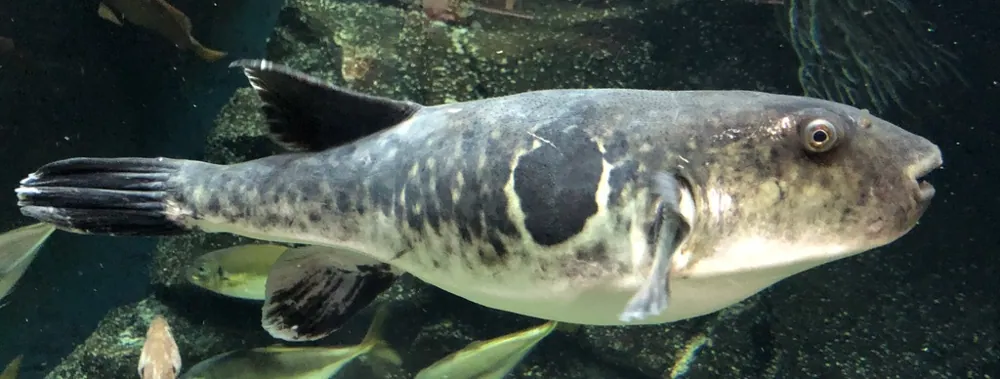
The Japanese pufferfish, also called the tiger puffer or torafugu, is a fish that lives in cold, shallow seas off East Asia. It is famous as a food in Japan, but its liver and ovaries contain a strong toxin, so it must be prepared with great care. It is also a key animal in genetics research.1
Imbaraga z'uburozi
Igira nabi gusa iyo hari ikiyiriye.
Uburozi bwayo bukora iki?
This pufferfish is poisonous rather than venomous. Some of its organs contain tetrodotoxin, a highly toxic substance, which is concentrated in the liver and ovaries, slightly present in the intestines and flesh, and absent from the skin and testes.1
Iteje akaga kangana iki ku bantu?
Akaga ku bantu: YicaImwe mu nyamaswa ziteje akaga kurusha izindi ku isi.Its organs are highly toxic, so the liver and ovaries are the dangerous parts to eat. Only the flesh and skin are the parts that are safe to eat in regulated preparation.1
 Niba hari uwayikozeho cyangwa uwayiriye
- Niba hari uwayiriye cyangwa afite ibimenyetso nyuma yo kuyirya: hamagara ako kanya nimero y'ubutabazi cyangwa ikigo gishinzwe uburozi.
Buri gihe banza uhamagare nimero y'ubutabazi (112, 000, 911). Izi ni inama rusange z'ubutabazi bw'ibanze, si inama za muganga. Ibanze by'ubutabazi bw'ibanze
 Irinde akaga
- Ntuzigere ukora, ufata cyangwa ushotora inyamaswa yo mu gasozi, nubwo yaba ntoya, kandi nubwo yasa n'isinziriye cyangwa yapfuye.
- Yihe umwanya. Niba uhuye n'imwe, tuza, usubire inyuma buhoro buhoro kandi uyireke yigendere.
- Niba wayikozeho cyangwa wayiriye: ntukube amaso cyangwa umunwa, karaba intoki kandi ushake ubufasha bwa muganga.
Ntigushakisha ngo ikugirire nabi. Uburozi bwayo buriho gusa kugira ngo hatagira ikiyirya. Ibindi ku kwirinda
Ni hehe ku isi?
Ingana gute?
Ireshya ite?
 ireshya n'imineke 2 ikurikiranye
 ireshya n'ibice 12 by'ibikinisho byo kubaka biri ku murongo
 yakoga uburebure bw'ikidendezi kinini (metero 50) mu masegonda 45
Japanese pufferfish ingana ite ugereranyije NAWE?
Ni imibare gusa ikorerwa muri mudasobwa yawe. Nta kintu kibikwa cyangwa cyoherezwa ahandi.
Yihuta gute?
Ibintu by'ukuri
A genetically modified type called 22-seiki fugu, meaning 22nd-century fugu, has had four leptin receptor genes removed, which increases appetite. It grows on average 1.9 times faster than normal torafugu and is sold as food.1
Its genome is one of the smallest known among vertebrates, and it was the first vertebrate genome after the human genome to be made publicly available.1
Its genome has about 6% of the base pairs of the human genome, yet it has 22 chromosomes, close to the 23 in humans.1
It is one of the most valuable commercial fishes in Japan.1
It is used as a reference genome to help identify genes in human and other vertebrate genomes.1
Ku bahanga mu by'ubumara
- Izina rya siyansi
- Takifugu rubripes
- Itsinda
- Izindi nyamaswa zifite uburozi
- Umuryango
- Tetraodontidae2
- Itsinda rinini (order)
- Tetraodontiformes
- Imigabane
- Inyanja ya Pasifika, Inyanja ngari
- Abana bato
- Spawning takes place in estuaries. Young fish stay in river mouths and lagoons for about one year before migrating permanently to the open ocean.1
- Uko imeze mu gasozi
- Near Threatened1
- Akaga ku bantu
- 5 / 5: Yica3
Aho ibintu bivugwa bituruka
- Takifugu rubripes (Wikipedia (CC BY-SA 4.0))
- Takifugu rubripes (iNaturalist): amazina n'ibyiciro.
- Venom Wiki: urwego rw'akaga, ingano isanzwe n'ikigereranyo cy'umuvuduko ni ibyacu bwite. Reba uko tubibara: Uko tugena akaga.
Buri kintu kivugwa kuri iyi paji gifite nimero yerekana aho cyavuye. Niba twibeshye, tubabarire, turi abakunzi b'inyamaswa, ntituri ikinyamakuru cya siyansi. Tubwire kuri [email protected] tuzabikosora.
 Sikorupiyo irashonje! Venom Wiki ni umushinga w'umuntu umwe: ni ubuntu, nta matangazo kandi nta bikurikirana abantu. Impano ntoya ifasha kugira ngo ikomeze kuboneka kuri interineti.Gaburira sikorupiyo
Izindi zo mu itsinda rimwe: Izindi nyamaswa zifite uburozi
 Hawksbill sea turtleIzindi nyamaswa zifite uburoziIshobora kwica
 Greenland sharkIzindi nyamaswa zifite uburoziIrababaza gusa
 Silver-cheeked toadfishIzindi nyamaswa zifite uburoziYica
 Blackspotted pufferIzindi nyamaswa zifite uburoziIshobora kwica
 White-spotted pufferIzindi nyamaswa zifite uburoziIshobora kwica
 Long-spine porcupinefishIzindi nyamaswa zifite uburoziBisaba muganga
Iba kandi muri: Inyanja ya Pasifika
 Australian box jellyfishJellyfish n'izindi nyamaswa zo mu nyanja zitera uruboriYicaNtukayikoreho
 Geography coneCone snail na octopusYica
 Greater blue-ringed octopusCone snail na octopusYica
 Southern blue-ringed octopusCone snail na octopusYica
 Irukandji jellyfishJellyfish n'izindi nyamaswa zo mu nyanja zitera uruboriIshobora kwicaNtukayikoreho
 Reef stonefishAmafi afite ubumaraIshobora kwicaNtukayikoreho