
 Afurika
 Aziya
Aziya Uburayi
 Amerika y'Amajyepfo
 Ositaraliya na Oseyaniya
 Antaragitika
 Inyanja ya Pasifika
 Inyanja ya Atalantika
 Inyanja y'Abahinde
 Inyanja ya Arigitika
 Inyanja ya Mediterane
 Inyanja Itukura
 Inyanja ya Karayibe
 Inyanja ya Korali
 Inyanja y'Amajyepfo y'u Bushinwa
 Inyanja ya Filipine
 Inyanja ya Andamani
 Inyanja y'Amajyaruguru
 Inyanja ya Timor na Arafura
 Ikigobe cya Bengali
 Ikigobe cya Kaliforuniya
Red paper wasp
 Itera urubori
The red paper wasp is a social wasp that builds papery nests from chewed plant fibres and saliva. It lives across much of the Neotropical region, from southern Arizona down to Argentina. Its colonies share work between many females, which makes it a useful example for scientists studying how social animals organise themselves.1


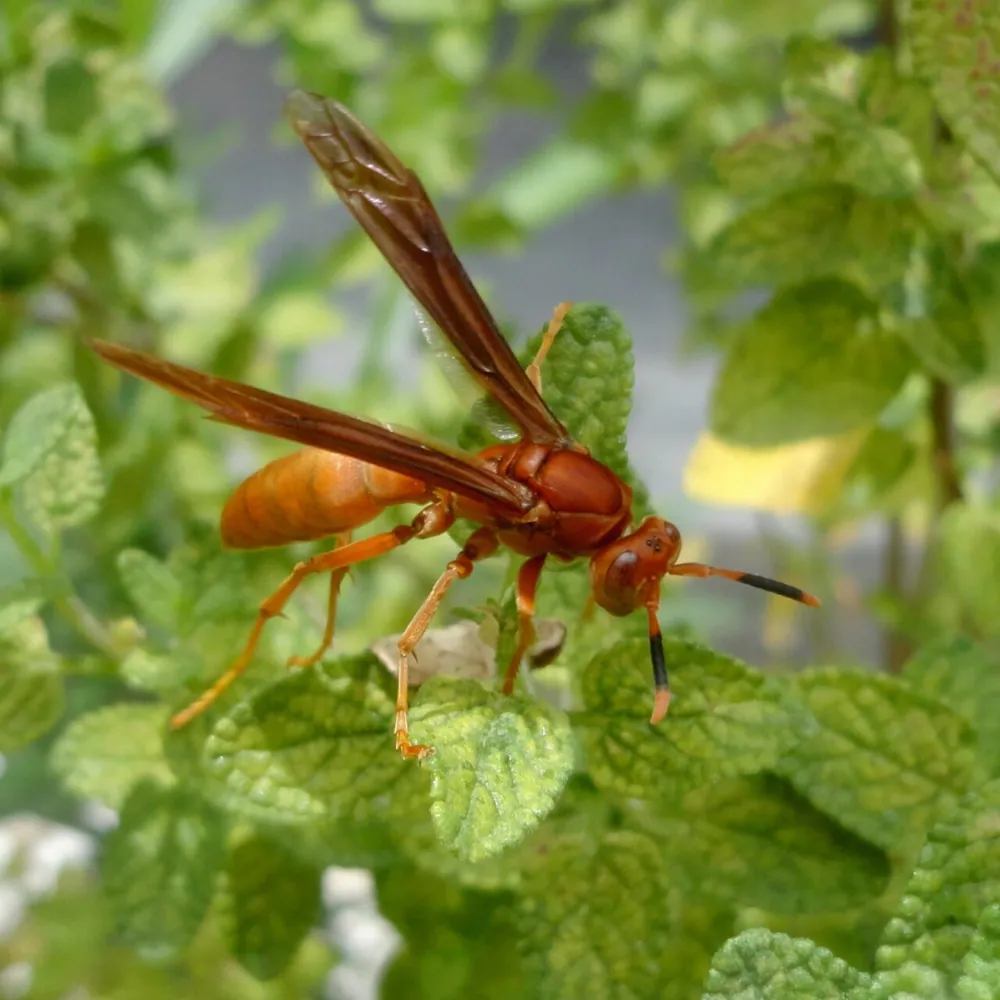
 Uko wayimenya
- Body is a uniform light to dark mahogany-brown, sometimes with a lighter head and thorax.1
- Some individuals have a yellow edge on the front of the first abdominal segment.1
- Wings are purplish black, with black or reddish-brown veins.1
- It is a large paper wasp, with wings 17.0 to 24.5 mm long.1
- Nests have open combs with hexagonal cells and no outer envelope.1
Imbaraga z'ubumara
Ubumara busohokera mu rubori.
Iteje akaga kangana iki ku bantu?
Akaga ku bantu: IrababazaIshobora kubabaza cyane, ariko hafi ya buri gihe nta kibazo gikomeye biteza. Niba itera urubori
- Kuramo urubori rw'uruyuki uruharura, kandi ukonjeshe aho rwateye.
- Niba umuntu ahumeka bimugoye, akabyimba mu maso cyangwa mu muhogo, cyangwa akumva agiye guta ubwenge, ni ikibazo cyihutirwa cya aleriji: hamagara nimero y'ubutabazi kandi ukoreshe urushinge rwe rwa adrenaline (adrenaline pen) niba arufite.
Buri gihe banza uhamagare nimero y'ubutabazi (112, 000, 911). Izi ni inama rusange z'ubutabazi bw'ibanze, si inama za muganga. Ibanze by'ubutabazi bw'ibanze
 Irinde akaga
- Ntuzigere ukora, ufata cyangwa ushotora inyamaswa yo mu gasozi, nubwo yaba ntoya, kandi nubwo yasa n'isinziriye cyangwa yapfuye.
- Yihe umwanya. Niba uhuye n'imwe, tuza, usubire inyuma buhoro buhoro kandi uyireke yigendere.
- Niba imwe igutereye urubori: tuza, ntunyeganyege, hamagara nimero y'ubutabazi (112, 000, 911) cyangwa ujye ku bitaro vuba. Ibuka uko yasaga, ifoto irafasha.
Ntigushakisha ngo ikugirire nabi. Ikoresha ubumara bwayo kugira ngo ifate ibyo kurya cyangwa yirinde, kandi ikunda cyane kwihisha. Ibindi ku kwirinda
Ingana gute?
Ireshya ite?
 ireshya hafi na trombone yo gufata impapuro
 yaguruka ikambuka ikibuga cyose cy'umupira w'amaguru mu masegonda 14
Red paper wasp ingana ite ugereranyije NAWE?
Ni imibare gusa ikorerwa muri mudasobwa yawe. Nta kintu kibikwa cyangwa cyoherezwa ahandi.
Yihuta gute?


Ibintu by'ukuri
A single queen dominates the other females, sometimes using physical attacks that can turn into fatal battles.1
Colonies build many combs, often around 38 in total, and move brood into new combs as old ones are abandoned. This is thought to protect the colony from moth infestations.1
Male wasps follow two mating tactics: some defend territories, while smaller males patrol from tree to tree and sneak matings when they can.1
Around 56% of females drift to nearby nests, which helps protect the colony against predators. An egg has a 40% chance of being eaten by a predator before it reaches adulthood.1
Colonies are founded or abandoned at any time of year, so their development is not tied to the seasons.1
Usenya ibinyoma
Ikinyoma: The species name canadensis shows that this wasp lives in Canada.
Ukuri: Linnaeus was misinformed about where his specimen came from. In North America, this wasp only reaches as far north as southern Arizona.1
Ku bahanga mu by'ubumara
- Izina rya siyansi
- Polistes canadensis
- Itsinda
- Inzuki, amavubi n'amavubi manini
- Umuryango
- Vespidae2
- Itsinda rinini (order)
- Hymenoptera
- Imigabane
- Amerika y'Amajyaruguru, Amerika y'Amajyepfo
- Abana bato
- Eggs are laid in hexagonal cells, and the egg-to-adult stage takes around 40 days, with broods raised year round.1
- Akaga ku bantu
- 2 / 5: Irababaza3
Aho ibintu bivugwa bituruka
- Polistes canadensis (Wikipedia (CC BY-SA 4.0))
- Polistes canadensis (iNaturalist): amazina n'ibyiciro.
- Venom Wiki: urwego rw'akaga, ingano isanzwe n'ikigereranyo cy'umuvuduko ni ibyacu bwite. Reba uko tubibara: Uko tugena akaga.
Buri kintu kivugwa kuri iyi paji gifite nimero yerekana aho cyavuye. Niba twibeshye, tubabarire, turi abakunzi b'inyamaswa, ntituri ikinyamakuru cya siyansi. Tubwire kuri [email protected] tuzabikosora.
 Sikorupiyo irashonje! Venom Wiki ni umushinga w'umuntu umwe: ni ubuntu, nta matangazo kandi nta bikurikirana abantu. Impano ntoya ifasha kugira ngo ikomeze kuboneka kuri interineti.Gaburira sikorupiyo
Izindi zo mu itsinda rimwe: Inzuki, amavubi n'amavubi manini
 Tarantula hawkInzuki, amavubi n'amavubi maniniIrababaza gusa
 Executioner waspInzuki, amavubi n'amavubi maniniBisaba muganga
 Warrior waspInzuki, amavubi n'amavubi maniniBisaba muganga
 Bald-faced hornetInzuki, amavubi n'amavubi maniniIrababaza gusa
 Cow killer velvet antInzuki, amavubi n'amavubi maniniIrababaza gusa
 Eastern cicada killerInzuki, amavubi n'amavubi maniniNtacyo itwaye
 Terciopelo
 Eastern coral snake
 Eastern diamondback rattlesnake
 Eyelash viper
 Timber rattlesnake
 Western diamondback rattlesnake