
 Afurika
 Aziya
Aziya Uburayi
 Amerika y'Amajyepfo
 Ositaraliya na Oseyaniya
 Antaragitika
 Inyanja ya Pasifika
 Inyanja ya Atalantika
 Inyanja y'Abahinde
 Inyanja ya Arigitika
 Inyanja ya Mediterane
 Inyanja Itukura
 Inyanja ya Karayibe
 Inyanja ya Korali
 Inyanja y'Amajyepfo y'u Bushinwa
 Inyanja ya Filipine
 Inyanja ya Andamani
 Inyanja y'Amajyaruguru
 Inyanja ya Timor na Arafura
 Ikigobe cya Bengali
 Ikigobe cya Kaliforuniya
Skeleton tarantula
 Iraruma
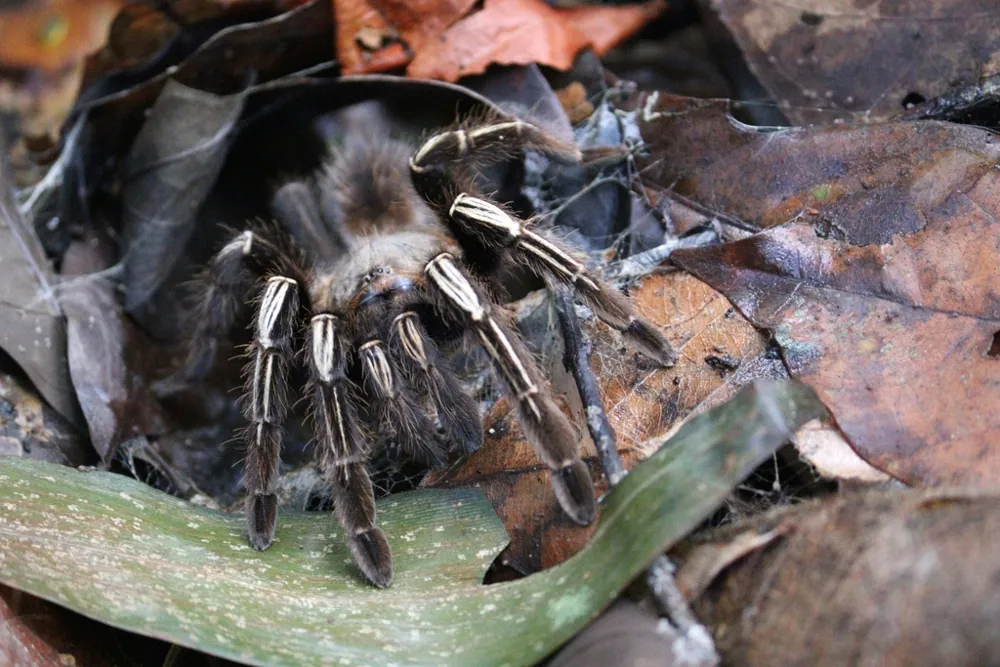
The skeleton tarantula is a large, hairy spider from South America. It lives mostly on the forest floor in the lowland forests of northern Brazil, French Guiana and Suriname. It is known for its skeleton-like leg markings and for being fast and ready to defend itself.1



 Uko wayimenya
- Black legs with yellowish, skeleton-like striping1
- Small, brown abdomen1
- Coffee-coloured or golden carapace (the hard shell covering the front of the body)1
- Leg span of about 11 to 12 cm, though females can reach 15 cm1
Ikunze kwitiranywa na: Aphonopelma seemani has leg striping similar to this spider's. The skeleton tarantula's striping is more yellowish.1
Imbaraga z'ubumara
Ubumara busohokera mu menyo yayo y'ubumara cyangwa mu yandi menyo iyo iriye.
Iteje akaga kangana iki ku bantu?
Akaga ku bantu: YorohejeNko guterwa urubori n'uruyuki cyangwa munsi yaho. Mu by'ukuri ntacyo itwaye abantu.Ikora iki iyo ifite ubwoba?
When threatened, it brushes urticating hairs off its palps (the small leg-like organs near the mouth) by rubbing them against its chelicerae (jaw parts). It will also rise up and show its fangs.1
 Niba iruma
- Oza aho yarumye kandi uhakonjeshe. Shaka ubufasha bwa muganga niba ububabare bukabije cyangwa umuntu yumva atameze neza.
Buri gihe banza uhamagare nimero y'ubutabazi (112, 000, 911). Izi ni inama rusange z'ubutabazi bw'ibanze, si inama za muganga. Ibanze by'ubutabazi bw'ibanze
 Irinde akaga
- Ntuzigere ukora, ufata cyangwa ushotora inyamaswa yo mu gasozi, nubwo yaba ntoya, kandi nubwo yasa n'isinziriye cyangwa yapfuye.
- Yihe umwanya. Niba uhuye n'imwe, tuza, usubire inyuma buhoro buhoro kandi uyireke yigendere.
- Niba imwe ikurumye: tuza, ntunyeganyege, hamagara nimero y'ubutabazi (112, 000, 911) cyangwa ujye ku bitaro vuba. Ibuka uko yasaga, ifoto irafasha.
Ntigushakisha ngo ikugirire nabi. Ikoresha ubumara bwayo kugira ngo ifate ibyo kurya cyangwa yirinde, kandi ikunda cyane kwihisha. Ibindi ku kwirinda
Ingana gute?
Ireshya ite?
 ireshya n'ibice 5 by'ibikinisho byo kubaka biri ku murongo
 yakwiruka metero 100 mu masegonda 220 (umuntu wihuta kurusha abandi akenera 9,6)
Skeleton tarantula ingana ite ugereranyije NAWE?
Ni imibare gusa ikorerwa muri mudasobwa yawe. Nta kintu kibikwa cyangwa cyoherezwa ahandi.
Yihuta gute?


Ibintu by'ukuri
Its urticating hairs grow on its palps, not on its abdomen as they do in most New World tarantulas.1
It is a fast and aggressive species that will readily rise up and present its fangs to a predator.1
It builds a heavily webbed burrow under the topsoil, or among branches, rocks and other forest floor debris.1
Most members of its subfamily live in trees, but this species lives mainly on or near the forest floor.1
Aho ibintu bivugwa bituruka
- Skeleton tarantula (Wikipedia (CC BY-SA 4.0))
- Ephebopus murinus (iNaturalist): amazina n'ibyiciro.
- Venom Wiki: urwego rw'akaga, ingano isanzwe n'ikigereranyo cy'umuvuduko ni ibyacu bwite. Reba uko tubibara: Uko tugena akaga.
Buri kintu kivugwa kuri iyi paji gifite nimero yerekana aho cyavuye. Niba twibeshye, tubabarire, turi abakunzi b'inyamaswa, ntituri ikinyamakuru cya siyansi. Tubwire kuri [email protected] tuzabikosora.
 Sikorupiyo irashonje! Venom Wiki ni umushinga w'umuntu umwe: ni ubuntu, nta matangazo kandi nta bikurikirana abantu. Impano ntoya ifasha kugira ngo ikomeze kuboneka kuri interineti.Gaburira sikorupiyo
Izindi zo mu itsinda rimwe: Tarantula na funnel-web
 Goliath birdeaterTarantula na funnel-webIrababaza gusa
 Brazilian salmon pink birdeaterTarantula na funnel-webNtacyo itwaye
 Chilean rose tarantulaTarantula na funnel-webNtacyo itwaye
 Greenbottle blue tarantulaTarantula na funnel-webNtacyo itwaye
 Pinktoe tarantulaTarantula na funnel-webNtacyo itwaye
 Brazilian funnel-web spiderTarantula na funnel-webBisaba muganga
 Golden poison frog
 Terciopelo
 Brazilian wandering spider
 Eyelash viper
 Golden lancehead
 South American bushmaster