
 Afurika
 Aziya
Aziya Uburayi
 Amerika y'Amajyepfo
 Ositaraliya na Oseyaniya
 Antaragitika
 Inyanja ya Pasifika
 Inyanja ya Atalantika
 Inyanja y'Abahinde
 Inyanja ya Arigitika
 Inyanja ya Mediterane
 Inyanja Itukura
 Inyanja ya Karayibe
 Inyanja ya Korali
 Inyanja y'Amajyepfo y'u Bushinwa
 Inyanja ya Filipine
 Inyanja ya Andamani
 Inyanja y'Amajyaruguru
 Inyanja ya Timor na Arafura
 Ikigobe cya Bengali
 Ikigobe cya Kaliforuniya
Southern yellowjacket
 Itera urubori
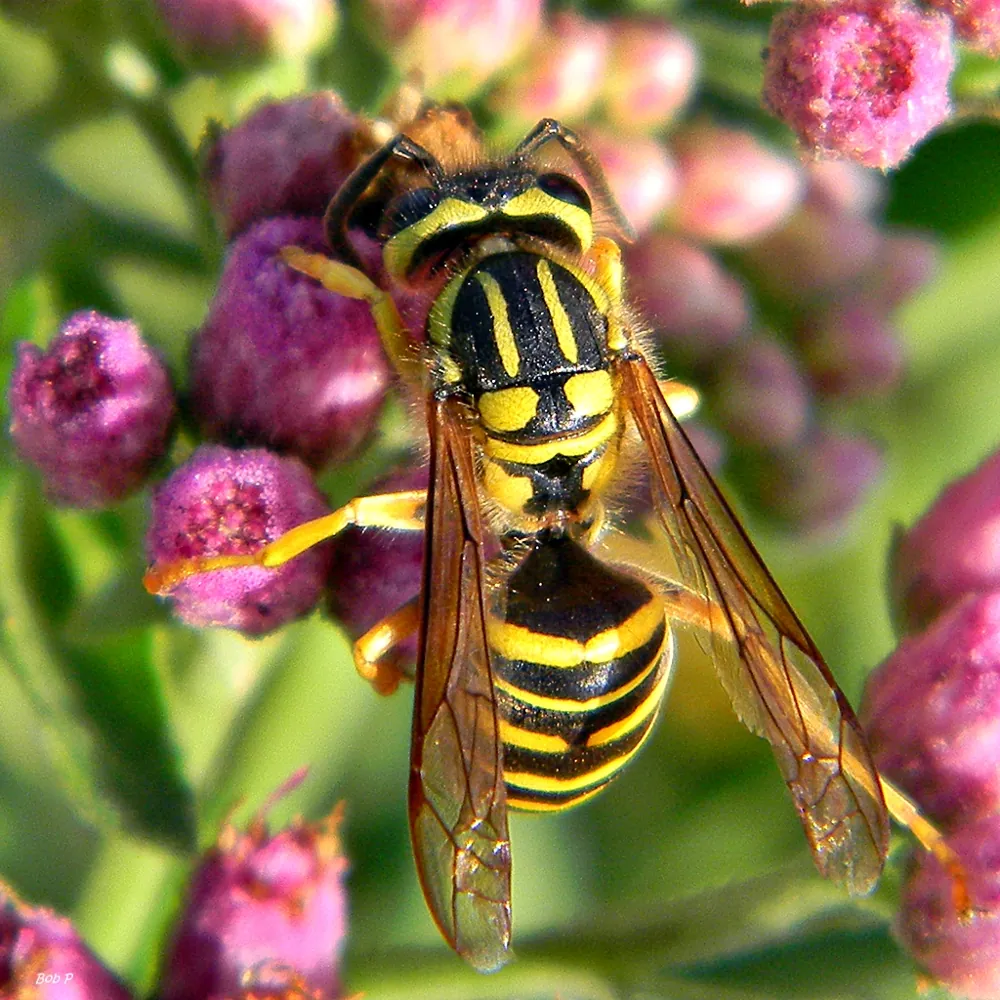
The southern yellowjacket is a social wasp with black and yellow stripes and an orange queen. It lives in eastern North America and further south into Central America. Its nests are often in yards, parks and by roads, so people meet it often, and its stings are painful.1



 Uko wayimenya
- Black body with yellow striping over the whole body1
- Clear wings and a hairless body1
- About 1.3 cm long1
- The queen is larger than the males and workers and is more orange in colour1
- Has two stripes on its scuta1
Ikunze kwitiranywa na: Its two stripes on the scuta are shared with V. sulphurea. The queen looks different from the workers and males, so check the colour and size of the wasp you see.1
Imbaraga z'ubumara
Ubumara busohokera mu rubori.
Ubumara bwayo bukora iki?
Its stings are venomous, and the venom causes pain. Workers can sting several times in one attack.1
Iteje akaga kangana iki ku bantu?
Akaga ku bantu: IrababazaIshobora kubabaza cyane, ariko hafi ya buri gihe nta kibazo gikomeye biteza.The species is considered a pest because its nests are close to people and can be large. Close contact with people commonly leads to multiple, painful stings. Disturbing a nest can result in several stings.1
Ikora iki iyo ifite ubwoba?
Workers release alarm pheromones that signal the rest of the colony to attack whatever threatens the nest. Their stings are typically used in defence of the colony.1
 Niba itera urubori
- Kuramo urubori rw'uruyuki uruharura, kandi ukonjeshe aho rwateye.
- Niba umuntu ahumeka bimugoye, akabyimba mu maso cyangwa mu muhogo, cyangwa akumva agiye guta ubwenge, ni ikibazo cyihutirwa cya aleriji: hamagara nimero y'ubutabazi kandi ukoreshe urushinge rwe rwa adrenaline (adrenaline pen) niba arufite.
Buri gihe banza uhamagare nimero y'ubutabazi (112, 000, 911). Izi ni inama rusange z'ubutabazi bw'ibanze, si inama za muganga. Ibanze by'ubutabazi bw'ibanze
 Irinde akaga
- Ntuzigere ukora, ufata cyangwa ushotora inyamaswa yo mu gasozi, nubwo yaba ntoya, kandi nubwo yasa n'isinziriye cyangwa yapfuye.
- Yihe umwanya. Niba uhuye n'imwe, tuza, usubire inyuma buhoro buhoro kandi uyireke yigendere.
- Niba imwe igutereye urubori: tuza, ntunyeganyege, hamagara nimero y'ubutabazi (112, 000, 911) cyangwa ujye ku bitaro vuba. Ibuka uko yasaga, ifoto irafasha.
Ntigushakisha ngo ikugirire nabi. Ikoresha ubumara bwayo kugira ngo ifate ibyo kurya cyangwa yirinde, kandi ikunda cyane kwihisha. Ibindi ku kwirinda
Ingana gute?
Ireshya ite?
 ntoya ku buryo yakwicara ku nzara yawe
 yaguruka ikambuka ikibuga cyose cy'umupira w'amaguru mu masegonda 16
Southern yellowjacket ingana ite ugereranyije NAWE?
Ni imibare gusa ikorerwa muri mudasobwa yawe. Nta kintu kibikwa cyangwa cyoherezwa ahandi.
Yihuta gute?


Ibintu by'ukuri
Most southern yellowjackets are social parasites: they build their nests around the nests of another species.1
About 85% of colonies start when a queen takes over a small nest of the eastern yellowjacket, V. maculifrons, and only about 15% are founded independently.1
Some nests are very large. One of the biggest reported was in a pine tree and the dirt beneath it, and it had over 50 combs in the trunk alone.1
In Florida and other southern coastal areas, some nests survive the winter and last for several years.1
Workers and queens use pheromones to communicate, with alarm signals for attacks and a different pheromone that attracts males to the queen.1
Ku bahanga mu by'ubumara
Aho ibintu bivugwa bituruka
- Vespula squamosa (Wikipedia (CC BY-SA 4.0))
- Vespula squamosa (iNaturalist): amazina n'ibyiciro.
- Venom Wiki: urwego rw'akaga, ingano isanzwe n'ikigereranyo cy'umuvuduko ni ibyacu bwite. Reba uko tubibara: Uko tugena akaga.
Buri kintu kivugwa kuri iyi paji gifite nimero yerekana aho cyavuye. Niba twibeshye, tubabarire, turi abakunzi b'inyamaswa, ntituri ikinyamakuru cya siyansi. Tubwire kuri [email protected] tuzabikosora.
 Sikorupiyo irashonje! Venom Wiki ni umushinga w'umuntu umwe: ni ubuntu, nta matangazo kandi nta bikurikirana abantu. Impano ntoya ifasha kugira ngo ikomeze kuboneka kuri interineti.Gaburira sikorupiyo
Izindi zo mu itsinda rimwe: Inzuki, amavubi n'amavubi manini
 Tarantula hawkInzuki, amavubi n'amavubi maniniIrababaza gusa
 Executioner waspInzuki, amavubi n'amavubi maniniBisaba muganga
 Warrior waspInzuki, amavubi n'amavubi maniniBisaba muganga
 Bald-faced hornetInzuki, amavubi n'amavubi maniniIrababaza gusa
 Cow killer velvet antInzuki, amavubi n'amavubi maniniIrababaza gusa
 Eastern cicada killerInzuki, amavubi n'amavubi maniniNtacyo itwaye
 Terciopelo
 Eastern coral snake
 Eastern diamondback rattlesnake
 Eyelash viper
 Timber rattlesnake
 Western diamondback rattlesnake
_(7225863346).jpg)