
 Afrika
 Asia
Asia Yuropu
 Amerika yeKumaodzanyemba
 Australia neOceania
 Antarctica
 Gungwa rePacific
 Gungwa reAtlantic
 Gungwa reIndia
 Gungwa reArctic
 Gungwa reMediterranean
 Gungwa Dzvuku
 Gungwa reCaribbean
 Gungwa reCoral
 Gungwa reChina yeKumaodzanyemba
 Gungwa rePhilippines
 Gungwa reAndaman
 Gungwa reKuchamhembe
 Gungwa reTimor neArafura
 Gungwa reBengal
 Gulf yeCalifornia
African crested rat
 Chepfu muganda rayoInodya: ZvirimwaIne chepfu, haina uturu hwekuruma kana kubaya
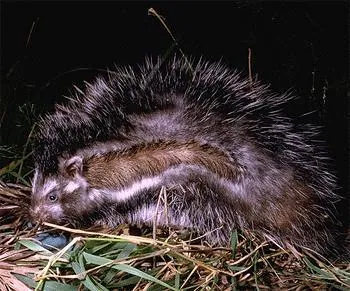
The African crested rat is a large, nocturnal rodent with long hair and a bushy tail. It looks a little like a porcupine. It lives in East Africa, where it is the world's only known poisonous rodent, coating itself in plant toxins to keep predators away.1



 Maziviro ayo
- Large, nocturnal rodent with long, silver and black-tipped guard hairs over a woolly grey and white undercoat1
- A mane of longer black-and-white banded hairs runs from the top of the head to just beyond the base of the tail1
- A broad, white-bordered strip of glandular skin sits beside the mane, and it becomes visible when the animal is threatened1
- Bushy tail and short black fur on the face and limbs1
- Superficially resembles a porcupine1
Simba rechepfu
Ganda rayo rine chepfu. Ine ngozi kubata, kunanzva kana kudya.
Chepfu yayo inoitei?
This animal is poisonous rather than venomous, so it does not bite or sting to inject poison. It smears poison from the bark of the poison arrow tree onto the hairs of its glandular skin patch. A predator that bites it can be sickened or even killed by this poison.1
Ine ngozi yakadii kuvanhu?
Ngozi kuvanhu: YakakombaKana munhu akaibata kana kuidya, enda kuna chiremba. Kufa hakuwanzoitiki zvachose.Its poison is a risk to predators that try to bite it. The rat itself is not harmed by the toxins it stores.1
Inoitei kana yatya?
When threatened or excited, the mane stands up and the glandular strip parts, exposing the skin that carries the poison.1
 Kana munhu akaibata kana kuidya
- Kana munhu akaidya kana aine zviratidzo mushure mekuidya: fonera nhamba yechimbichimbi kana nzvimbo yeruzivo rwechepfu ipapo ipapo.
Gara uchitanga wafonera nhamba yechimbichimbi (112, 000, 911). Iri izano rakajairika rerubatsiro rwekutanga, kwete zano rechiremba. Zvakakosha zverubatsiro rwekutanga
 Gara wakachengeteka
- Usambobata mhuka yesango, kuedza kuitora kana kuinetsa, kunyange iri diki, uye kunyange ichiita seyakarara kana yakafa.
- Ipa nzvimbo. Kana ukasangana nayo, dzikama, dzokera shure zvishoma nezvishoma uirege iende nenzira yayo.
- Kana wakaibata kana kuidya: usakwesha maziso kana muromo wako, geza maoko ako uye wana rubatsiro rwechiremba.
Haisi kukutsvaga. Chepfu yayo iripo chete kuti pasava nechinhu chinoidya. Zvimwe pamusoro pekugara wakachengeteka
Yakakura sei?
Yakareba zvakadii?
Inorema zvakadii?

 yakareba sezvidhinha zvematoyi 10 zvakateedzana
 inogona kumhanya mamita 100 mumasekondi 72 (munhu anomhanyisa kupfuura vose anoda 9.6)
African crested rat yakakura sei kana yaenzaniswa NEWE?
Masvomhu chete mubrowser yako. Hapana chinochengetwa kana kutumirwa kupi zvako.
Inomhanya zvakadii?


Chokwadi
It is the world's only known poisonous rodent.1
It is the only rodent known to use and store toxins from a different species in nature to protect itself, and it suffers no known harm from them.1
Its stomach has five anatomically distinct sections, a feature found in very few rodents.1
The skull is covered with small bony projections that give it a pebbled look.1
Its large size may allow microbes in its foregut to break down cellulose from plants by fermentation.1
Kuputsa ngano
Ngano: The maned rat was believed to be solitary.
Chokwadi: It is now known to be somewhat sociable. Several animals are found in the same territory, and they purr and groom one another, so they may form family groups of a male, a female and their young.1
Kune nyanzvi dzeuturu
- Zita resainzi
- Lophiomys imhausi
- Boka
- Dzimwe mhuka dzine chepfu
- Mhuri
- Muridae2
- Odha
- Rodentia
- Makondinendi
- Afrika
- Vacheche
- Litters have 1 to 3 young. The young are slightly haired at birth, their eyes open by day 13, and they are weaned by day 40.1
- Iri kurarama sei musango
- Least Concern1
- Ngozi kuvanhu
- 3 / 5: Yakakomba3
Kwakabva chokwadi
- Maned rat (Wikipedia (CC BY-SA 4.0))
- Lophiomys imhausi (iNaturalist): mazita nekurongwa kwemhuka.
- Venom Wiki: danho rengozi, saizi yakajairika nekufungidzira kwekumhanya ndezvedu. Ona kuti tinozviwana sei: Matinoyera ngozi.
Chokwadi chimwe nechimwe pane peji rino chine nhamba inoratidza kwachakabva. Kana takakanganisa, ruregerero, tiri vanoda mhuka, kwete magazini yesainzi. Tiudze pa[email protected] tichazvigadzirisa.
 Chinyavada chine nzara! Venom Wiki iprojekiti yemunhu mumwe: yemahara, isina kushambadza uye isina zvinokuteedzera. Chipo chidiki chinobatsira kuti irambe iri paindaneti.Fudza chinyavada
Zvimwe kubva muboka rimwe chete: Dzimwe mhuka dzine chepfu
 Common quailDzimwe mhuka dzine chepfuInongorwadza
 Spur-winged gooseDzimwe mhuka dzine chepfuInongorwadza
 Fahaka pufferfishDzimwe mhuka dzine chepfuInogona kuuraya
 Red-striped oil beetleDzimwe mhuka dzine chepfuInongorwadzaUsabata
 Japanese pufferfishDzimwe mhuka dzine chepfuInouraya
 Hawksbill sea turtleDzimwe mhuka dzine chepfuInogona kuuraya
 Black mamba
 Deathstalker
 Egyptian cobra
 Puff adder
 Boomslang
 Fat-tailed scorpion