
 Afrika
 Asia
Asia Yuropu
 Amerika yeKumaodzanyemba
 Australia neOceania
 Antarctica
 Gungwa rePacific
 Gungwa reAtlantic
 Gungwa reIndia
 Gungwa reArctic
 Gungwa reMediterranean
 Gungwa Dzvuku
 Gungwa reCaribbean
 Gungwa reCoral
 Gungwa reChina yeKumaodzanyemba
 Gungwa rePhilippines
 Gungwa reAndaman
 Gungwa reKuchamhembe
 Gungwa reTimor neArafura
 Gungwa reBengal
 Gulf yeCalifornia
Cape cobra
 Inoruma
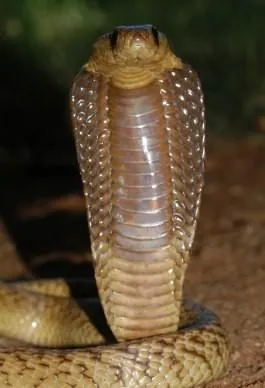
The Cape cobra is a medium-sized, highly venomous cobra. It lives in many kinds of land across southern Africa, and it often comes close to people. It is regarded as one of the most dangerous cobras in all of Africa.1



 Maziviro ayo
- Colour ranges from yellow through golden brown and dark brown to black.1
- Many individuals have black or pale stippling and blotches.1
- Juveniles have a dark throat that continues down the belly.1
- Adults are typically 1.2 to 1.4 m long.1
- When threatened, it raises the front of its body and spreads a broad hood.1
Inowanzovhiringidzwa ne: Juvenile Cape cobras have dark throats, which often leads people to confuse them with the rinkhals, a spitting cobra. The dark throat fades during the first year or two of life.1
Simba reuturu
Uturu hunobuda nemeno ayo painoruma.
Uturu hwayo hunoitei?
Its venom is thick and syrupy, and contains potent neurotoxins that act on the nerves, and possibly cardiotoxins that affect the heart. The venom can affect the respiratory system, nervous system and heart. When death occurs, it normally takes one to ten hours, or more, and is often caused by respiratory failure due to paralysis.1
Ine ngozi yakadii kuvanhu?
Ngozi kuvanhu: InourayaImwe yemhuka dzine ngozi zvikuru pasi rose.It is regarded as one of the most dangerous cobras in Africa because of its potent venom and its frequent presence around houses. The mortality rate for untreated bites is not exactly known, but is thought to be high, around 50%. Outcomes depend on factors such as the amount of venom injected and the bitten person's state of mind.1
 Mashoko akanaka: vanachiremba vane mushonga (antivenom) kana kurapwa kwechinhu ichi.1
Inoitei kana yatya?
When threatened, it raises its forebody, spreads a broad hood, may hiss loudly and strikes readily.1
 Kana ikaruma
- Mechanical ventilation (a machine that helps the person breathe) and symptom management are often enough to save a life. Serious cases need antivenom, which is a polyvalent antivenom produced by the South African Institute of Medical Research.1
- Chengeta munhu asingafambe uye akadzikama, bvisa mhete nezvinhu zvakasunga, uende kuchipatara nokukurumidza: antivenom ndiwo mushonga wacho.
Gara uchitanga wafonera nhamba yechimbichimbi (112, 000, 911). Iri izano rakajairika rerubatsiro rwekutanga, kwete zano rechiremba. Zvakakosha zverubatsiro rwekutanga
 Gara wakachengeteka
- Usambobata mhuka yesango, kuedza kuitora kana kuinetsa, kunyange iri diki, uye kunyange ichiita seyakarara kana yakafa.
- Ipa nzvimbo. Kana ukasangana nayo, dzikama, dzokera shure zvishoma nezvishoma uirege iende nenzira yayo.
- Kana imwe ikakuruma: dzikama, gara wakanyarara, fonera nhamba yechimbichimbi (112, 000, 911) kana kuti enda kuchipatara nokukurumidza. Rangarira kuti yaitaridzika sei, mufananidzo unobatsira.
Haisi kukutsvaga. Inoshandisa uturu hwayo kubata chikafu kana kuzvidzivirira, uye inotonyanya kuda kuhwanda. Zvimwe pamusoro pekugara wakachengeteka
Yakakura sei?
Yakareba zvakadii?
 yakareba sekatsi dzepamba 3 kubva pamhuno kusvika kumuswe
 yakareba semabhanana 9 akateedzana
 inogona kumhanya mamita 100 mumasekondi 48 (munhu anomhanyisa kupfuura vose anoda 9.6)
Cape cobra yakakura sei kana yaenzaniswa NEWE?
Masvomhu chete mubrowser yako. Hapana chinochengetwa kana kutumirwa kupi zvako.
Inomhanya zvakadii?


Chokwadi
Kwakabva chokwadi
- Cape cobra (Wikipedia (CC BY-SA 4.0))
- Naja nivea (iNaturalist): mazita nekurongwa kwemhuka.
- Venom Wiki: danho rengozi, saizi yakajairika nekufungidzira kwekumhanya ndezvedu. Ona kuti tinozviwana sei: Matinoyera ngozi.
Chokwadi chimwe nechimwe pane peji rino chine nhamba inoratidza kwachakabva. Kana takakanganisa, ruregerero, tiri vanoda mhuka, kwete magazini yesainzi. Tiudze pa[email protected] tichazvigadzirisa.
 Chinyavada chine nzara! Venom Wiki iprojekiti yemunhu mumwe: yemahara, isina kushambadza uye isina zvinokuteedzera. Chipo chidiki chinobatsira kuti irambe iri paindaneti.Fudza chinyavada
 Black mamba
 Egyptian cobra
 Eastern green mamba
 Jameson's mamba
 Western green mamba
 Ashe's spitting cobra
 Deathstalker
 Puff adder
 Boomslang
 Fat-tailed scorpion
 Gaboon viper
 Western honey bee