
 Afrika
 Asia
Asia Yuropu
 Amerika yeKumaodzanyemba
 Australia neOceania
 Antarctica
 Gungwa rePacific
 Gungwa reAtlantic
 Gungwa reIndia
 Gungwa reArctic
 Gungwa reMediterranean
 Gungwa Dzvuku
 Gungwa reCaribbean
 Gungwa reCoral
 Gungwa reChina yeKumaodzanyemba
 Gungwa rePhilippines
 Gungwa reAndaman
 Gungwa reKuchamhembe
 Gungwa reTimor neArafura
 Gungwa reBengal
 Gulf yeCalifornia
Cinnabar moth
 Ine chepfu kana ikadyiwaInodya: ZvirimwaIne chepfu, haina uturu hwekuruma kana kubaya
The cinnabar moth is a brightly coloured day-flying moth with red and black wings. It is native to Europe and parts of Asia, and it has been introduced to New Zealand, Australia and North America. Its bright colours warn predators that it is poisonous.1


 Maziviro ayo
- Predominantly black wings with red patches1
- Adults are about 2 cm long, with a wingspan of 3.4 to 4.6 cm1
- Often seen flying in daylight, though it is also active at night1
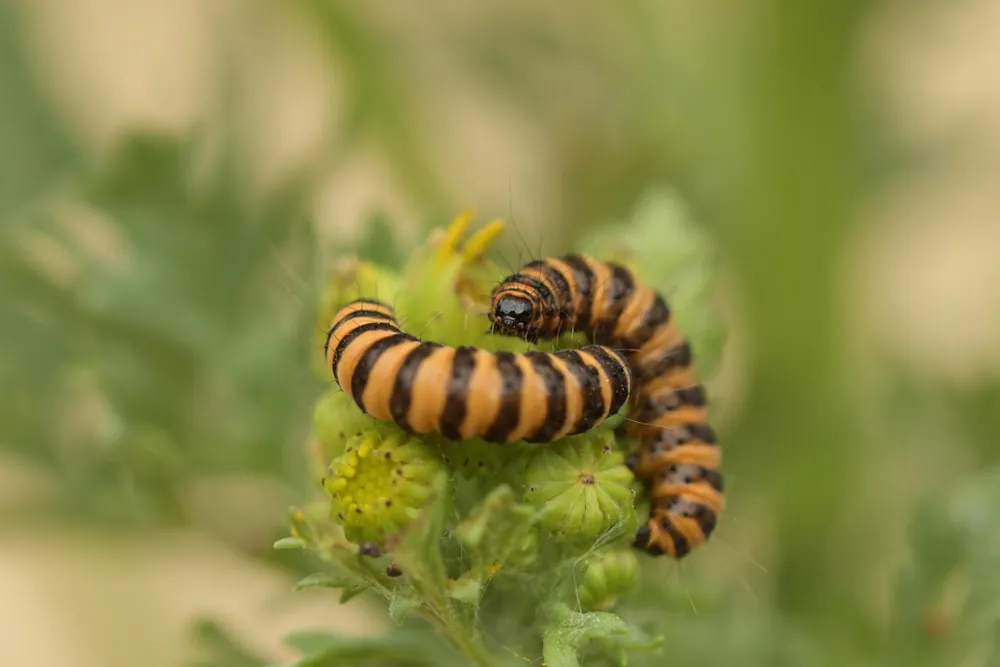
- Young caterpillars are pale yellow; later caterpillars are jet-black with orange or yellow stripes1
- Rarely, the red can be yellow, the forewing can be all red with a black border, or the wings can be completely black1
Simba rechepfu
Ine ngozi chete kana chimwe chinhu chikaidya.
Ine ngozi yakadii kuvanhu?
Ngozi kuvanhu: Ngozi shomaSenyuchi kubaya kana kushoma. Kazhinji haina ngozi kuvanhu.Inoitei kana yatya?
Its bright red and black colours warn predators that it is unpalatable, and predators seldom eat it.1
 Kana munhu akaibata kana kuidya
- Kana munhu akaidya kana aine zviratidzo mushure mekuidya: fonera nhamba yechimbichimbi kana nzvimbo yeruzivo rwechepfu ipapo ipapo.
Gara uchitanga wafonera nhamba yechimbichimbi (112, 000, 911). Iri izano rakajairika rerubatsiro rwekutanga, kwete zano rechiremba. Zvakakosha zverubatsiro rwekutanga
 Gara wakachengeteka
- Usambobata mhuka yesango, kuedza kuitora kana kuinetsa, kunyange iri diki, uye kunyange ichiita seyakarara kana yakafa.
- Ipa nzvimbo. Kana ukasangana nayo, dzikama, dzokera shure zvishoma nezvishoma uirege iende nenzira yayo.
- Kana wakaibata kana kuidya: usakwesha maziso kana muromo wako, geza maoko ako uye wana rubatsiro rwechiremba.
Haisi kukutsvaga. Chepfu yayo iripo chete kuti pasava nechinhu chinoidya. Zvimwe pamusoro pekugara wakachengeteka
Yakakura sei?
Yakareba zvakadii?
 inenge kureba sechibatanidzo chemapepa
 inogona kubhururuka ichiyambuka nhandare yose yebhora mumasekondi 42
Cinnabar moth yakakura sei kana yaenzaniswa NEWE?
Masvomhu chete mubrowser yako. Hapana chinochengetwa kana kutumirwa kupi zvako.
Inomhanya zvakadii?


Chokwadi
The caterpillars can turn cannibalistic, mainly when food is short, and will eat other cinnabar caterpillars.1
Cuckoos are an exception to the moth's protection, as some species eat its hairy, poisonous caterpillars.1
The moth was used as a biocontrol agent against ragwort, working alongside the Tansy ragwort flea beetle in the western United States.1
Very few caterpillars usually survive to the pupal stage, because they can eat their food plant bare before they mature.1
Evidence suggests the Brown long-eared bat preys on this moth.1
The caterpillars overwinter as cocoons on the ground.1
Kwakabva chokwadi
- Cinnabar moth (Wikipedia (CC BY-SA 4.0))
- Tyria jacobaeae (iNaturalist): mazita nekurongwa kwemhuka.
- Venom Wiki: danho rengozi, saizi yakajairika nekufungidzira kwekumhanya ndezvedu. Ona kuti tinozviwana sei: Matinoyera ngozi.
Chokwadi chimwe nechimwe pane peji rino chine nhamba inoratidza kwachakabva. Kana takakanganisa, ruregerero, tiri vanoda mhuka, kwete magazini yesainzi. Tiudze pa[email protected] tichazvigadzirisa.
 Chinyavada chine nzara! Venom Wiki iprojekiti yemunhu mumwe: yemahara, isina kushambadza uye isina zvinokuteedzera. Chipo chidiki chinobatsira kuti irambe iri paindaneti.Fudza chinyavada
Zvimwe kubva muboka rimwe chete: Dzimwe mhuka dzine chepfu
 Spanish flyDzimwe mhuka dzine chepfuInoda chirembaUsabata
 Green spotted pufferDzimwe mhuka dzine chepfuInoda chiremba
 Common quailDzimwe mhuka dzine chepfuInongorwadza
 Black oil beetleDzimwe mhuka dzine chepfuInongorwadzaUsabata
 Red-striped oil beetleDzimwe mhuka dzine chepfuInongorwadzaUsabata
 Six-spot burnetDzimwe mhuka dzine chepfuIsina ngozi
Inogarawo mu: Yuropu
 Common European adderMavhaipa nemaadderInoda chiremba
 Common waspNyuchi, mago nemahornetInongorwadza
 European hornetNyuchi, mago nemahornetInongorwadza
 Fire salamanderMatatya ane chepfu, matoad nemanewtInongorwadzaUsabata
 Western honey beeNyuchi, mago nemahornetInongorwadza
 Blunt-nosed viperMavhaipa nemaadderInogona kuuraya